Mariel Borowitz – författare
461 kr
Läs direkt efter köp
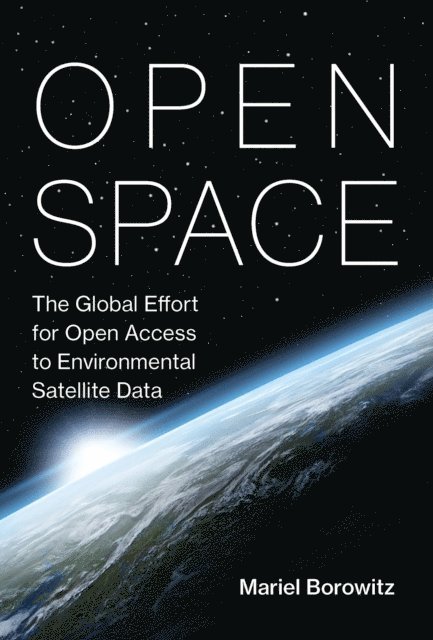
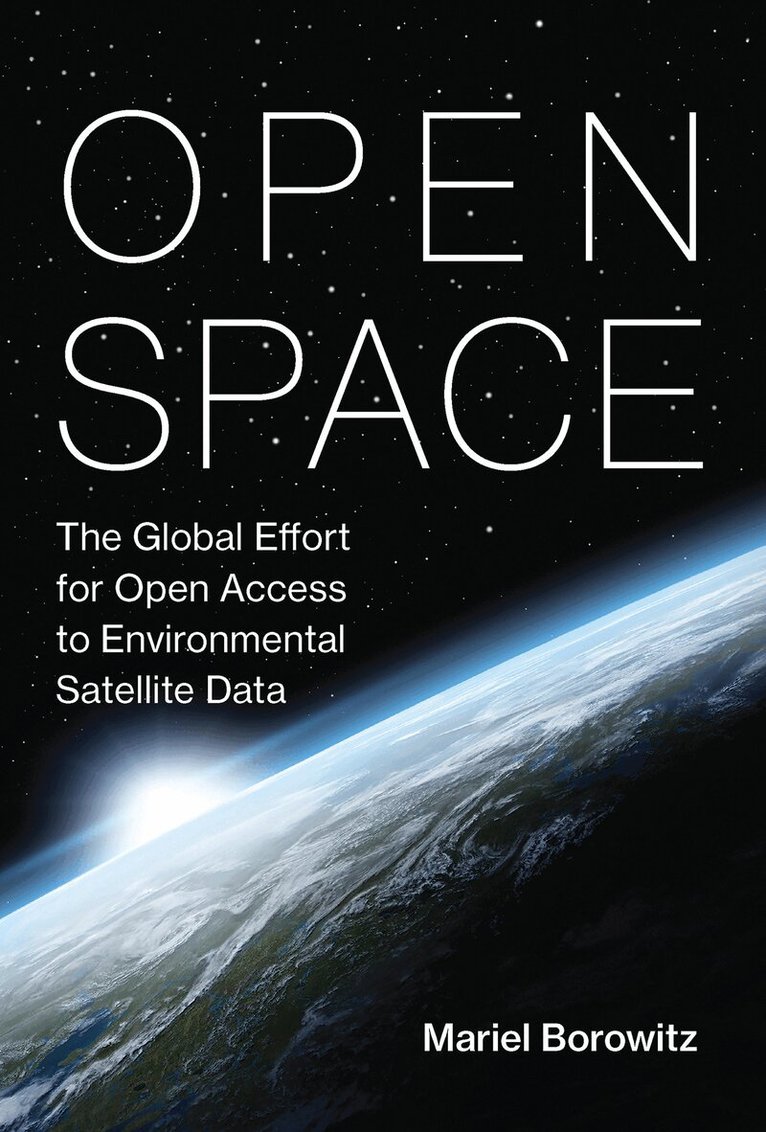
An examination of environmental satellite data sharing policies, offering a model of data-sharing policy development, case and practical recommendations for increasing global data sharing.
Key to understanding and addressing climate change is continuous and precise monitoring of environmental conditions. Satellites play an important role in collecting climate data, offering comprehensive global coverage that can''t be matched by in situ observation. And yet, as Mariel Borowitz shows in this book, much satellite data is not freely available but restricted; this remains true despite the data-sharing advocacy of international organizations and a global open data movement. Borowitz examines policies governing the sharing of environmental satellite data, offering a model of data-sharing policy development and applying it in case studies from the United States, Europe, and Japan—countries responsible for nearly half of the unclassified government Earth observation satellites.
Borowitz develops a model that centers on the government agency as the primary actor while taking into account the roles of such outside actors as other government officials and non-governmental actors, as well as the economic, security, and normative attributes of the data itself. The case studies include the U.S. National Aeronautics and Space Administration (NASA) and the U.S. National Oceanographic and Atmospheric Association (NOAA), and the United States Geological Survey (USGS); the European Space Agency (ESA) and the European Organization for the Exploitation of Meteorological Satellites (EUMETSAT); and the Japanese Aerospace Exploration Agency (JAXA) and the Japanese Meteorological Agency (JMA). Finally, she considers the policy implications of her findings for the future and provides recommendations on how to increase global sharing of satellite data.
556 kr
Skickas inom 5-8 vardagar
3 188 kr
Skickas inom 10-15 vardagar
737 kr
Kommande
776 kr
Läs direkt efter köp
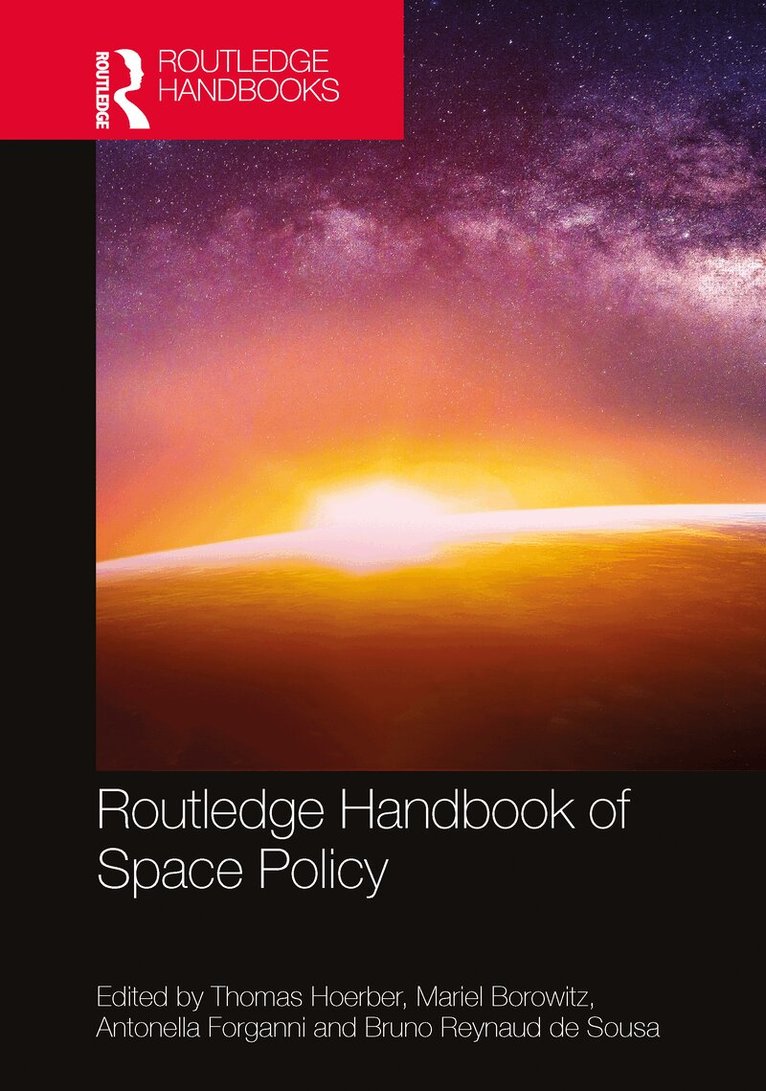
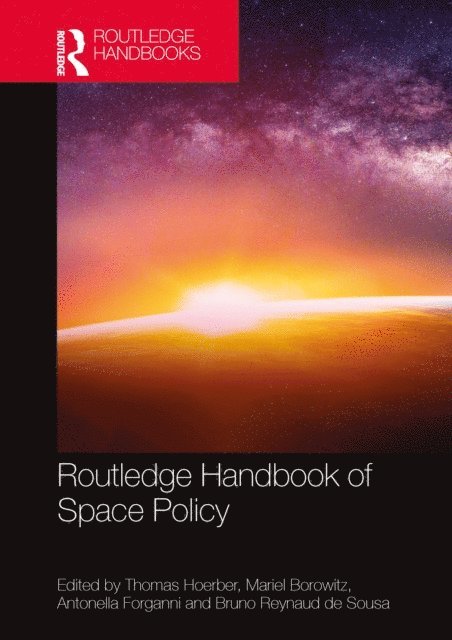
This volume offers a comprehensive overview of the field of space policy.
Space is a technology-driven domain, and policy development has accelerated in recent years, at a time when the space economy has begun to show remarkable potential. Thus, this handbook gathers experts from different fields with the aim of (1) offering an overview of the state of play regarding space policy issues, and (2) expanding knowledge about possible future developments. Given the cross-disciplinary nature of the subject and its vast scope, the authors'' contributions are grouped within different thematic sections, as follows:
Theoretical structures for an understanding of space policies The history of space Society, justice, and the human impact Governance of space Popularisation of space New frontiers in space and expansion into the unknown World space policies by geographic areas.The introduction and the conclusion chapters provide a coherent connection between the contributions, with each section presenting transversal themes, such as power dynamics and rules, commercialisation, sustainability, militarisation, applications and domestic use, and justice.
This volume will be of much interest to students of space policy and power, security studies, and international relations.
776 kr
Läs direkt efter köp
This volume offers a comprehensive overview of the field of space policy.
Space is a technology-driven domain, and policy development has accelerated in recent years, at a time when the space economy has begun to show remarkable potential. Thus, this handbook gathers experts from different fields with the aim of (1) offering an overview of the state of play regarding space policy issues, and (2) expanding knowledge about possible future developments. Given the cross-disciplinary nature of the subject and its vast scope, the authors'' contributions are grouped within different thematic sections, as follows:
Theoretical structures for an understanding of space policies The history of space Society, justice, and the human impact Governance of space Popularisation of space New frontiers in space and expansion into the unknown World space policies by geographic areas.The introduction and the conclusion chapters provide a coherent connection between the contributions, with each section presenting transversal themes, such as power dynamics and rules, commercialisation, sustainability, militarisation, applications and domestic use, and justice.
This volume will be of much interest to students of space policy and power, security studies, and international relations.