Marietta Meier – författare
Visar alla böcker från författaren Marietta Meier. Handla med fri frakt och snabb leverans.
4 produkter
4 produkter
Del 58 - Social Histories of Medicine
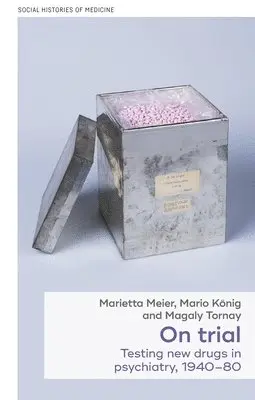
On trial
Testing new drugs in psychiatry, 1940–1980
Inbunden, Engelska, 2024
1 298 kr
Skickas inom 5-8 vardagar
The heroic story of the invention of antidepressants is a key part of the psychopharmaceutical turn. On Trial revolves around one of its pioneers, psychiatrist Roland Kuhn, who practiced in Münsterlingen, a state-run psychiatric hospital in Switzerland. Kuhn became famous for the ‘discovery’ of the first antidepressant, Tofranil, and more recently notorious for his numerous trials on often unsuspecting patients.Largely based on the extensive and previously inaccessible sources of Kuhn’s private archive, the book delves into the early days of industry-sponsored clinical research in psychiatry. It examines how the clinic, patients, doctors, nursing staff, corporations, and authorities interacted in the trials. Conducted from the 1940s to 1980s, the Münsterlingen drug trials are historicised and situated in the period’s evolving landscape of experimentation.
Del 58 - Social Histories of Medicine
On trial
Testing new drugs in psychiatry, 1940–1980
Häftad, Engelska, 2026
443 kr
Skickas inom 5-8 vardagar
The heroic story of the invention of antidepressants is a key part of the psychopharmaceutical turn. On Trial revolves around one of its pioneers, psychiatrist Roland Kuhn, who practiced in Münsterlingen, a state-run psychiatric hospital in Switzerland. Kuhn became famous for the ‘discovery’ of the first antidepressant, Tofranil, and more recently notorious for his numerous trials on often unsuspecting patients.Largely based on the extensive and previously inaccessible sources of Kuhn’s private archive, the book delves into the early days of industry-sponsored clinical research in psychiatry. It examines how the clinic, patients, doctors, nursing staff, corporations, and authorities interacted in the trials. Conducted from the 1940s to 1980s, the Münsterlingen drug trials are historicised and situated in the period’s evolving landscape of experimentation.
Inbunden, Tyska
448 kr
Skickas inom 3-6 vardagar
E-bok
PDF, Tyska, 2015453 kr
Läs direkt efter köp
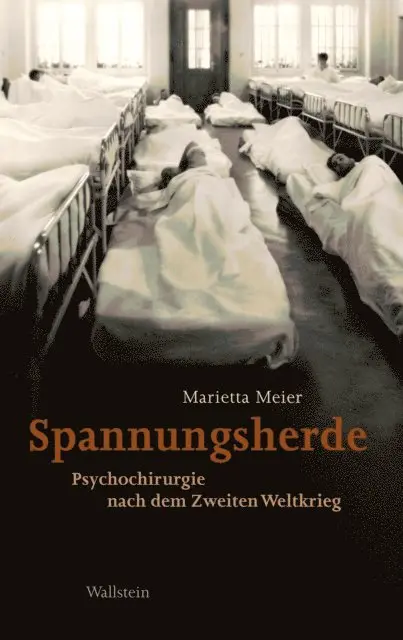
Eine packende Studie, die dafür plädiert, unseren Blick auf Emotionen, das Gehirn und das Selbst in einen breiteren Kontext zu stellen.1935 entwickelte ein portugiesischer Neurologe die Lobotomie. Die Operation sollte schwere psychische Störungen lindern, stieß aber in der Fachwelt auf harsche Kritik. Sie brach ein Tabu, weil sie direkt ins Gehirn eingriff und die Persönlichkeit der Patienten veränderte. Nach dem Ende des Zweiten Weltkriegs setzte sich das Verfahren jedoch breit durch. Da die Zahl psychochirurgischer Eingriffe schnell zunahm, erschlossen sich auch der Forschung neue Chancen. Nun hieß es, die Lobotomie löse die »affektive Spannung" psychisch Kranker, wirke sogar in »hoffnungslosen Fällen" und entlaste neben der Anstaltspsychiatrie auch die Gesellschaft. Obwohl Experten die Methode schon im Laufe der 1950er Jahre immer skeptischer beurteilten, kam die Ära der Lobotomie erst zum Abschluss, als die Psychiatrie um 1970 zunehmend ins Kreuzfeuer öffentlicher Kritik geriet.Marietta Meier untersucht die Geschichte eines Behandlungsverfahrens, das körperliche, psychische und soziale Spannungen lösen sollte, gleichzeitig aber grundsätzliche ethische, wissenschaftliche und gesellschaftspolitische Fragen aufwarf. Sie legt den Fokus auf die Schweiz, nimmt jedoch den ganzen deutsch- und französischsprachigen Raum Europas und dessen Verbindungen zur angelsächsischen Welt in den Blick. Auf diese Weise lässt sich nicht nur zeigen, wie lokale Praktiken, nationale Rahmenbedingungen und internationale Debatten ineinandergriffen. Der vielschichtige Ansatz macht auch klar, wie Subjekt-, Wissens-, Geschlechter- und Gesellschaftsordnung in der Nachkriegszeit zusammenspielten.