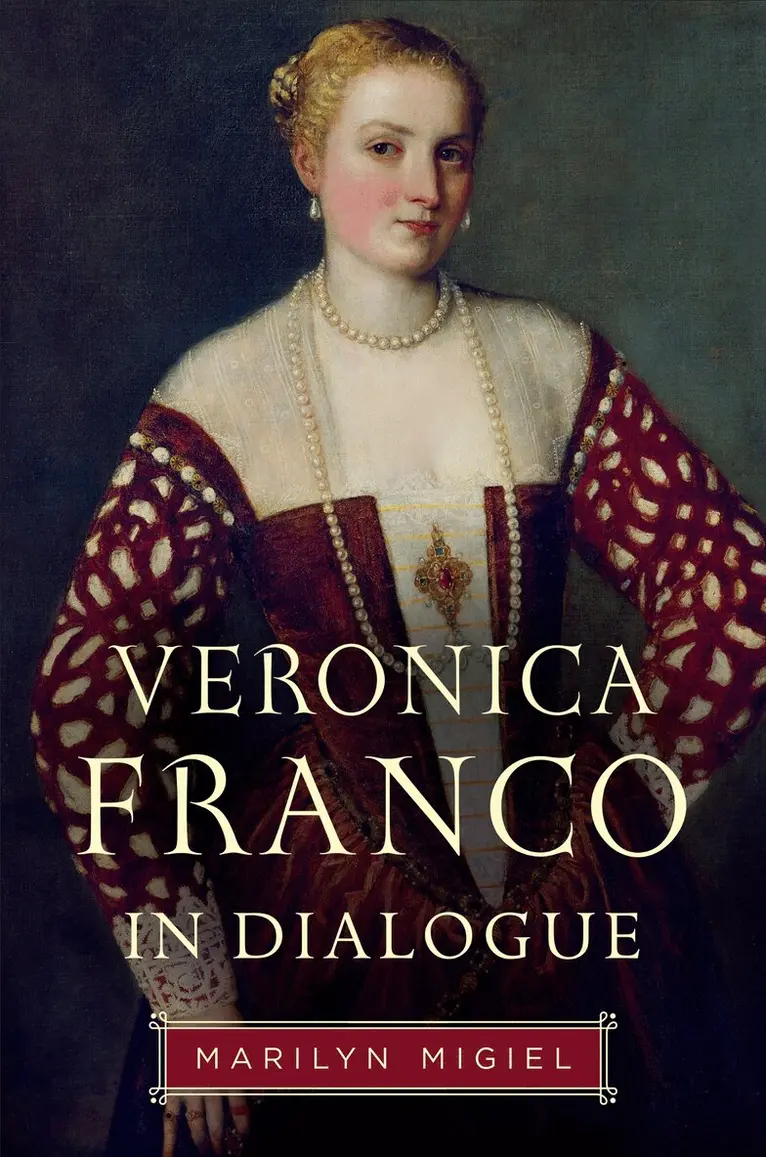
Marilyn Migiel – författare
472 kr
Skickas inom 10-15 vardagar
783 kr
Läs direkt efter köp
874 kr
Läs direkt efter köp
686 kr
Skickas inom 5-8 vardagar
528 kr
Läs direkt efter köp
569 kr
Skickas inom 5-8 vardagar
681 kr
Läs direkt efter köp
Since the late twentieth century, the Venetian courtesan Veronica Franco has been viewed as a triumphant proto-feminist icon: a woman who celebrated her sexuality, an outspoken champion of women and their worth, and an important intellectual and cultural presence in sixteenth-century Venice.
In Veronica Franco in Dialogue, Marilyn Migiel provides a nuanced account of Franco’s rhetorical strategies through a close analysis of her literary work. Focusing on the first fourteen poems in the Terze rime, a collection of Franco’s poems published in 1575, Migiel looks specifically at back-and-forth exchanges between Franco and an unknown male author. Migiel argues that in order to better understand what Franco is doing in the poetic collection, it is essential to understand how she constructs her identity as author, lover, and sex worker in relation to this unknown male author.
Veronica Franco in Dialogue accounts for the moments of ambivalence, uncertainty, and indirectness in Franco’s poetry, as well as the polemicism and assertions of triumph. In doing so, it asks readers to consider their ideological investments in the stories we tell about early modern female authors and their cultural production.
681 kr
Läs direkt efter köp
Since the late twentieth century, the Venetian courtesan Veronica Franco has been viewed as a triumphant proto-feminist icon: a woman who celebrated her sexuality, an outspoken champion of women and their worth, and an important intellectual and cultural presence in sixteenth-century Venice.
In Veronica Franco in Dialogue, Marilyn Migiel provides a nuanced account of Franco’s rhetorical strategies through a close analysis of her literary work. Focusing on the first fourteen poems in the Terze rime, a collection of Franco’s poems published in 1575, Migiel looks specifically at back-and-forth exchanges between Franco and an unknown male author. Migiel argues that in order to better understand what Franco is doing in the poetic collection, it is essential to understand how she constructs her identity as author, lover, and sex worker in relation to this unknown male author.
Veronica Franco in Dialogue accounts for the moments of ambivalence, uncertainty, and indirectness in Franco’s poetry, as well as the polemicism and assertions of triumph. In doing so, it asks readers to consider their ideological investments in the stories we tell about early modern female authors and their cultural production.