Marilyne Andersen – författare
Visar alla böcker från författaren Marilyne Andersen. Handla med fri frakt och snabb leverans.
3 produkter
3 produkter
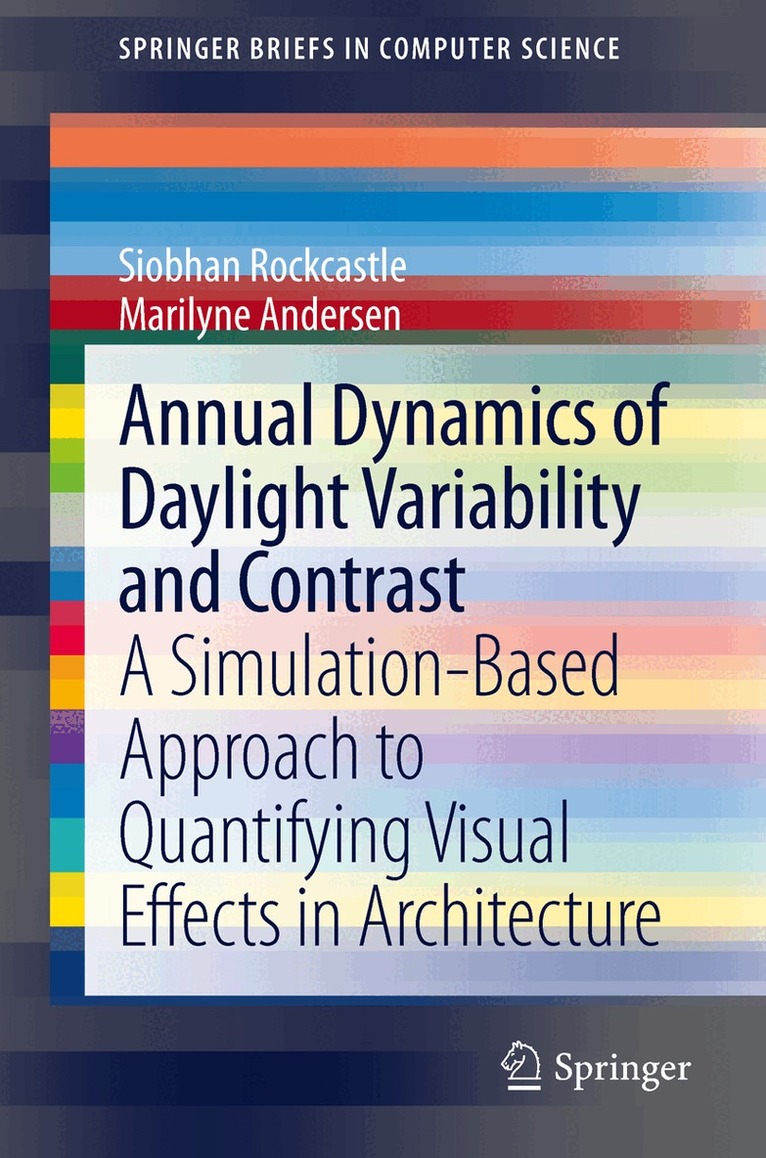
Annual Dynamics of Daylight Variability and Contrast
A Simulation-Based Approach to Quantifying Visual Effects in Architecture
Häftad, Engelska, 2013
550 kr
Skickas inom 10-15 vardagar
Daylight is a dynamic source of illumination in architectural space, creating diverse and ephemeral configurations of light and shadow within the built environment. Perceptual qualities of daylight, such as contrast and temporal variability, are essential to our understanding of both material and visual effects in architecture. Although spatial contrast and light variability are fundamental to the visual experience of architecture, architects still rely primarily on intuition to evaluate their designs because there are few metrics that address these factors. Through an analysis of contemporary architecture, this work develops a new typological language that categorizes architectural space in terms of contrast and temporal variation. This research proposes a new family of metrics that quantify the magnitude of contrast-based visual effects and time-based variation within daylit space through the use of time-segmented daylight renderings to provide a more holistic analysis of daylight performance.
546 kr
Skickas inom 7-10 vardagar
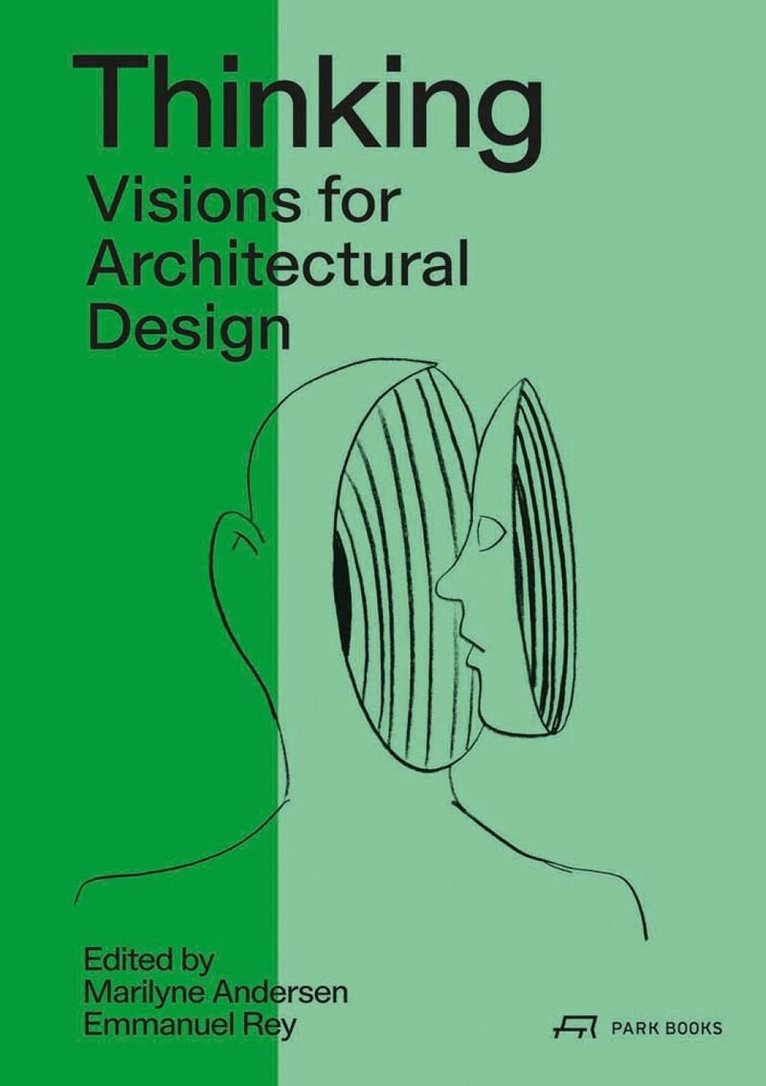
Product of a research cooperation between three Swiss universities - the École Polytechnique Fédérale de Lausanne's School of Architecture, the School of Architecture and Technology in Fribourg, and the University of Fribourg - the Smart Living Lab is a research and development centre for the built environment of the future. This high-tech structure also serves as an emblem of the cooperation's aim to translate academic research into actual buildings. A new series of books, entitled Towards 2050 will be showcasing the ambitious undertaking at various stages.The series' inaugural volume, Thinking: Visions for Architectural Design highlights preliminary research for the smart living lab and considers visions for sustainable buildings. The book features essays by Sophie Lufkin, Emilie Nault, MArilyne Andersen, and Emmanuel Rey as well as interviews with leading experts such as Tatiana Bilbao, Paula Cadima, Lionel Devlieger, Herbert Girardet, Alistair Guthrie, Kengo Kuma, Ali Malkawi, Edward Ng, Susan Parnell, Antoine Picon, Carlo Ratti, and Koen Steemers. It lays out the myriad challenges and opportunities the project is likely to face, as well as its considerable potential to drive change.
546 kr
Skickas inom 7-10 vardagar
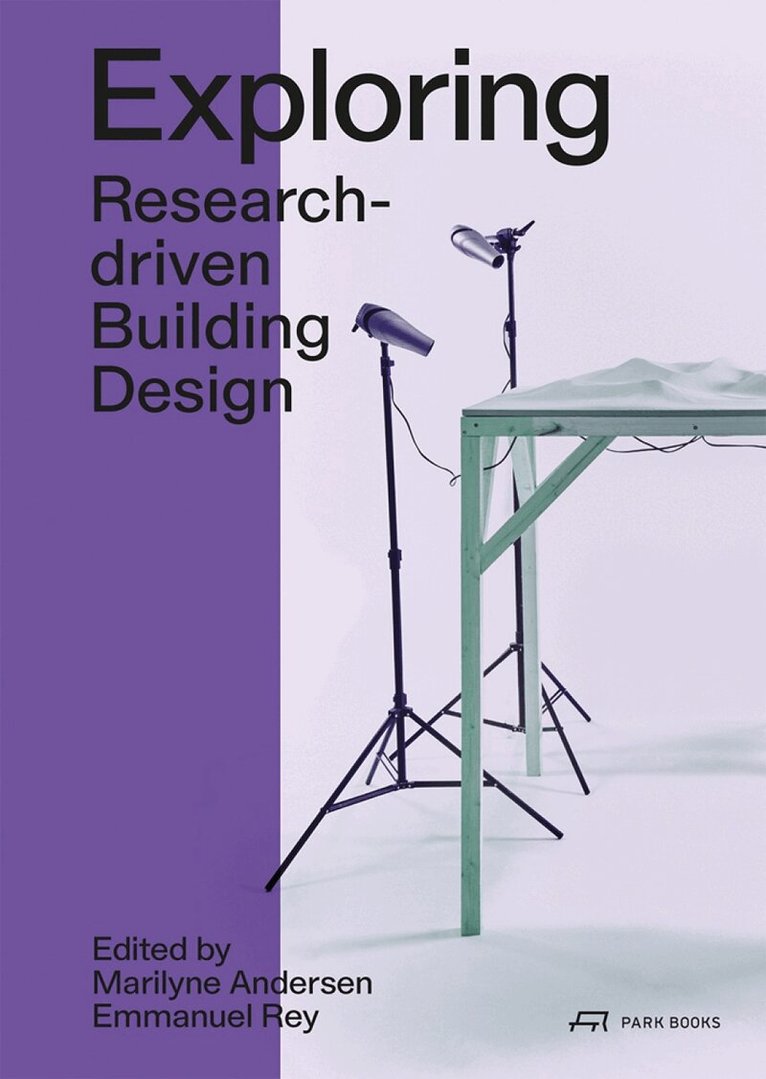
Product of a research cooperation between three Swiss universities - the École Polytechnique Fédérale de Lausanne's School of Architecture, the School of Architecture and Technology in Fribourg, and the University of Fribourg - the Smart Living Lab is a research and development centre for the built environment of the future. This high-tech structure also serves as an emblem of the cooperation's aim to translate academic research into actual buildings. A new series of books, entitled Towards 2050 will be showcasing the ambitious undertaking at various stages.Exploring: Research-driven Building Design presents the second phase of research at the Smart Living Lab, which focuses on the various problems that must be solved to satisfy future buildings' sustainability goals. Given that the building sector is one of the world's biggest contributors to CO2 emissions and energy consumption, the research group is seeking strategies to improve energy and carbon performance of the Smart Living Lab, anticipating the expected tight requirements thirty years from now. The book features contributions by Marilyne Andersen and Emmanuel Rey; Anne-Claude Cosandey, Marilyne Andersen, and Emmanuel Rey; Thomas Jusselme; Dominic Villeneuve, Thierry Maeder, Hamed Alavi, Vincent Kaufmann, and Denis Lalanne; Thomas Jusselme, Endrit Hoxha, Cédric Liardet, Himanshu Verma, Derek Christie, Marc Antoine Messer, and Luca Pattaroni; Arianna Brambilla, Cécile Nyffeler, Hugo Gasnier, Jean-Marie Le Tiec, and Arnaud Misse; Didier Vuarnoz, Julien Nembrini, Philippe Couty, and Thibaut Schafer; Florinel Radu; Thomas Jusselme, Endrit Hoxha, Stefano Cozza, Raphaël Tuor, Renato Zülli, Nicolas Henchoz, and Denis Lalanne; and Thomas Jusselme and Didier Vuarnoz. Further volumes in the Towards 2050 series: Thinking: Visions for Architectural Design.