Marina Paola Banchetti-Robino – författare
Visar alla böcker från författaren Marina Paola Banchetti-Robino. Handla med fri frakt och snabb leverans.
6 produkter
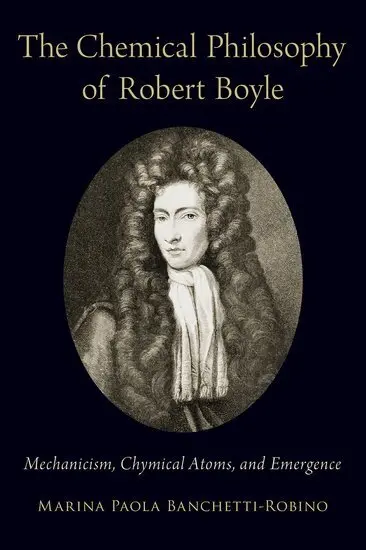
The Chemical Philosophy of Robert Boyle
Mechanicism, Chymical Atoms, and Emergence
Av Marina Paola Banchetti-Robino
Inbunden, 2020
1720 kr
Lägg i varukorg
Robert Boyle (1627-1691) believed that a reductionist conception of the mechanical philosophy threatened the heuristic power and autonomy of chemistry as an experimental science. While some historical and philosophical scholars have examined his nuanced position, understanding the chemical …
Chemical Philosophy of Robert Boyle
Mechanicism, Chymical Atoms, and Emergence
Av Marina Paola Banchetti-Robino
E-bok, 2020
1192 kr
Lägg i varukorg
Robert Boyle (1627-1691) believed that a reductionist conception of the mechanical philosophy threatened the heuristic power and autonomy of chemistry as an experimental science. While some historical and philosophical scholars have examined his nuanced position, understanding the chemical …
Chemical Philosophy of Robert Boyle
Mechanicism, Chymical Atoms, and Emergence
Av Marina Paola Banchetti-Robino
E-bok, 2020
1192 kr
Lägg i varukorg
Robert Boyle (1627-1691) believed that a reductionist conception of the mechanical philosophy threatened the heuristic power and autonomy of chemistry as an experimental science. While some historical and philosophical scholars have examined his nuanced position, understanding the chemical …
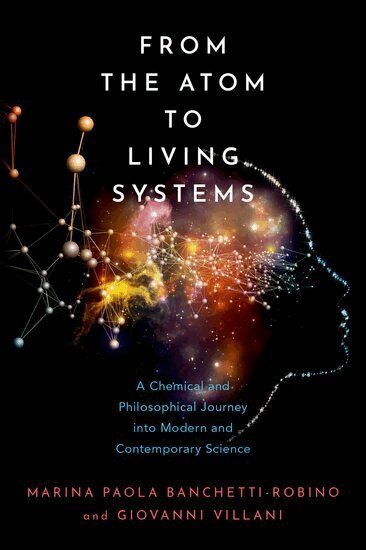
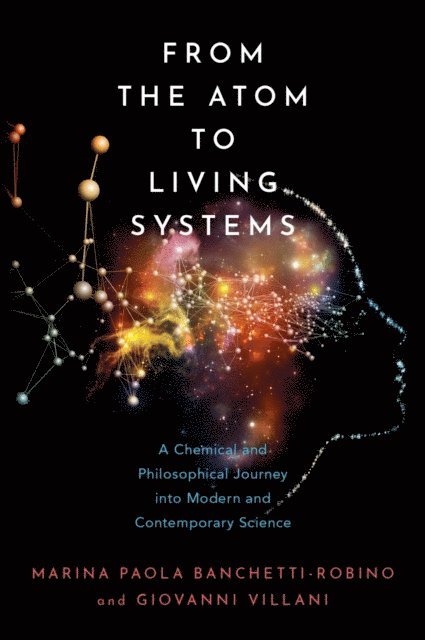
From the Atom to Living Systems
A Chemical and Philosophical Journey Into Modern and Contemporary Science
Av Marina Paola Banchetti-Robino, Giovanni Villani
Inbunden, 2023
1109 kr
Lägg i varukorg
From the Atom to Living Systems represents an original historico-epistemological approach to follow the passage, in the microscopic analysis of reality, from the atomic to the molecular to the macromolecular levels and then to the threshold of life itself. Naturally, some parts of this journey have …
From the Atom to Living Systems
A Chemical and Philosophical Journey Into Modern and Contemporary Science
Av Giovanni Villani, Marina Paola Banchetti-Robino
E-bok, 2023
1009 kr
Lägg i varukorg
From the Atom to Living Systems represents an original historico-epistemological approach to follow the passage, in the microscopic analysis of reality, from the atomic to the molecular to the macromolecular levels and then to the threshold of life itself. Naturally, some parts of this journey have …
From the Atom to Living Systems
A Chemical and Philosophical Journey Into Modern and Contemporary Science
Av Giovanni Villani, Marina Paola Banchetti-Robino
E-bok, 2023
1009 kr
Lägg i varukorg
From the Atom to Living Systems represents an original historico-epistemological approach to follow the passage, in the microscopic analysis of reality, from the atomic to the molecular to the macromolecular levels and then to the threshold of life itself. Naturally, some parts of this journey have …