• Fri frakt över 249 kr
  • •
  • Snabba leveranser
  • •
  • Billiga böcker
Kundservice

Du är på sajten för privatpersoner.

Företag, bibliotek eller offentlig verksamhet?

Du handlar på classic.bokus.com, där alla dina funktioner finns intakta.
Till classic.bokus.com
Bokus logotyp. Gå till startsidan.
  • Erbjudanden
  • Nyheter
  • Student
  • Topplistor
  • Barn & ungdom
  • Bokus Play
  • E-böcker
  • Pocketböcker
  • Spel & pussel

10% rabatt på allt med kod: NYSTART10 →

Sidfot

Mina sidor

    Hjälp

    • Kundservice
    • Vanliga frågor och svar
    • Frakt och leverans
    • Retur vid ångerrätt
    • Reklamera vara
    • Betalning
    • Köpvillkor
    • Allmänna villkor
    • Information om webbplatsens tillgänglighet

    Om Bokus

    • Om oss
    • Pressrum
    • För studenter
    • För företag
    • För bibliotek och offentlig verksamhet
    • För leverantörer
    • Hållbarhet

    Populärt

    • Aktuella erbjudanden
    • Presentkort
    • Studentlitteratur
    • Nya böcker
    • Topplistor
    • Signerade böcker
    • Engelska böcker

    Inspiration

    • Boktips
    • BookTok
    • Populära bokserier
    • Barnbokskaraktärer
    • Populära författare
    Logotyp för Bokus
    Följ oss på Facebook (extern länk)Följ oss på Instagram (extern länk)Följ oss på YouTube (extern länk)Följ oss på TikTok (extern länk)
    bokus @ CookiesAnpassa cookiesIntegritetspolicyKöpvillkor
    Till Citymail hemsida (extern länk)Till Budbee hemsida (extern länk)Till Postnord hemsida (extern länk)Till Schenker hemsida (extern länk)Till Early Bird hemsida (extern länk)Till Walleys hemsida (extern länk)
    1. Naturvetenskap och teknik
    2. Matematik och naturvetenskap
    3. Kemi
    4. Analytisk kemi

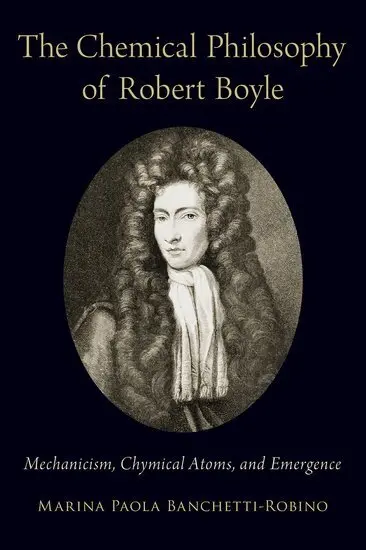
    The Chemical Philosophy of Robert Boyle

    Mechanicism, Chymical Atoms, and Emergence

    AvMarina Paola Banchetti-Robino

    Inbunden, Engelska, 2020

    1 666 kr

    Beställningsvara. Skickas inom 5-8 vardagar. Fri frakt över 249 kr.

    Beskrivning

    Robert Boyle (1627-1691) believed that a reductionist conception of the mechanical philosophy threatened the heuristic power and autonomy of chemistry as an experimental science. While some historical and philosophical scholars have examined his nuanced position, understanding the chemical philosophy he developed through his own experimental work is incredibly difficult even for experts in the field. In The Chemical Philosophy of Robert Boyle, Marina Paola Banchetti-Robino energetically explains Boyle's ideas in a whole new light and proposes that Boyle regarded chemical qualities as non-reducible dispositional and relational properties that emerge from, and supervene upon, the mechanistic structure of chymical atoms. Banchetti-Robino demonstrates that these ideas are implicit in Boyle's writing, making his philosophical contributions crucial to the fields of both philosophy and chemistry. The arguments presented are further strengthened by a detailed mereological analysis of Boylean chymical atoms as chemically elementary entities, which establishes the theory of wholes and parts that is most consistent with an emergentist conception of chemical properties. More generally, this book examines the way in which Boyle sought to accommodate his complex chemical philosophy within the framework of the 17th century mechanistic theory of matter. Banchetti-Robino conceptualizes Boyle's experimental work as a scientific research programme, in the Lakatosian sense, to better explain the positive and negative heuristic function of the mechanistic theory of matter within his chemical philosophy. The Chemical Philosophy of Robert Boyle actively engages with the contemporary and lively debates over the nature of Boyle's ideas about structural chemistry, fundamental mechanistic particles and properties, the explanatory power of subordinate causes, the complex relation between fundamental particles, natural kinds, and unified chemical wholes. The book is a rich historical account that begins with the dominant paradigms of 16th and 17th Century chemical philosophy and takes readers all the way through to the 21st Century.

    Produktinformation

    • Utgivningsdatum:2020-09-17
    • Mått:163 x 239 x 20 mm
    • Vikt:454 g
    • Format:Inbunden
    • Språk:Engelska
    • Antal sidor:206
    • Förlag:OUP USA
    • ISBN:9780197502501

    Utforska kategorier

    • Analytisk kemi inom Naturvetenskap och teknik
    • Filosofiska discipliner inom Filosofi och religion
    • Naturvetenskapens filosofi inom Naturvetenskap och teknik

    Mer om författaren

    Marina Paola Banchetti-Robino is Associate Professor of Philosophy at Florida Atlantic University. Her work has appeared in Synthese, Husserl Studies, Philosophy East & West, Continental Philosophy Review, The Review of Metaphysics, and Foundations of Chemistry. She is co-editor of The Philosophies of Environment and Technology and of Shifting the Geography of Reason: Science, Gender, and Religion.

    Recensioner i media

    Using several different strands from this literature, Marina Banchetti-Robino aims to show how Boyle addresses issues relevant to philosophy of chemistry today: the emergent nature of chemical properties, the mereology of fundamental chemical wholes, and the nonreducibility of chemistry to physics.

    Innehållsförteckning

    • Preface Introduction 1. Chemical Philosophy in the 16th and 17th Centuries: Vitalism, Paracelsian Alchemy, and Aristotelian Hylomorphism 1.1 The Vitalistic Character of Renaissance Alchemy 1.2 The Scholastic Theory of Substantial Form 1.3 Paracelsian Spagyria and the Tria Prima 1.4 Semina Rerum, Minima Naturalia, and Vitalistic Corpuscularianism 1.5 Daniel Sennert's Structural Hylomorphism and Atomicity as a "Negative-Empirical" Concept 1.6 Jan Baptista van Helmont and the Chemical Interpretation of Spirit and Ferment 2. Chemical Philosophy vs. Rationalistic Mechanicism: The Heuristic Limits of Cartesianism for Chymistry 2.1 The Cartesian Rejection of Substantial Forms 2.2 Pierre Gassendi and the Reformation of Epicurean Atomism 2.3 The Limitations of the Cartesian Project for Chymistry and Chemical Philosophy 2.4 Mechanistic Corpuscularianism and Experimental Natural Philosophy 2.5 Boyle's Relation to the Cartesian Project in Natural Philosophy 2.6 The Negative and Positive Heuristic Functions of the Mechanical Philosophy in Boyle's Scientific Research Programme 3. The Ontological Complexity of Boyle's Corpuscular Theory: Microstructure, Natural Kinds, and Essential Form 3.1 The Sceptical Chymist: Against Scholastics and Paracelsians 3.2 Boyle's Corpuscular Theory of Matter 3.3 Composition vs. Microstructure 3.4 Taxonomical Classification, Natural Kinds, and Essential Form3.5 The Empirical Nature of Essential Form: The Reduction to the Pristine State 4. Boyle's View of Chemical Properties as Dispositional, Relational, and Emergent Properties 4.1 The Hierarchy of Properties in Boyle's Chemical Ontology 4.2 Sensible Properties as Dispositional and Relational 4.3 Chemical Properties as Dispositional and Relational 4.4 Chemical Properties as Emergent and Supervenient 4.5 Supervenience, Non-Summative Difference, and Underdetermination4.6 Cosmical Qualities as Dispositional and Relational Properties 5. The Relation between Parts and Wholes: The Complex Mereology of Chymical Atoms 5.1 Boylean Chymistry as Mereological 5.2 Continuous vs. Contiguous Integral Wholes 5.3 Integral Parts and Essential Parts 5.4 Aquinas, Abelard, and Boyle on Substantial Unity 5.5 The Mereology of Boyle's Chymical Atoms as Chemically Elementary Entities 5.6 A Brief Excursion into the Mereology of Epicurean Semantics Concluding Remarks Bibliography Index