Mario Tronti – författare
Visar alla böcker från författaren Mario Tronti. Handla med fri frakt och snabb leverans.
7 produkter
7 produkter
E-bok
Engelska, 2019163 kr
Läs direkt efter köp
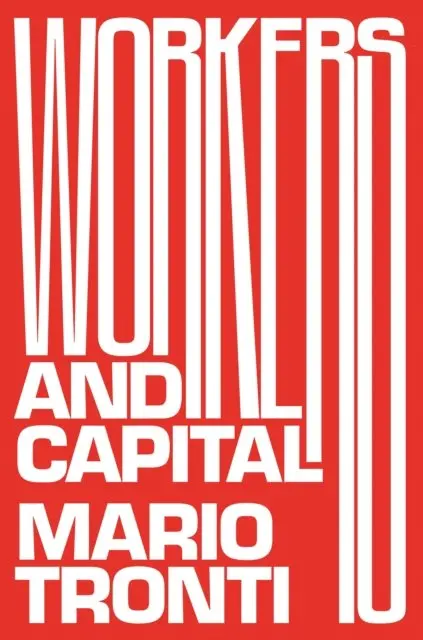
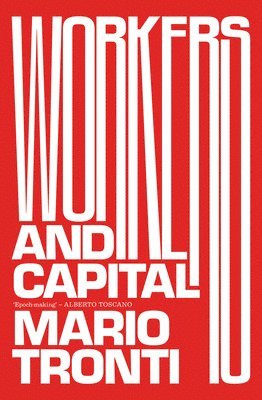
Workers and Capital is universally recognised as the most important work produced by operaismo, a current of political thought emerging in the 1960s that revolutionised the institutional and extra-parliamentary Left in Italy and beyond. In the decade after its first publication in 1966, the debates over Workers and Capital produced new methods of analysis and a new vocabulary for thousands of militants, helping to inform the new forms of workplace, youth and community struggles. Concepts like ''neocapitalism'', ''class composition'', ''mass-worker'', ''the plan of capital'', ''workers'' inquiry'' and ''co-research'' became an established part of the Italian Left''s political lexicon. Over five decades since it was first published, Workers and Capital is a key text in the history of the international workers'' movement, yet only now appears in English translation for the first time. Far from simply an artefact of the intense political conflicts of the 1960s, Tronti''s work offers extraordinary tools for understanding the powerful shifts in the nature of work and class composition in recent decades.
Inbunden, Engelska, 2025
952 kr
Skickas inom 5-8 vardagar
A classic work of political theory by a major twentieth-century figure of the Italian Left. Italian political thinker Mario Tronti is most famous for being the author of Workers and Capital, which became the central theoretical formulation of Italian operaismo or workerism, a current of political thought emerging in the 1960s that revolutionized the institutional and extra-parliamentary Left in Italy and beyond. In The Twilight of Politics, written originally in 1998, Tronti argues that modern politics, which reached its apogee in the twentieth century, has ended. Realism and Utopia, Tronti explains, were the foundational qualities of modern politics, which it always tried to clasp together. But behind this highwater mark of politics was a history over the longue durée, encompassing the wars of religion, Hobbes’ Leviathan, revolution, great individuals, and popular movements, as well as innovations such as the nation-state and the party-form. Historically, the modern period is also a coming together of the categories of the political and the laws of political economy. At the heart of this book is Tronti’s attempt to hold together a view of the course of political history with a critique of the “dictatorship of the present” to help us escape being “chained to the bars of an eternal present . . . which deprives us both of the freedom to look back and to see ahead.”
Häftad, Engelska, 2025
273 kr
Skickas inom 5-8 vardagar
A classic work of political theory by a major twentieth-century figure of the Italian Left. Italian political thinker Mario Tronti is most famous for being the author of Workers and Capital, which became the central theoretical formulation of Italian operaismo or workerism, a current of political thought emerging in the 1960s that revolutionized the institutional and extra-parliamentary Left in Italy and beyond. In The Twilight of Politics, written originally in 1998, Tronti argues that modern politics, which reached its apogee in the twentieth century, has ended. Realism and Utopia, Tronti explains, were the foundational qualities of modern politics, which it always tried to clasp together. But behind this highwater mark of politics was a history over the longue durée, encompassing the wars of religion, Hobbes’ Leviathan, revolution, great individuals, and popular movements, as well as innovations such as the nation-state and the party-form. Historically, the modern period is also a coming together of the categories of the political and the laws of political economy. At the heart of this book is Tronti’s attempt to hold together a view of the course of political history with a critique of the “dictatorship of the present” to help us escape being “chained to the bars of an eternal present . . . which deprives us both of the freedom to look back and to see ahead.”
Häftad, Engelska, 2020
213 kr
Skickas inom 11-20 vardagar
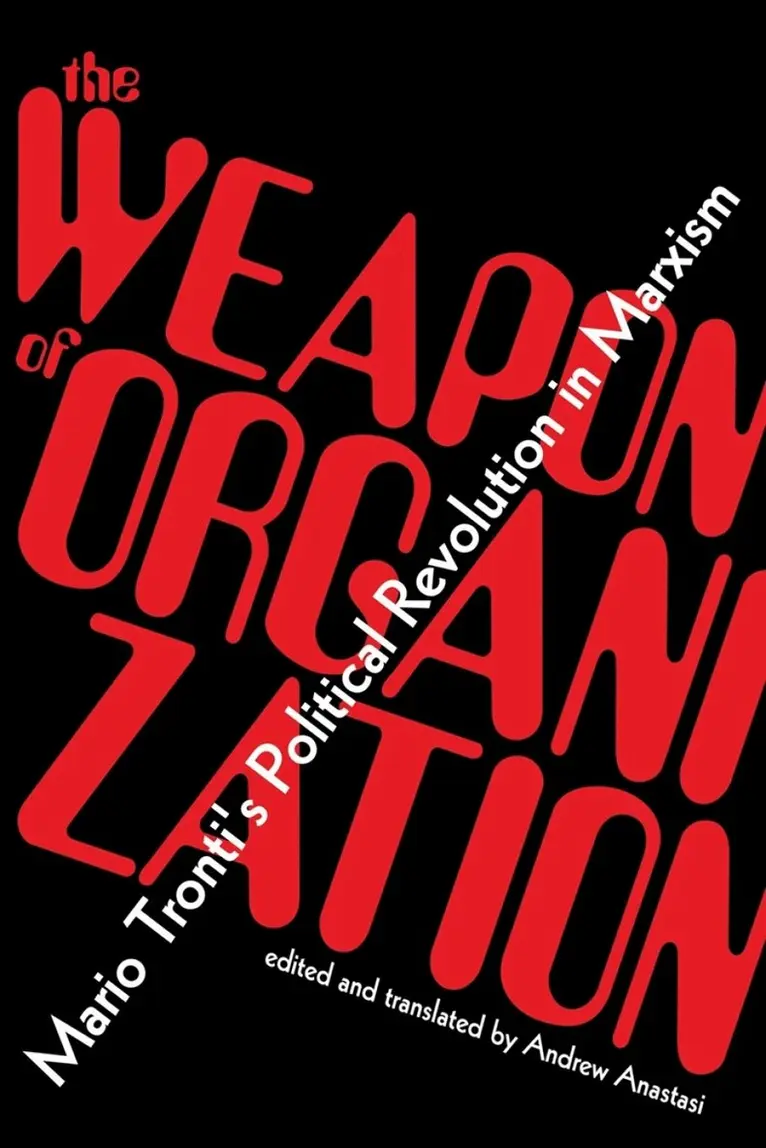
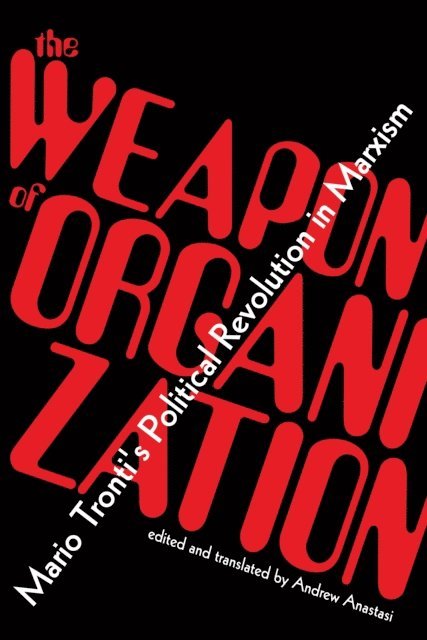
Never before translated texts powerfully present Italian autonomist Marxist Mario Tronti’s resonance with contemporary questions of revolutionary organization. Mario Tronti was the principal theorist of the radical political movement of the 1960s known in Italy as operaismo and in the Anglophone world as Italian workerism, a current which went on to inform the development of autonomist Marxism. His “Copernican revolution”—the proposal that working class struggles against exploitation propel capitalist development, which can only be understood as a reaction that seeks to harness this antagonism—has inspired dissident leftists around the world. Tronti’s influence as a theorist thus already reaches far beyond Italy to activists and writers working in different sectors on different problems historically and geographically. While his imposing and acclaimed Workers and Capital has only recently appeared in English translation, Tronti has influenced many of the most creative social and political theorists of our time.
E-bok
Engelska, 2020199 kr
Läs direkt efter köp
Mario Tronti was the principal theorist of the radical political movement of the 1960s known in Italy as operaismo and in the Anglophone world as Italian workerism, a current which went on to inform the development of autonomist Marxism. His ';Copernican revolution'the proposal that working class struggles against exploitation propel capitalist development, which can only be understood as a reaction that seeks to harness this antagonismhas inspired dissident leftists around the world.Tronti's influence as a theorist thus already reaches far beyond Italy to activists and writers working in different sectors on different problems historically and geographically. While his imposing and acclaimed Workers and Capital has only recently appeared in English translation, Tronti has influenced many of the most creative social and political theorists of our time. Antonio Negri and Michael Hardt have long acknowledged the influence of Tronti on their thinking, drawing especially on his inversion of strategy and tactics in their influential collaborations. Tronti's work in the 1960s also furnished important building blocks for a Marxist feminist critique of unwaged laboras developed by Mariarosa dalla Costa, Silvia Federici, and many others working on social reproduction theoryas Tronti showed how capitalist control extends beyond the factory to all of society. Fred Moten and Stefano Harney have echoed Tronti's calls for a radical antagonism ';within and against' institutions and the state. The Weapon of Organization is a crucial introduction to Tronti, presenting a variety of never-before-translated textspersonal letters, public talks, published articles. With an incisive and provocative introduction that situates Tronti and highlights his relevance to contemporary political struggle, Anastasi translates and restores key writing from the birth of Italian operaismodays of street fighting and theorizing for a renewed age of revolution.Tronti's goal, Anastasi writes, was not to become a revered thinker but to participate in the destruction of capitalist society.
E-bok
PDF, Spanska, 2026108 kr
Läs direkt efter köp
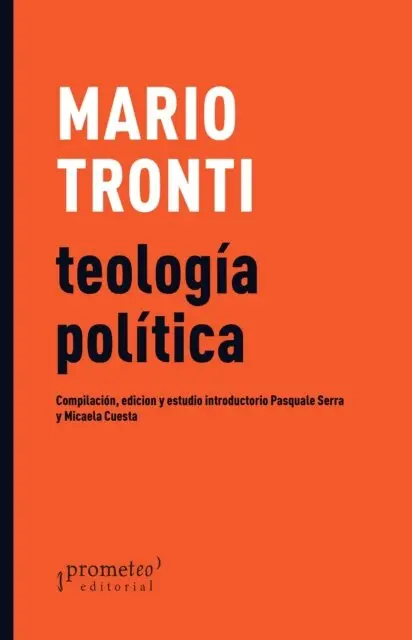
La publicacion de parte de la obra de Mario Tronti en castellano le debe casi todo al intelectual italiano Pasquale Serra y a la investigadora argentina Micaela Cuesta. Serra eligio no casualmente el texto El enano y el automata, la teologia como lengua de la politica para inaugurar la coleccion "e;Pensamiento politico italiano"e; de Prometeo, en el ano 2017 (a ese le seguiria La autonomia de lo politico del mismo autor y El suicidio de la revolucion de Augusto Del Noce). Unos anos antes Serra, amigo personal de Tronti, experto en la obra de Germani y autor del ensayo mas importante de los ultimos anos sobre el peronismo (El populismo argentino editado por Prometeo) habia iniciado en Argentina la tarea de redescubrir a Tronti. Hubo una primera "e;Operacion Mario Tronti"e;, encarnada por el postoperaismo autonomista que desconocia su recorrido posterior. Con reconocimiento benevolente y magnanimo, Toni Negri confinaba a Tronti al inicio cronologico de esa secuencia que lo reducia a su Operai e capitale. Desde el hito de las revueltas de los sesenta y setentas, cuando se agotan las revoluciones del siglo XX y parece consumirse toda la energia vital en la contienda, Tronti apuesta por preservar todo plusvalor de vida para un mas alla de la contingencia. Eligio, asi, un camino que no evadio ningun desierto (ni el de la academia ni el de la politica) alumbrando reflexion teorica sofisticada y densa. Sin abandonar jamas la interlocucion con la undecima tesis, reformulada en su "e;pensar extremo y actuar prudente"e;. El primer texto traducido al castellano conto con el estudio preliminar de Micaela Cuesta, un trabajo que resolvio con profundidad y claridad todos los inconvenientes que surgen ante un pensamiento que hay que ubicar retrospectivamente y que nos puede llevar a desafios teoricos incomodos. En esta oportunidad Serra y Cuesta nos ofrecen un trabajo extraordinario cuyo final fue precedido por varios anos de busqueda de material e investigacion. Este libro ofrece, por primera vez a nivel mundial, todos los escritos de Tronti sobre teologia politica, hoy olvidados por completo, muy dificiles de encontrar, o ineditos. En ellos toma forma el drama que la disolucion del socialismo lego al mundo contemporaneo, y la necesidad de centrarse en la figura del homo religiosus, del vinculo determinante e ineludible entre antagonismo y espiritualidad, asi como en su extraordinaria naturaleza politica. Este, sin duda, no es el problema central de la revolucion hoy, pero, como el propio Tronti reitero en la hermosa conversacion con Micaela Cuesta, "e;es un punto estrategico para un giro necesario en el pensamiento critico"e;. Mario Greco (director de la coleccion de Pensamiento Politico Italiano) Mario Tronti es un reconocido filosofo politico italiano. Docente por treinta anos de la Universidad de Siena, presidente durante diez anos del Centro para la Reforma del Estado y ex senador de la Republica Italiana. Estudioso de Marx, fundador del operaismo, es autor, entre otros, de Obreros y capital (1966, traducido en 2001), Con le spalle al futuro (1992), La politica al tramonto (1998), Politica e destino (2006), Non si puo accettare (2009), Dell'estremo possibile (2011), Noi operaisti (2009), Dello spirito libero (2015) y los recientemente traducido El enano y el automata. La teologia como lengua de la politica (2017) y La autonomia de lo politico (2018).
Häftad, Engelska, 2019
325 kr
Tillfälligt slut
Workers and Capital is universally recognised as the most important work produced by operaismo, a current of political thought emerging in the 1960s that revolutionised the institutional and extra-parliamentary Left in Italy and beyond. In the decade after its first publication in 1966, the debates over Workers and Capital produced new methods of analysis and a new vocabulary for thousands of militants, helping to inform the new forms of workplace, youth and community struggles. Concepts like 'neocapitalism', 'class composition', 'mass-worker', 'the plan of capital', 'workers' inquiry' and 'co-research' became an established part of the Italian Left's political lexicon. Over five decades since it was first published, Workers and Capital is a key text in the history of the international workers' movement, yet only now appears in English translation for the first time. Far from simply an artefact of the intense political conflicts of the 1960s, Tronti's work offers extraordinary tools for understanding the powerful shifts in the nature of work and class composition in recent decades.