Marion Laurence – författare
Visar alla böcker från författaren Marion Laurence. Handla med fri frakt och snabb leverans.
7 produkter
7 produkter
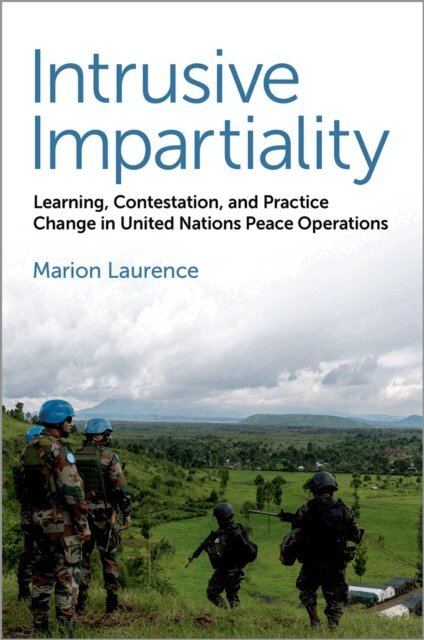
Intrusive Impartiality
Learning, Contestation, and Practice Change in United Nations Peace Operations
Inbunden, Engelska, 2025
949 kr
Skickas inom 5-8 vardagar
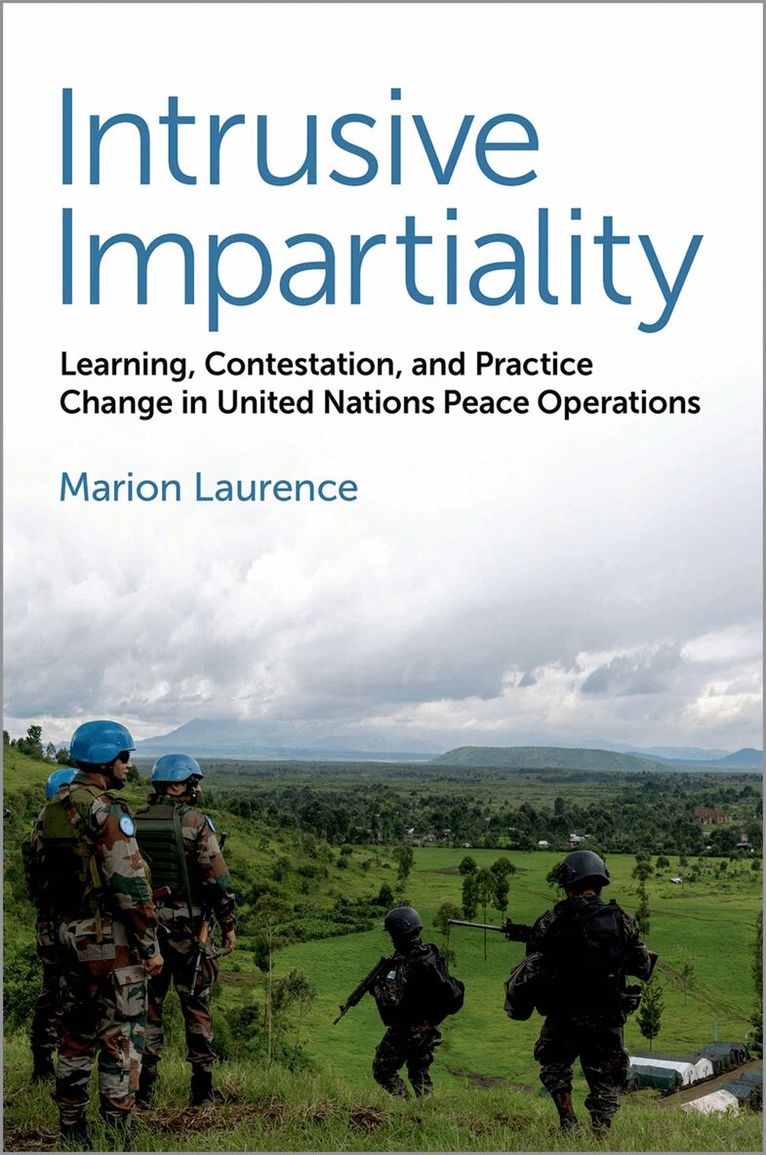
Impartiality is a guiding principle in United Nations peace operations that has helped legitimize multilateral intervention in dozens of armed conflicts around the world. In practice, it has long been associated with passive monitoring of cease-fires and peace agreements. In the twenty-first century, however, its meaning has been stretched to allow for a range of forceful, intrusive, and ideologically prescriptive practices, all in the name of building durable peace. In Intrusive Impartiality, Marion Laurence explains how these new ways of being "impartial" emerge, how they spread within and across missions, and how they become institutionalized across UN peace operations. Laurence argues that new peacekeeping practices are not only products of top-down pressures from member states or instructions from the UN Secretariat; they often emerge from tacit knowledge and unconscious decisions about how to follow orders or comply with social rules. By foregrounding the creativity and agency of the field staff who are responsible for translating mandates into action, Laurence shows that new definitions and practices of impartiality are products of contestation, learning, and the interplay between top-down pressures and bottom-up drivers of change in UN peace operations. Drawing on original data gathered through extensive fieldwork, Laurence uses evidence from UN missions in Sierra Leone, Côte d'Ivoire, the Democratic Republic of the Congo, and from UN headquarters in New York, to provide an innovative framework for studying authority and change in global governance. In doing so, Intrusive Impartiality sheds light on controversial changes in peacekeeping practice and yields valuable insights about the practical and ethical dilemmas that confront UN peacekeepers.
Intrusive Impartiality
Learning, Contestation, and Practice Change in United Nations Peace Operations
E-bok
PDF, Engelska, 2024825 kr
Läs direkt efter köp
Impartiality is a guiding principle in United Nations peace operations that has helped legitimize multilateral intervention in dozens of armed conflicts around the world. In practice, it has long been associated with passive monitoring of cease-fires and peace agreements. In the twenty-first century, however, its meaning has been stretched to allow for a range of forceful, intrusive, and ideologically prescriptive practices, all in the name of building durable peace. In Intrusive Impartiality, Marion Laurence explains how these new ways of being "e;impartial"e; emerge, how they spread within and across missions, and how they become institutionalized across UN peace operations. Laurence argues that new peacekeeping practices are not only products of top-down pressures from member states or instructions from the UN Secretariat; they often emerge from tacit knowledge and unconscious decisions about how to follow orders or comply with social rules. By foregrounding the creativity and agency of the field staff who are responsible for translating mandates into action, Laurence shows that new definitions and practices of impartiality are products of contestation, learning, and the interplay between top-down pressures and bottom-up drivers of change in UN peace operations. Drawing on original data gathered through extensive fieldwork, Laurence uses evidence from UN missions in Sierra Leone, CA'te d'Ivoire, the Democratic Republic of the Congo, and from UN headquarters in New York, to provide an innovative framework for studying authority and change in global governance. In doing so, Intrusive Impartiality sheds light on controversial changes in peacekeeping practice and yields valuable insights about the practical and ethical dilemmas that confront UN peacekeepers.
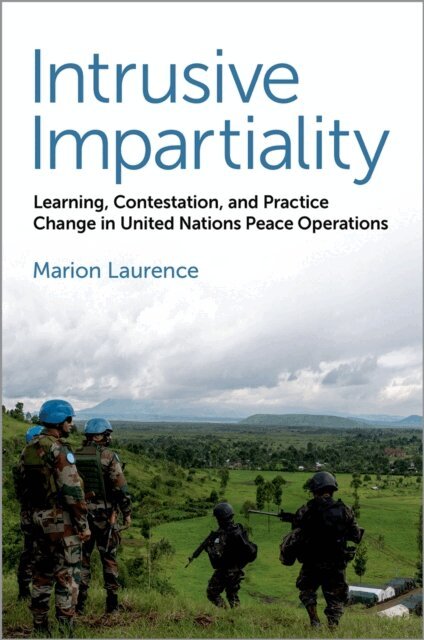
Intrusive Impartiality
Learning, Contestation, and Practice Change in United Nations Peace Operations
E-bok
Engelska, 2024825 kr
Läs direkt efter köp
Impartiality is a guiding principle in United Nations peace operations that has helped legitimize multilateral intervention in dozens of armed conflicts around the world. In practice, it has long been associated with passive monitoring of cease-fires and peace agreements. In the twenty-first century, however, its meaning has been stretched to allow for a range of forceful, intrusive, and ideologically prescriptive practices, all in the name of building durable peace. In Intrusive Impartiality, Marion Laurence explains how these new ways of being "e;impartial"e; emerge, how they spread within and across missions, and how they become institutionalized across UN peace operations. Laurence argues that new peacekeeping practices are not only products of top-down pressures from member states or instructions from the UN Secretariat; they often emerge from tacit knowledge and unconscious decisions about how to follow orders or comply with social rules. By foregrounding the creativity and agency of the field staff who are responsible for translating mandates into action, Laurence shows that new definitions and practices of impartiality are products of contestation, learning, and the interplay between top-down pressures and bottom-up drivers of change in UN peace operations. Drawing on original data gathered through extensive fieldwork, Laurence uses evidence from UN missions in Sierra Leone, CA'te d'Ivoire, the Democratic Republic of the Congo, and from UN headquarters in New York, to provide an innovative framework for studying authority and change in global governance. In doing so, Intrusive Impartiality sheds light on controversial changes in peacekeeping practice and yields valuable insights about the practical and ethical dilemmas that confront UN peacekeepers.
E-bok
Engelska, 2025260 kr
Läs direkt efter köp
Häftad, Engelska, 2025
218 kr
Skickas inom 7-10 vardagar
Debate over how to recognize and understand change and continuity has long animated the field of International Relations. This Element brings norm-oriented and practice-oriented approaches into conversation to advance a wide-ranging account of change and continuity in global politics. It elaborates four scenarios in which norm and practice interactions produce change and continuity: relative continuity and a tight coupling of practices and norms; change through accidental incompetence; new competencies that create disjunctures; and change through deliberate contestation. It demonstrates the utility of the approach using empirical illustrations from the fields of global health and development. The Element also shows the wider applicability of the scenarios for major contemporary debates about change in global governance and security. This title is also available as Open Access on Cambridge Core.
E-bok
PDF, Engelska, 2025260 kr
Läs direkt efter köp
Inbunden, Engelska, 2025
675 kr
Skickas inom 7-10 vardagar
Debate over how to recognize and understand change and continuity has long animated the field of International Relations. This Element brings norm-oriented and practice-oriented approaches into conversation to advance a wide-ranging account of change and continuity in global politics. It elaborates four scenarios in which norm and practice interactions produce change and continuity: relative continuity and a tight coupling of practices and norms; change through accidental incompetence; new competencies that create disjunctures; and change through deliberate contestation. It demonstrates the utility of the approach using empirical illustrations from the fields of global health and development. The Element also shows the wider applicability of the scenarios for major contemporary debates about change in global governance and security. This title is also available as Open Access on Cambridge Core.