Marius Iosifescu – författare
Visar alla böcker från författaren Marius Iosifescu. Handla med fri frakt och snabb leverans.
9 produkter
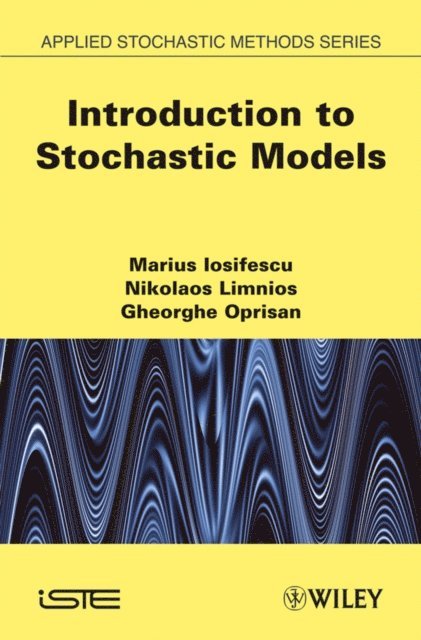
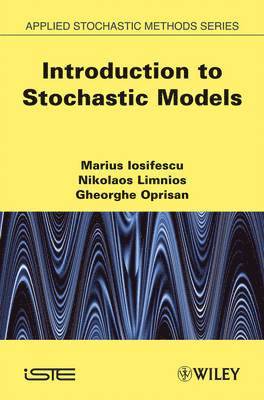
Introduction to Stochastic Models
Av Gheorghe Oprisan, Nikolaos Limnios m. fl.
E-bok, 2013
2265 kr
Lägg i varukorg
This book provides a pedagogical examination of the way in which stochastic models are encountered in applied sciences and techniques such as physics, engineering, biology and genetics, economics and social sciences. It covers Markov and semi-Markov models, as well as their particular cases: …
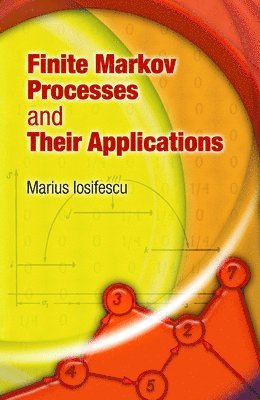
Finite Markov Processes and Their Applications
Av K. Morgan, Marius Iosifescu
Häftad, 2007
240 kr
Lägg i varukorg
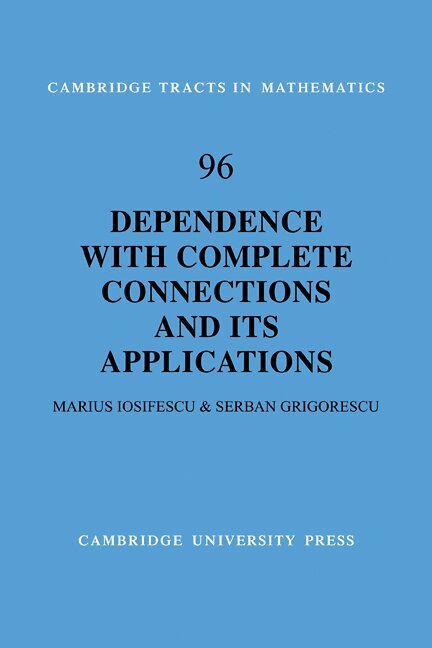
Dependence with Complete Connections and its Applications
Av Marius Iosifescu, Serban Grigorescu
Häftad, 2009
927 kr
Lägg i varukorg
Dependence with complete connections is a more general type of stochastic process than the well-known Markovian dependence, accounting for a complete history of a stochastic evolution. This book is an authoritative survey of knowledge of the subject, dealing with the basic theoretical understanding …
Introduction to Stochastic Models
Av Gheorghe Oprisan, Nikolaos Limnios m. fl.
E-bok, 2013
2193 kr
Lägg i varukorg
This book provides a pedagogical examination of the way in which stochastic models are encountered in applied sciences and techniques such as physics, engineering, biology and genetics, economics and social sciences. It covers Markov and semi-Markov models, as well as their particular cases: …
Introduction to Stochastic Models
Av Marius Iosifescu, Nikolaos Limnios m. fl.
Inbunden, 2010
1988 kr
Lägg i varukorg
This book provides a pedagogical examination of the way in which stochastic models are encountered in applied sciences and techniques such as physics, engineering, biology and genetics, economics and social sciences. It covers Markov and semi-Markov models, as well as their particular cases: …
Proceedings of the Seventh Conference on Probability Theory
August 29–September 4, 1982, Brasov, Romania
Av Marius Iosifescu, Șerban Grigorescu m. fl.
Inbunden, 1985
3249 kr
Lägg i varukorg
Random Processes and Learning
Av Marius Iosifescu, Radu Theodorescu
Häftad, 2012
550 kr
Lägg i varukorg
The aim of" the present monograph is two-fold: (a) to give a short account of the main results concerning the theory of random systems with complete connections, and (b) to describe the general learning model by means of random systems with complete connections. The notion of chain with complete …
Stochastic processes and applications in biology and medicine I
Theory
Häftad, 2012
566 kr
Lägg i varukorg
This volume is a revised and enlarged version of Chapters 1 and 2 of a book with the same title, published in Romanian in 1968. The revision resulted in a new book which has been divided into two parts because of the large amount of new material. The present part is intended to introduce …
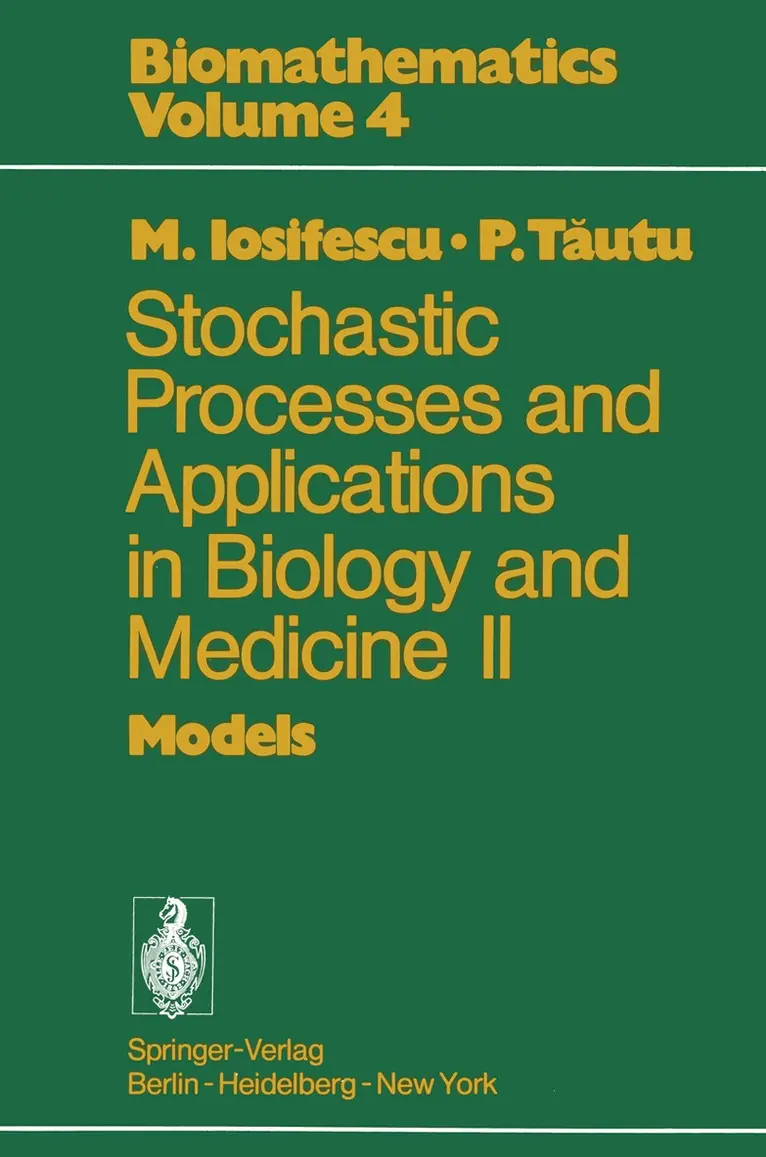
Stochastic processes and applications in biology and medicine II
Models
Häftad, 2011
566 kr
Lägg i varukorg
This volume is a revised and enlarged version of Chapter 3 of. a book with the same title, published in Romanian in 1968. The revision resulted in a new book which has been divided into two of the large amount of new material. The whole book parts because is intended to introduce mathematicians and …