Mark A Lutz - Böcker
Visar alla böcker från författaren Mark A Lutz. Handla med fri frakt och snabb leverans.
3 produkter
3 produkter
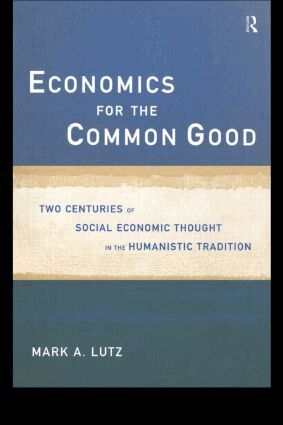
Economics for the Common Good
Two Centuries of Economic Thought in the Humanist Tradition
Häftad, Engelska, 1999
812 kr
Skickas inom 10-15 vardagar
This textbook presents an introduction to the central issues of social economics. Building on a venerable social economics tradition, the book recommends a more rational economic order and proposes new principles of economic policy. The issues covered include:* the inadequacy of individualistic economics in guiding the policy maker* a critique of economic rationality* rethinking of the modern business corporation* a critical look at markets as panacea* the harmful effects of international competition* environmental problems.The book introduces social economic concepts and challenges the reader to look beyond the confines of mainstream economic thinking to find a solution to these critical issues.
1 105 kr
Skickas inom 10-15 vardagar
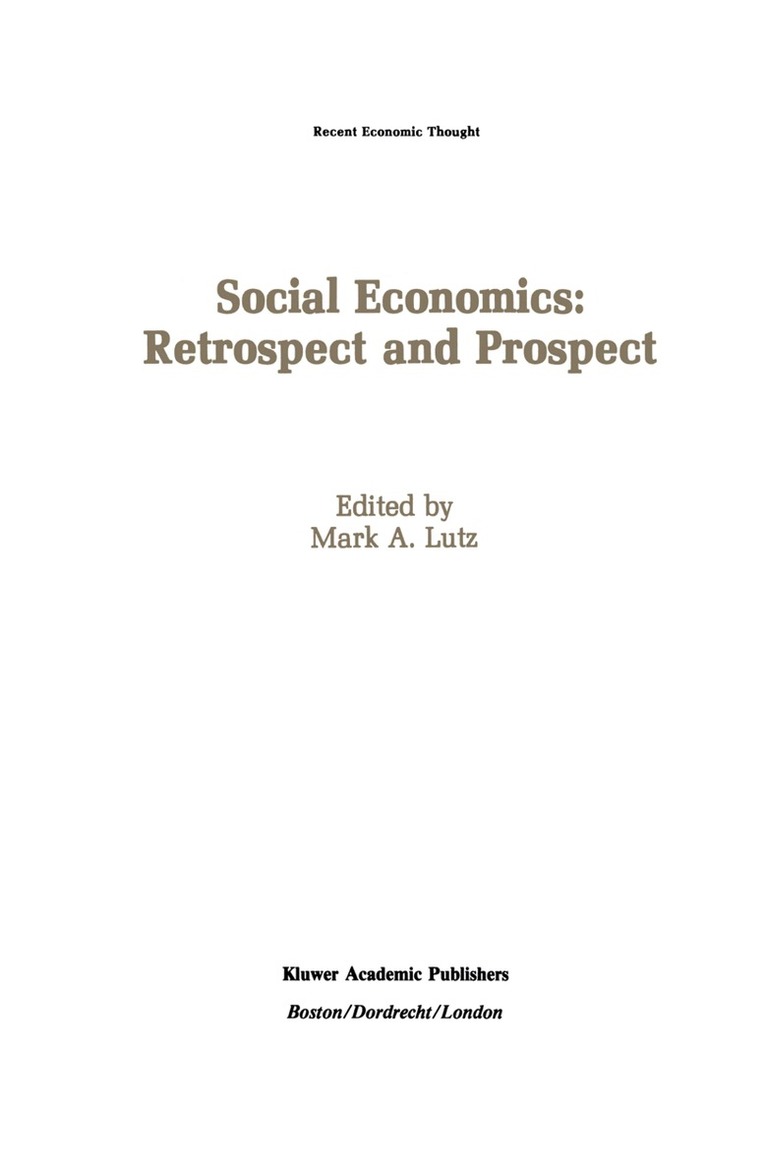
At the very heart of the conception of the present volume lies the conviction that social economics is a highly pluralistic discipline, inspired and enriched by several often radically different world views, Schumpeterian visions, and at times even quite antagonistic social doctrines. Yet, in spite of all these differences, social economists can nevertheless be seen and also approached as some kind of economic brotherhood for various reasons dissatisfied with the austere "value-free" diet offered by the pOSitivistic neoclassical paradigm. What all social economists seem to have in common is a profound interest in values and the process of valuation in order to more fully understand both economic behavior and the possibilities of improving the economic system. Such a distinguishing characteristic is also well articulated and enshrined in Article I of the Constitution of the Association of Social Economics where we are told that the aims and objectives of the Association shall be: 1. To foster research and publication centered on the reciprocal relationship between economic science and broader questions of human dignity, ethical values, and social philosophy, [and to] encourage the efforts of all scholars who are dedicated to exploring the ethical presuppositions and implications of economic science. 2. To consider the personal and social dimensions of economic problems and to assist in the formulation of economic policies consistent with a concern for ethical values and pluralistic community and the demands of personal dignity.
1 073 kr
Skickas inom 10-15 vardagar
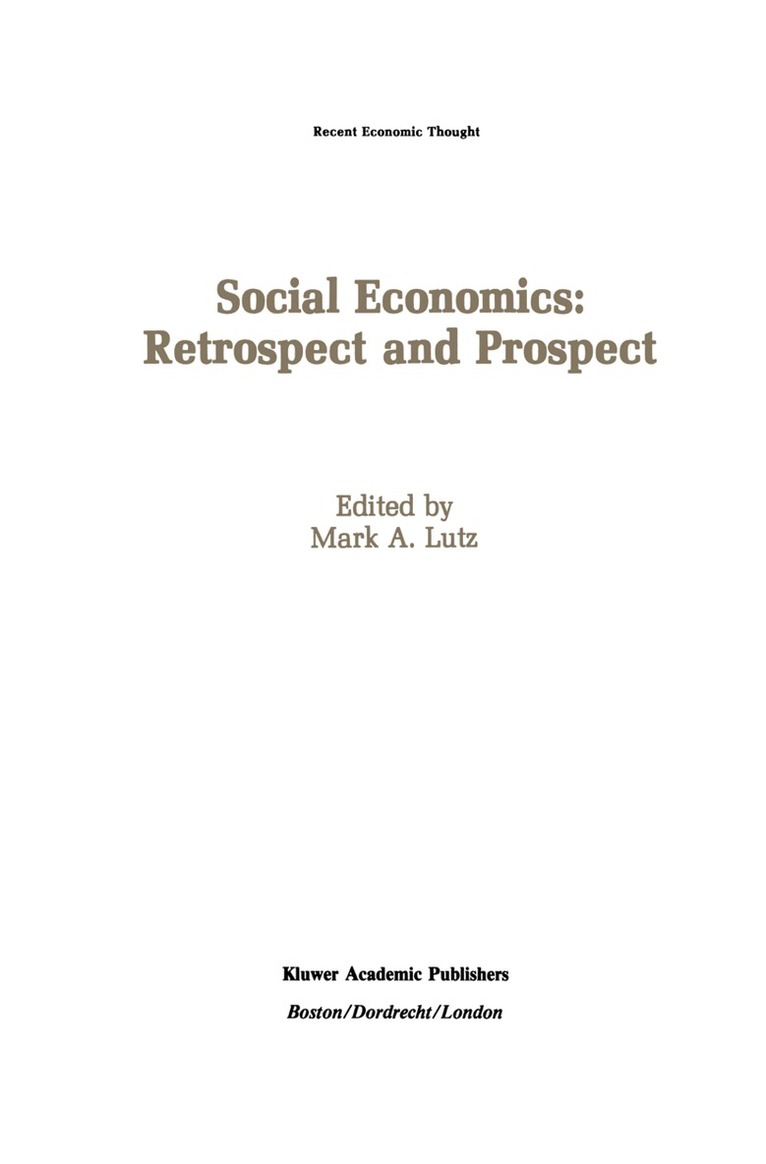
At the very heart of the conception of the present volume lies the conviction that social economics is a highly pluralistic discipline, inspired and enriched by several often radically different world views, Schumpeterian visions, and at times even quite antagonistic social doctrines. Yet, in spite of all these differences, social economists can nevertheless be seen and also approached as some kind of economic brotherhood for various reasons dissatisfied with the austere "value-free" diet offered by the pOSitivistic neoclassical paradigm. What all social economists seem to have in common is a profound interest in values and the process of valuation in order to more fully understand both economic behavior and the possibilities of improving the economic system. Such a distinguishing characteristic is also well articulated and enshrined in Article I of the Constitution of the Association of Social Economics where we are told that the aims and objectives of the Association shall be: 1. To foster research and publication centered on the reciprocal relationship between economic science and broader questions of human dignity, ethical values, and social philosophy, [and to] encourage the efforts of all scholars who are dedicated to exploring the ethical presuppositions and implications of economic science. 2. To consider the personal and social dimensions of economic problems and to assist in the formulation of economic policies consistent with a concern for ethical values and pluralistic community and the demands of personal dignity.