Mark B. Andersen - Böcker
Visar alla böcker från författaren Mark B. Andersen. Handla med fri frakt och snabb leverans.
3 produkter
3 produkter
Athlete Apperception Technique
Manual and Materials for Sport and Clinical Psychologists
Häftad, Engelska, 2021
323 kr
Skickas inom 10-15 vardagar
As the field of sport psychology has matured, so a greater appreciation for a diversity of training models, research methodologies, and therapeutic approaches, opposed to the dominant models of objective testing, has developed. The Athlete Apperception Technique (AAT) sets out a sport-specific projective test for practitioners working in sport and exercise service delivery or counselling work with athletes and coaches.This innovative book includes a basic primer on projective methods and the psychoanalytic theory behind them; a history of projective, storytelling instruments in clinical psychology; the development of the image set for the AAT; some examples of interpreting AAT image stories; instructions for the administration of the AAT; a scoring guide for the stories produced; and in-depth descriptions of the stimulus properties of each image in the AAT, along with all images presented as full-page illustrations.The AAT will help sport practitioners identify and assess personality features, relationships, anxieties, achievement, motivation, and perfectionism, and augment the recent shift in orientation for service delivery to athletes and provide a more in-depth understanding of athletes’ characters. The AAT is useful supplementary reading for students of sport psychology and a novel tool for any practicing sport psychologist.
Athlete Apperception Technique
Manual and Materials for Sport and Clinical Psychologists
Inbunden, Engelska, 2017
876 kr
Skickas inom 10-15 vardagar
As the field of sport psychology has matured, so a greater appreciation for a diversity of training models, research methodologies, and therapeutic approaches, opposed to the dominant models of objective testing, has developed. The Athlete Apperception Technique (AAT) sets out a sport-specific projective test for practitioners working in sport and exercise service delivery or counselling work with athletes and coaches.This innovative book includes a basic primer on projective methods and the psychoanalytic theory behind them; a history of projective, storytelling instruments in clinical psychology; the development of the image set for the AAT; some examples of interpreting AAT image stories; instructions for the administration of the AAT; a scoring guide for the stories produced; and in-depth descriptions of the stimulus properties of each image in the AAT, along with all images presented as full-page illustrations.The AAT will help sport practitioners identify and assess personality features, relationships, anxieties, achievement, motivation, and perfectionism, and augment the recent shift in orientation for service delivery to athletes and provide a more in-depth understanding of athletes’ characters. The AAT is useful supplementary reading for students of sport psychology and a novel tool for any practicing sport psychologist.
849 kr
Skickas inom 7-10 vardagar
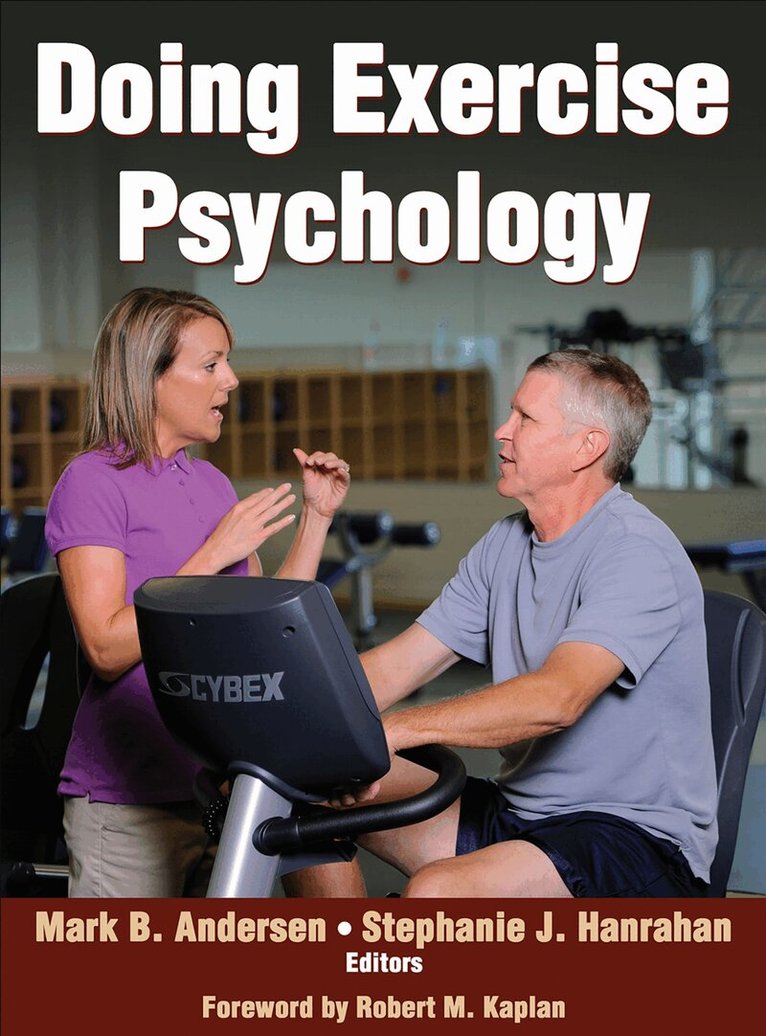
According to the President's Council on Fitness, Sports & Nutrition, "If exercise could be packaged into a pill, it would be the single most widely prescribed and beneficial medicine in the nation." Yet the incorporation of physical activity into a regular routine proves difficult for many. Bringing together a field of experts, Doing Exercise Psychology uses applied theories alongside authentic client interactions to address the challenging psychological components of physical activity. Doing Exercise Psychology helps students understand how to build connections with individual clients, strengthen the professional relationship through listening, and understand clients' needs. The text features diverse topics, bridging health psychology and exercise psychology and demonstrating the increasingly important role of physical activity in overall wellness and health. The first chapter is devoted to the development of mindfulness as a practitioner, while another addresses the difficulties professionals encounter with their own inactivity, encouraging self-reflection in order to be more helpful and open with clients. A key feature of many chapters in Doing Exercise Psychology is the in-the-trenches dialogue between practitioner and client, accompanied by follow-up commentary on what went right and what went wrong in particular sessions. Through these real-world scenarios, students will witness firsthand the methods that are most effective in communicating with clients. The text also explores complex questions such as these: • What are the implications and consequences of using exercise as a component of psychological therapies? • How can practitioners help clients with impaired movement abilities as a result of chronic conditions or illness embrace physical activity as part of their therapy or their lives? • How can exercise be incorporated in therapies to change nutrition, smoking, and alcohol habits? • Why are some exercise protocols that are extremely effective for some but not for others? • How can relationships, interrelatedness, and attunement to others be vehicles for healthy change in whatever kind of therapy is being done? The book is arranged so that information flows progressively, covering major themes early and then applying them to the field. Part I introduces the relationship-building motif by covering the variety of relationships that one might find in exercise and physical activity settings. Part II addresses specific conditions and behavior change, with suggestions for encouraging activity in those who are also working to quit smoking, reduce alcohol consumption, or modify their nutrition habits. Part III deals directly with chronic and major medical conditions that professionals will contend with on a regular basis, including cancer, heart disease, and multiple sclerosis. Part IV delves into the dark side of exercise, such as overtraining, exercise dependence, and eating disorders. A growing and exciting area of study, exercise psychology covers all the psychosocial, intra- and interpersonal, and cultural variables that come into play when people get together and exercise. Students and practitioners who work with individuals in exercise settings will find Doing Exercise Psychology a vital resource to refer to repeatedly in their practice.