Mark Ballow – författare
Visar alla böcker från författaren Mark Ballow. Handla med fri frakt och snabb leverans.
4 produkter
4 produkter
Inbunden, Engelska, 2020
923 kr
Skickas inom 10-15 vardagar
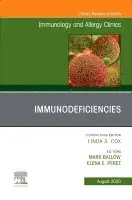
This issue of Immunology and Allergy Clinics, guest edited by Dr. Mark Ballow and Dr. Elena Perez, will provide up-to-date clinical concepts regarding Immunodeficiencies. Articles in this outstanding issue include: Precision Medicine for Patients with Primary Immune Dysregulation, Immune Disorders Associated with Abnormalities in Treg Cells, Defining Common Variable Immunodeficiency, The Importance of Primary Immune Deficiency Registries, Chronic Lung Disease in Primary Antibody Deficiency: Diagnosis and Management, Immune Deficiencies Associated with Th17 Immunity, Truths and Myths of Vaccines in Patients with Primary Immune Deficiency, The Nuts and Bolts of Subcutaneous Immunoglobulin Replacement Therapy, Newly Discovered Primary Immune Deficiencies, and Specific Antibody Deficiency.
Inbunden, Engelska, 1992
2 239 kr
Skickas inom 10-15 vardagar
It has been little more than a century since Emil von Behring and his colleagues (1890) showed that the blood of tetanus-immune rabbits contained a factor that could be transferred to nonimmune animals to protect them against tetanus. These observations, together with the work of Paul Ehrlich, started scientists on the long and complex path to our present understanding of the humoral, or B-cell, immune system. These early studies led to Nobel prize awards for von Behring (1901 ) and Ehrlich (1908), each of whom contributed much to our knowledge of the B-cell immune system. In the early 20th century it was recognized that the serum of individuals who had recently suffered an infection contained a protective humoral factor that could be transferred to a nonimmune person, thereafter affording that individual protection against the infectious agent that had caused disease. In 1933 McKhann and Chu reported that a placental extract containing the globulin fraction could modify measles. However, it was not until 1939 that Tiselius and Kabat demonstrated that the antibodies responsible for protection against these infectious disorders resided within the gammaglobulin plasma fraction. In a major step forward, Cohn in 1944 established a method for the fractionation and purification of this plasma gammaglobulin fraction. These procedures, which are based on cold ethanol precipitation of plasma, produce a readily adaptable, large-scale fractionation procedure that is still utilized to this day in the preparation of commercial gammaglobulin.
E-bok
PDF, Engelska, 20121 459 kr
Läs direkt efter köp
It has been little more than a century since Emil von Behring and his colleagues (1890) showed that the blood of tetanus-immune rabbits contained a factor that could be transferred to nonimmune animals to protect them against tetanus. These observations, together with the work of Paul Ehrlich, started scientists on the long and complex path to our present understanding of the humoral, or B-cell, immune system. These early studies led to Nobel prize awards for von Behring (1901 ) and Ehrlich (1908), each of whom contributed much to our knowledge of the B-cell immune system. In the early 20th century it was recognized that the serum of individuals who had recently suffered an infection contained a protective humoral factor that could be transferred to a nonimmune person, thereafter affording that individual protection against the infectious agent that had caused disease. In 1933 McKhann and Chu reported that a placental extract containing the globulin fraction could modify measles. However, it was not until 1939 that Tiselius and Kabat demonstrated that the antibodies responsible for protection against these infectious disorders resided within the gammaglobulin plasma fraction. In a major step forward, Cohn in 1944 established a method for the fractionation and purification of this plasma gammaglobulin fraction. These procedures, which are based on cold ethanol precipitation of plasma, produce a readily adaptable, large-scale fractionation procedure that is still utilized to this day in the preparation of commercial gammaglobulin.
Häftad, Engelska, 2013
1 123 kr
Skickas inom 10-15 vardagar
It has been little more than a century since Emil von Behring and his colleagues (1890) showed that the blood of tetanus-immune rabbits contained a factor that could be transferred to nonimmune animals to protect them against tetanus. These observations, together with the work of Paul Ehrlich, started scientists on the long and complex path to our present understanding of the humoral, or B-cell, immune system. These early studies led to Nobel prize awards for von Behring (1901 ) and Ehrlich (1908), each of whom contributed much to our knowledge of the B-cell immune system. In the early 20th century it was recognized that the serum of individuals who had recently suffered an infection contained a protective humoral factor that could be transferred to a nonimmune person, thereafter affording that individual protection against the infectious agent that had caused disease. In 1933 McKhann and Chu reported that a placental extract containing the globulin fraction could modify measles. However, it was not until 1939 that Tiselius and Kabat demonstrated that the antibodies responsible for protection against these infectious disorders resided within the gammaglobulin plasma fraction. In a major step forward, Cohn in 1944 established a method for the fractionation and purification of this plasma gammaglobulin fraction. These procedures, which are based on cold ethanol precipitation of plasma, produce a readily adaptable, large-scale fractionation procedure that is still utilized to this day in the preparation of commercial gammaglobulin.