Mark Biondich – författare
Visar alla böcker från författaren Mark Biondich. Handla med fri frakt och snabb leverans.
4 produkter
4 produkter
E-bok
PDF, Engelska, 20111 668 kr
Läs direkt efter köp
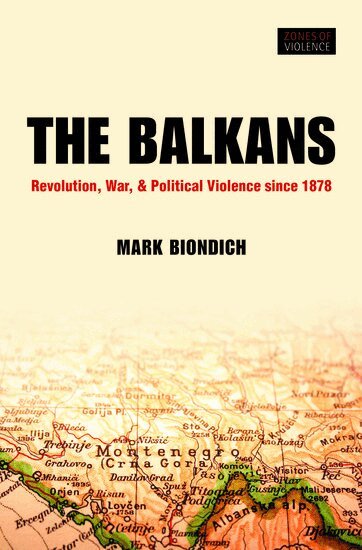
The Balkans has long been a place of encounter among different peoples, religions, and civilizations, resulting in a rich cultural tapestry and mosaic of nationalities. But it has also been burdened by a traumatic post-colonial experience. The transition from traditional multinational empires to modern nation-states has been accompanied by large-scale political violence that has resulted in the deaths of hundreds of thousands and the permanent displacement ofmillions more.Mark Biondich examines the origins of these conflicts, while treating the region as an integral part of modern European history, shaped by much the same forces and intellectual impulses. It reminds us that political violence and ethnic cleansing have scarcely been unique to the Balkans.As Biondich shows, the political violence that has bedevilled the region since the late nineteenth century stemmed from modernity and the ideology of integral nationalism, employed by states that were dominated by democratizing or authoritarian nationalizing elites committed to national homogeneity. Throughout this period, the Balkan proponents of democratic governance, civil society, and multiculturalism were progressively marginalized. The history of revolution, war, political violence, andethnic cleansing in the modern Balkans is above all the story of this tragic marginalization.
Inbunden, Engelska, 2011
1 848 kr
Skickas inom 5-8 vardagar
The Balkans has long been a place of encounter among different peoples, religions, and civilizations, resulting in a rich cultural tapestry and mosaic of nationalities. But it has also been burdened by a traumatic post-colonial experience. The transition from traditional multinational empires to modern nation-states has been accompanied by large-scale political violence that has resulted in the deaths of hundreds of thousands and the permanent displacement of millions more. Mark Biondich examines the origins of these conflicts, while treating the region as an integral part of modern European history, shaped by much the same forces and intellectual impulses. It reminds us that political violence and ethnic cleansing have scarcely been unique to the Balkans. As Biondich shows, the political violence that has bedevilled the region since the late nineteenth century stemmed from modernity and the ideology of integral nationalism, employed by states that were dominated by democratizing or authoritarian nationalizing elites committed to national homogeneity. Throughout this period, the Balkan proponents of democratic governance, civil society, and multiculturalism were progressively marginalized. The history of revolution, war, political violence, and ethnic cleansing in the modern Balkans is above all the story of this tragic marginalization.
Häftad, Engelska, 2019
667 kr
Skickas inom 3-6 vardagar
E-bok
PDF, Engelska, 20001 124 kr
Läs direkt efter köp
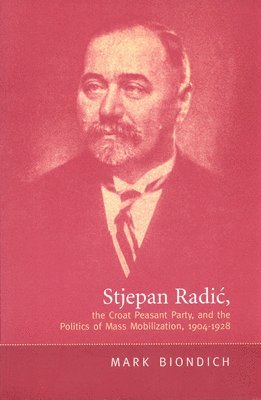
The name Stjepan Radic is as well known to Croatians as Sir John A. MacDonald is to Canadians. In 1904, Radic mobilized the peasantry to form a populist movement that resulted in the Croat Peasant Party. The CPP fought to reform Yugoslavia's centralist state system and to amend the structural flaws of the parliamentary system. His assassination in 1928 marked the end of the country's short democratic experience; a royalist dictatorship immediately followed. Croatia failed to achieve statehood or autonomy within Yugoslavia, but Radic's indisputably dominant role in the formation of Croatian national consciousness is widely celebrated among Croatians today.The story of this charismatic, ideologically eclectic politician and his role in nation-building makes for fascinating reading. In North America, with our increasing involvement in the political conflicts of the former Yugoslavia, we cannot afford to remain ignorant of the major historical forces involved in the early Serb/Croat struggles for power and identity. This is an essential work for political scientists and other specialists in the area.