Mark Bredin – författare
Visar alla böcker från författaren . Handla med fri frakt och snabb leverans.
5 produkter
5 produkter
E-bok
PDF, Engelska, 20062 724 kr
Läs direkt efter köp
The essays collected here approach the book of Tobit from a range of disciplines: literary, feminist, anthropological, imagination, theological, textual and historical. This multi-disciplinary approach will generate new ideas and approaches to the book of Tobit. The essays vary not only in methodology used, but also in the texts that they examine. The book considers in detail some Latin manuscripts, encompassing an article introducing a print of the Ceriani Latin text, and includes an overview of the Old Latin textual tradition and context. There is a comparison between two Greek manuscripts of Tobit 14 and a re-examination of the place of origin of the text. A social anthropological reading of the book is also included. The subject of Tobit in 17th century novels is considered, along with a study of Kierkergard and Tobit. Also incorporated is an examination of the Aramaic fragments from Qumran, and their significance to New Testament studies. Intertextual studies of the book are considered in reference to the influence of Deuteronomy and the significance this has for exegesis of Tobit is analyzed. This is volume 55 in the Library of Second Temple Studies series (formerly the Journal for the Study of the Pseudepigrapha Supplement series).
Inbunden, Engelska, 2006
2 515 kr
Skickas inom 10-15 vardagar
The essays collected here approach the book of Tobit from a range of disciplines: literary, feminist, anthropological, imagination, theological, textual and historical. This multi-disciplinary approach will generate new ideas and approaches to the book of Tobit. The essays vary not only in methodology used, but also in the texts that they examine. The book considers in detail some Latin manuscripts, encompassing an article introducing a print of the Ceriani Latin text, and includes an overview of the Old Latin textual tradition and context. There is a comparison between two Greek manuscripts of Tobit 14 and a re-examination of the place of origin of the text. A social anthropological reading of the book is also included. The subject of Tobit in 17th century novels is considered, along with a study of Kierkergard and Tobit. Also incorporated is an examination of the Aramaic fragments from Qumran, and their significance to New Testament studies. Intertextual studies of the book are considered in reference to the influence of Deuteronomy and the significance this has for exegesis of Tobit is analyzed.This is volume 55 in the Library of Second Temple Studies series (formerly the Journal for the Study of the Pseudepigrapha Supplement series).
Häftad, Engelska, 2010
349 kr
Skickas inom 3-6 vardagar
E-bok
Engelska, 2012287 kr
Läs direkt efter köp
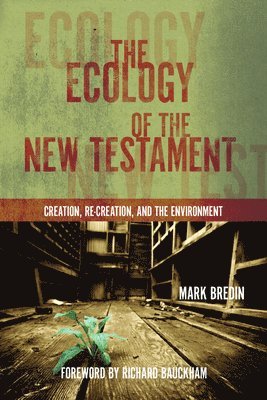
God is the Creator of all and cares deeply for all that he has made. His vision for creation is seen through a world teeming with life where eternity is breathed into and through all creation. Jesus teaches that humans must live with a spirit of generosity and restraint; however, a spirit of meanness and greed dominates human culture and leaves nearly 1.3 billion people living on less than $1 a day. The politics of globalization based on principles of greed have resulted in the loss of biodiversity, deforestation, and a shortage of food and clean water. Jesus teaches that those who are generous are blessed, and such generosity brings justice to all creation. There cannot be God''s social justice without ecological sanity, and yet we tend to speak of social justice as though non-human creation doesn''t matter. God cares even for the flowers of the field, yet we show contempt for God in our careless plunder of his creation. To love God is to love all that he has made, from our own families to the soil outside our homes.
E-bok
Engelska, 2017488 kr
Läs direkt efter köp
Is Jesus relevant to the sufferings of the helpless, the voiceless, those dying of hunger, those traumatized by violence, people with learning difficulties? In Matthew, we see Jesus to be a man on the frontline, battling against the forces that stop the non-poor from living generously, and the poorest of the poor living abundantly the way God intended. This is Jesus as one who in his very being is an expression of God''s wrath against human beings who live their lives as if creation is a battle zone where only the selfish and powerful flourish. Matthew''s Jesus is outraged at the lethargy and apathy that permits non-poor people to live according to practices that lead so many to be excluded from the fruits of God''s creation. But the Jesus found in this gospel is also one who teaches that God has created a world that is good to see; it is abundant as long as people live according to the dynamic order God has inwardly established in creation, one rooted in generosity, hospitality, love, self-sacrifice, righteousness, justice, Torah, and mercy.