Mark Brennan – författare
2 405 kr
Skickas inom 10-15 vardagar
783 kr
Skickas inom 10-15 vardagar
597 kr
Skickas inom 5-8 vardagar
2 193 kr
Skickas inom 10-15 vardagar
853 kr
Skickas inom 10-15 vardagar
437 kr
Läs direkt efter köp
Examine the questions of how, what, and why associated with religiousness and spirituality in the lives of older adults! New Directions in the Study of Late Life Religiousness and Spirituality explores new ways of thinking about a topic that was once taboo but that has now attracted considerable attention from the gerontological community. It examines various approaches to methodology and definition that are used in the study of religion, spirituality, and aging. In addition, it explores the ways that gerontological research can highlight the role of religion and spirituality in the lives of older adults. The first section will introduce you to new ways of thinking about research methodology and data analysis that can be applied to studying the complexity of older adults'' religious/spiritual practice and beliefs. You''ll learn several approaches to the study of phenomena that are both personal and also deeply embedded in community. The second section addresses issues of definition, exploring important questions that call for critical reflection, such as: What are we studying? What social and psychological influences shape our thinking about definition? and Do the definitions used by gerontologists match those held by older people? The final section moves the study of religion, spirituality, and aging beyond a focus on health and mortality to examine well-being more broadly in the context of the life experiences of older adults. Here is a small sample of what you''ll learn about in New Directions in the Study of Late Life Religiousness and Spirituality:
structural equation modelinga statistical method designed to capture the dynamics inherent in the passage of time feminist qualitative methods for studying spiritual resiliency in older women spirituality as a public health issue the differences between groups of older people in the way they define religion and spirituality the psychosocial implications of two types of religious orientationdwelling and seeking older women''s responses to the experience of widowhood and to the question of whether their religious beliefs were affected by the experience how social context influences our decisions and our interpretations of people''s religious beliefs, behaviors, and experiences the ways that people caring for a spouse with dementia rely on religious coping a model that delineates three different ways people relate to God in copingand a study that asks whether these types of coping produce different outcomes for caregivers how people adjust to bereavement as a function of their beliefs about an afterlife437 kr
Läs direkt efter köp
Examine the questions of how, what, and why associated with religiousness and spirituality in the lives of older adults! New Directions in the Study of Late Life Religiousness and Spirituality explores new ways of thinking about a topic that was once taboo but that has now attracted considerable attention from the gerontological community. It examines various approaches to methodology and definition that are used in the study of religion, spirituality, and aging. In addition, it explores the ways that gerontological research can highlight the role of religion and spirituality in the lives of older adults. The first section will introduce you to new ways of thinking about research methodology and data analysis that can be applied to studying the complexity of older adults'' religious/spiritual practice and beliefs. You''ll learn several approaches to the study of phenomena that are both personal and also deeply embedded in community. The second section addresses issues of definition, exploring important questions that call for critical reflection, such as: What are we studying? What social and psychological influences shape our thinking about definition? and Do the definitions used by gerontologists match those held by older people? The final section moves the study of religion, spirituality, and aging beyond a focus on health and mortality to examine well-being more broadly in the context of the life experiences of older adults. Here is a small sample of what you''ll learn about in New Directions in the Study of Late Life Religiousness and Spirituality:
structural equation modelinga statistical method designed to capture the dynamics inherent in the passage of time feminist qualitative methods for studying spiritual resiliency in older women spirituality as a public health issue the differences between groups of older people in the way they define religion and spirituality the psychosocial implications of two types of religious orientationdwelling and seeking older women''s responses to the experience of widowhood and to the question of whether their religious beliefs were affected by the experience how social context influences our decisions and our interpretations of people''s religious beliefs, behaviors, and experiences the ways that people caring for a spouse with dementia rely on religious coping a model that delineates three different ways people relate to God in copingand a study that asks whether these types of coping produce different outcomes for caregivers how people adjust to bereavement as a function of their beliefs about an afterlife952 kr
Läs direkt efter köp
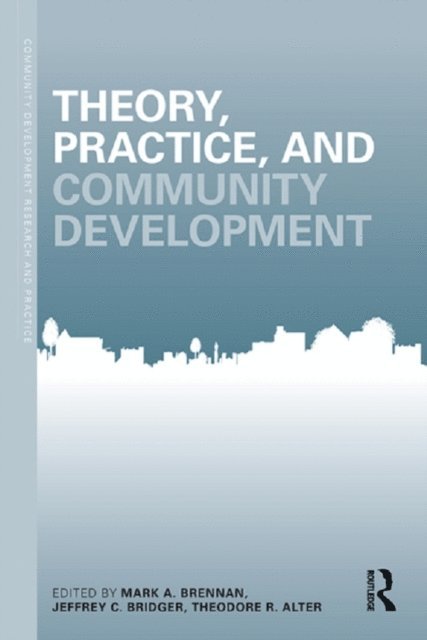
For many scholars, the study of community and community development is at a crossroads. Previously dynamic theories appear not to have kept pace with the major social changes of our day. Given our constantly shifting social reality we need new ideas and research that pushes the boundaries of our extant community theories. Theory, Practice, and Community Development stretches the traditional boundaries and applications of well-established community development theory, and establishes new theoretical approaches rooted in new disciplines and new perspectives on community development.
Expanded from a special issue of the journal Community Development, Theory, Practice, and Community Development collects previously published and widely cited essays, as well as new theoretical and empirical research in community development. Compiled by the editors of Community Development, the essays feature topics as varied as placemaking, democratic theory and rural organizing. Theory, Practice, and Community Development is vital for scholars and practitioners coming to grips with the rapidly changing definition of community.
952 kr
Läs direkt efter köp
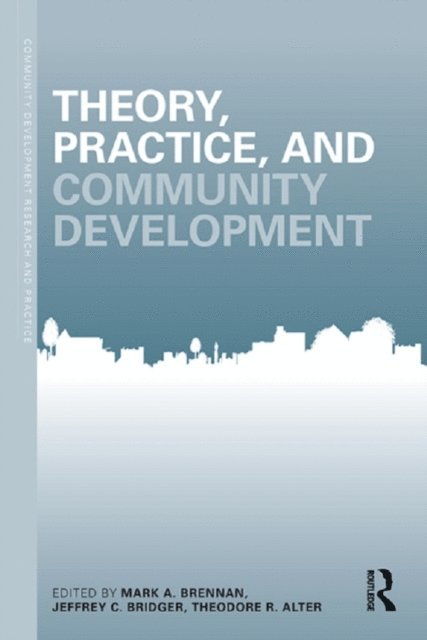
For many scholars, the study of community and community development is at a crossroads. Previously dynamic theories appear not to have kept pace with the major social changes of our day. Given our constantly shifting social reality we need new ideas and research that pushes the boundaries of our extant community theories. Theory, Practice, and Community Development stretches the traditional boundaries and applications of well-established community development theory, and establishes new theoretical approaches rooted in new disciplines and new perspectives on community development.
Expanded from a special issue of the journal Community Development, Theory, Practice, and Community Development collects previously published and widely cited essays, as well as new theoretical and empirical research in community development. Compiled by the editors of Community Development, the essays feature topics as varied as placemaking, democratic theory and rural organizing. Theory, Practice, and Community Development is vital for scholars and practitioners coming to grips with the rapidly changing definition of community.
1 009 kr
Läs direkt efter köp
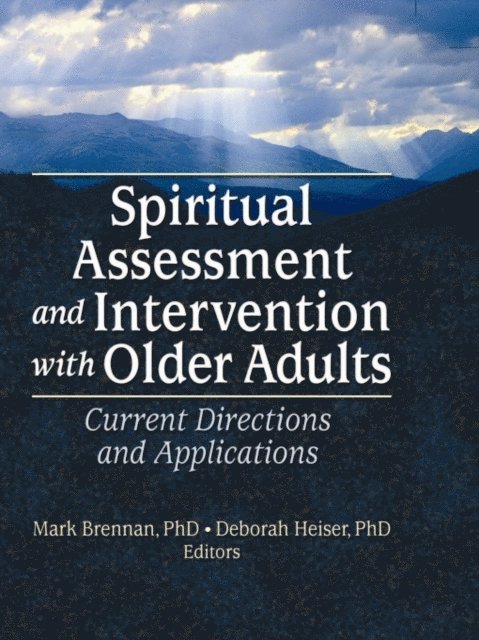
Stay up-to-date with the latest innovative methods of meeting the spiritual needs of the elderly Spiritual Assessment and Intervention: Current Directions and Applications examines current state-of-the-art efforts in the development and implementation of spiritual interventions for older adults. Academics and practitioners working in social work, social welfare, medicine, and mental health and aging present innovative approaches to meeting major challenges in the field of gerontology, including elder abuse, dementia, care giving, palliative care, and intergenerational relationships. The book provides practical methods for dealing with the problems and pitfalls of starting and evaluating interventions of a spiritual nature in a variety of community-based and institutional settings. Spiritual Assessment and Intervention: Current Directions and Applications provides you with an overview of current and future methods and means of providing spiritual support to the elderly as they struggle with the problems and possibilities of aging in today’s complex world. Growing interest in the positive effects that religiousness and spirituality can have on life stress has created a growing need for research and practice models that strengthen, reinforce, or promote the spiritual well-being of older adults. This collectionfirst presented in 2003 at the 56th Annual Scientific Meeting of the Gerontological Society of Americaaddresses the important care giving and practice issues involving the physical and psychological health of older adults.Spiritual Assessment and Intervention: Current Directions and Applications examines:
how older adults use narrative therapy to manage adversity and maintain self-efficacy how faith-based communities can be enlisted as important social resources a pilot government-funded project to raise awareness of elder abuse in faith communities an intergenerational project involving a preschool and a retirement community spiritual activities for adults with Alzheimer’s disease the Creating Alternative Relaxing Environment (CARE) Cabinet interventionSpiritual Assessment and Intervention: Current Directions and Applications is an essential resource for gerontological practitioners from the biological, clinical (including physicians, physician assistants, nurses, and dentists), behavioral and social sciences (including anthropologists, psychologists, social workers, sociologists, and researchers), and for health care administrators.
1 009 kr
Läs direkt efter köp
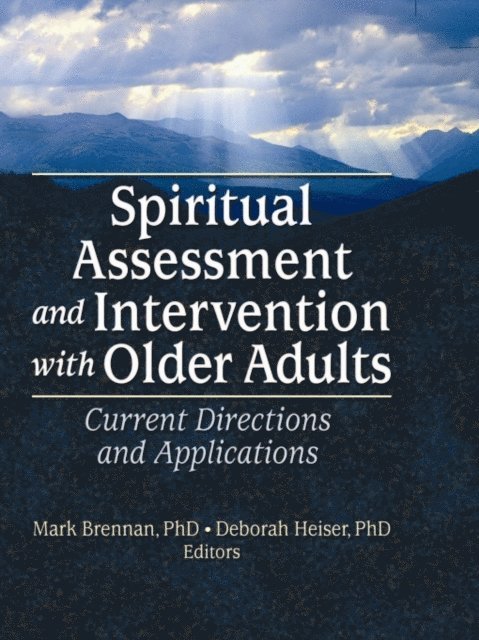
Stay up-to-date with the latest innovative methods of meeting the spiritual needs of the elderly Spiritual Assessment and Intervention: Current Directions and Applications examines current state-of-the-art efforts in the development and implementation of spiritual interventions for older adults. Academics and practitioners working in social work, social welfare, medicine, and mental health and aging present innovative approaches to meeting major challenges in the field of gerontology, including elder abuse, dementia, care giving, palliative care, and intergenerational relationships. The book provides practical methods for dealing with the problems and pitfalls of starting and evaluating interventions of a spiritual nature in a variety of community-based and institutional settings. Spiritual Assessment and Intervention: Current Directions and Applications provides you with an overview of current and future methods and means of providing spiritual support to the elderly as they struggle with the problems and possibilities of aging in today’s complex world. Growing interest in the positive effects that religiousness and spirituality can have on life stress has created a growing need for research and practice models that strengthen, reinforce, or promote the spiritual well-being of older adults. This collectionfirst presented in 2003 at the 56th Annual Scientific Meeting of the Gerontological Society of Americaaddresses the important care giving and practice issues involving the physical and psychological health of older adults.Spiritual Assessment and Intervention: Current Directions and Applications examines:
how older adults use narrative therapy to manage adversity and maintain self-efficacy how faith-based communities can be enlisted as important social resources a pilot government-funded project to raise awareness of elder abuse in faith communities an intergenerational project involving a preschool and a retirement community spiritual activities for adults with Alzheimer’s disease the Creating Alternative Relaxing Environment (CARE) Cabinet interventionSpiritual Assessment and Intervention: Current Directions and Applications is an essential resource for gerontological practitioners from the biological, clinical (including physicians, physician assistants, nurses, and dentists), behavioral and social sciences (including anthropologists, psychologists, social workers, sociologists, and researchers), and for health care administrators.
285 kr
Skickas inom 5-8 vardagar
154 kr
Skickas inom 5-8 vardagar
208 kr
Läs direkt efter köp
The right name for a child is important. No one understood this better than Chance Branch. As he grew to over 400 pounds, the derogatory nickname Fat Chance became unavoidable.
If his problems ended there, it might not be so bad. But life had other plans for Chance-from an embarrassing lisp to a height of nearly 7 feet, he was destined to be an easy target for his cruel peers. The hot summers of southern Missouri, a meager home, and absentee parents offered him no reprieve from the struggle. He has little choice but to suffer and find small pleasures wherever he can.
This is no longer an option when Chip Smith-a bully unlike any other-comes to the high school and challenges Chance''s right to live in peace. Laying low won''t suffice; he must take control of his life, or risk losing it.
103 kr
Skickas inom 5-8 vardagar
35 kr
Läs direkt efter köp
When Anna''s husband dies suddenly, she''s left to mourn the kind of man he was: a relentless jokester. In the weeks following his death, she still expects Graham to jump out and scare her, or to fall for one of his booby traps. In this way, it feels like he''s still with her.
This sentimental connection becomes much more real when the pranks keep happening. One after another, Graham''s gags let Anna know he may not be gone from her life forever.
269 kr
Tillfälligt slut