Mark E. Byington – författare
Visar alla böcker från författaren Mark E. Byington. Handla med fri frakt och snabb leverans.
6 produkter
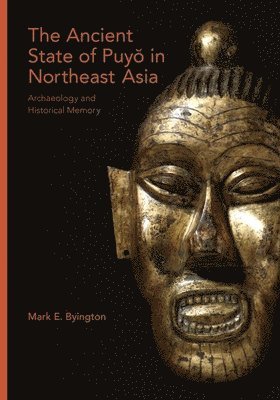
Ancient State of Puyŏ in Northeast Asia
Archaeology and Historical Memory
Inbunden, 2016
534 kr
Lägg i varukorg
Mark E. Byington explores the formation, history, and legacy of the ancient state of Puyŏ, which existed in central Manchuria from the third century BCE until the late fifth century CE. As the earliest archaeologically attested state to arise in northeastern Asia, Puyŏ occupies an important place …
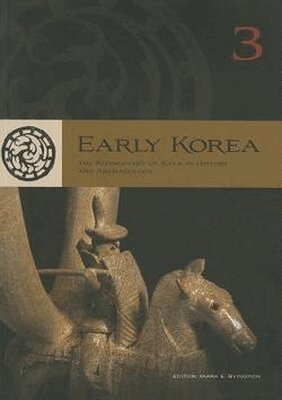
Early Korea 3
The Rediscovery of Kaya in History and Archaeology
Häftad, 2012
334 kr
Lägg i varukorg
Early Korea is dedicated to developing the fields of early Korean history and archaeology in the English language. Volume Three features six articles written by Korean scholars who specialise in the subjects presented herein. The featured section includes three articles written on the Kaya polities …
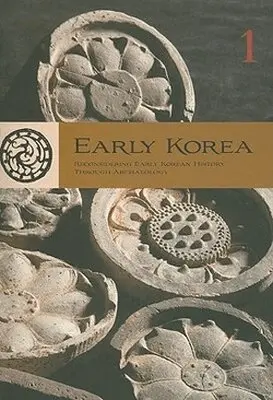
Early Korea
Reconsidering Early Korean History Through Archaeology
Av Mark E. Byington, Mark E. Byington m. fl.
Häftad, 2008
354 kr
Tillfälligt slut
Early Korea is dedicated to developing the fields of early Korean history and archaeology in the English language. The present volume consists of six scholarly works by specialists active in these fields. Three studies focus on the topic of recent advances in historical archaeology on the Korean …
Early Korea 2
The Samhan Period in Korean History
Häftad, 2010
340 kr
Tillfälligt slut
Early Korea, a publication of the Early Korea Project at the Korea Institute, Harvard University, is a series designed to promote and develop studies of early Korean history and archaeology in the English language. While these fields are active and dynamic in East Asia, they are only beginning to …
Han Commanderies in Early Korean History
Av Mark E. Byington, Mark E. Byington
Inbunden, 2014
586 kr
Tillfälligt slut
This volume, consisting of ten chapters and an introduction, treats that period of the history of the Korean peninsula characterized by the presence of commanderies first established by the Chinese Han empire in 108 B.C. The ten chapters of this volume address such topics as the societies that …
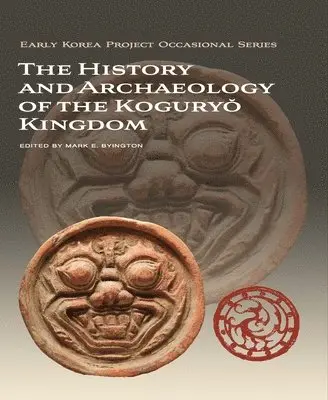
History and Archaeology of the Kogury? Kingdom
Inbunden, 2016
586 kr
Tillfälligt slut
This volume contains twelve studies on the history and archaeology of the Kogury? kingdom, which existed from the first century B.C. to 668, its territories encompassing the northern part of the Korean peninsula and much of southern Manchuria. The studies presented here were written by specialists …