Mark E. King - Böcker
Visar alla böcker från författaren Mark E. King. Handla med fri frakt och snabb leverans.
3 produkter
3 produkter
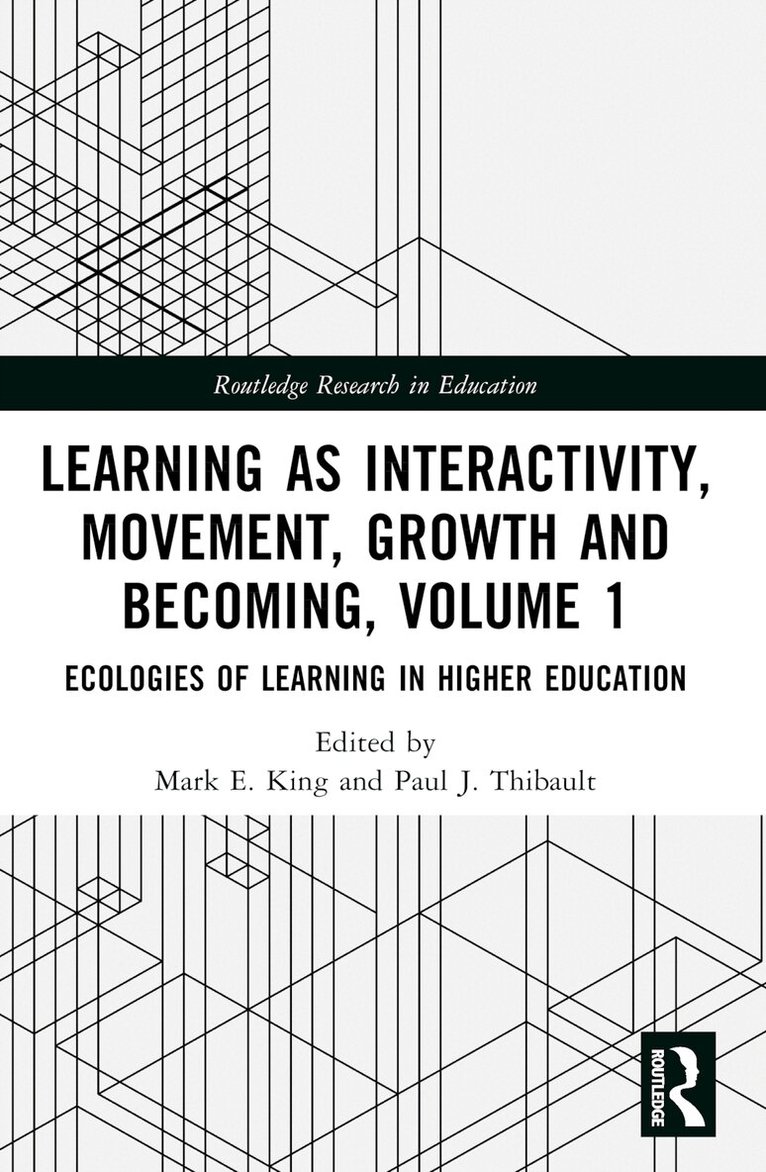
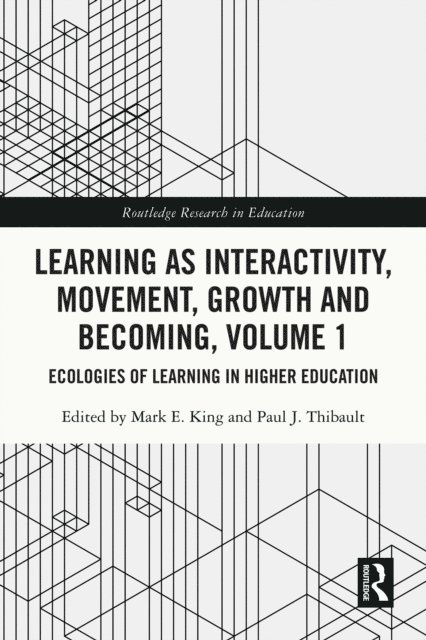
Learning as Interactivity, Movement, Growth and Becoming, Volume 1
Ecologies of Learning in Higher Education
Häftad, Engelska, 2024
547 kr
Skickas inom 10-15 vardagar
The two inter-linked volumes in this series are dedicated to the development of analysis and theorisation of learning and teaching in higher education. The two volumes focus on the multi-scalar ecological inter-connectedness of learners with teachers, with artefacts, with cultural patterns and resources, with places, with social activities and practices, with social institutions, with time and temporality, and with technologies. Learning reflects inter-individual dynamics that are shaped by biology and culture.Against prevailing orthodoxies that view learning in higher education in terms of "information transmission" and "content delivery," the contributors articulate leading developments in distributed cognition, distributed language, ecological psychology, enactivist and embodied-embedded cognitive science, interactivity, and multimodal event analysis. They also extend several earlier traditions such as American pragmatism, embodied curriculum theory, and Vygotsky's latter day anti-dualist Spinozan turn.Through detailed empirical analysis of in vivo episodes of learning using multimodal event analysis, cognitive event analysis, and cutting-edge theory, the authors show how and why learning is not adequately explainable as internal mental processes per se. Instead, sophisticated empirical analysis and innovative theory are put to work to reveal the emergence of learning in the interactivity of learners and teachers with the affordances of a distributed brain-body-environment learning system.Volume 1 is an edited collection of seven chapters written by internationally renowned researchers together with an Introduction and an Afterword written by King and Thibault. Volume 1 (and its successor Volume 2) will serve as valuable reading for educationalists and researchers in the cognitive, communication, learning, and language sciences who are looking for new multidimensional tools for thinking about, and new empirical tools for analysing, learning, and teaching as multi-scalar interactive processes in radical embodied ecologies of learning and teaching.
Learning as Interactivity, Movement, Growth and Becoming, Volume 1
Ecologies of Learning in Higher Education
Inbunden, Engelska, 2023
2 029 kr
Skickas inom 10-15 vardagar
The two inter-linked volumes in this series are dedicated to the development of analysis and theorisation of learning and teaching in higher education. The two volumes focus on the multi-scalar ecological inter-connectedness of learners with teachers, with artefacts, with cultural patterns and resources, with places, with social activities and practices, with social institutions, with time and temporality, and with technologies. Learning reflects inter-individual dynamics that are shaped by biology and culture.Against prevailing orthodoxies that view learning in higher education in terms of "information transmission" and "content delivery," the contributors articulate leading developments in distributed cognition, distributed language, ecological psychology, enactivist and embodied-embedded cognitive science, interactivity, and multimodal event analysis. They also extend several earlier traditions such as American pragmatism, embodied curriculum theory, and Vygotsky's latter day anti-dualist Spinozan turn.Through detailed empirical analysis of in vivo episodes of learning using multimodal event analysis, cognitive event analysis, and cutting-edge theory, the authors show how and why learning is not adequately explainable as internal mental processes per se. Instead, sophisticated empirical analysis and innovative theory are put to work to reveal the emergence of learning in the interactivity of learners and teachers with the affordances of a distributed brain-body-environment learning system.Volume 1 is an edited collection of seven chapters written by internationally renowned researchers together with an Introduction and an Afterword written by King and Thibault. Volume 1 (and its successor Volume 2) will serve as valuable reading for educationalists and researchers in the cognitive, communication, learning, and language sciences who are looking for new multidimensional tools for thinking about, and new empirical tools for analysing, learning, and teaching as multi-scalar interactive processes in radical embodied ecologies of learning and teaching.
698 kr
Skickas inom 3-6 vardagar
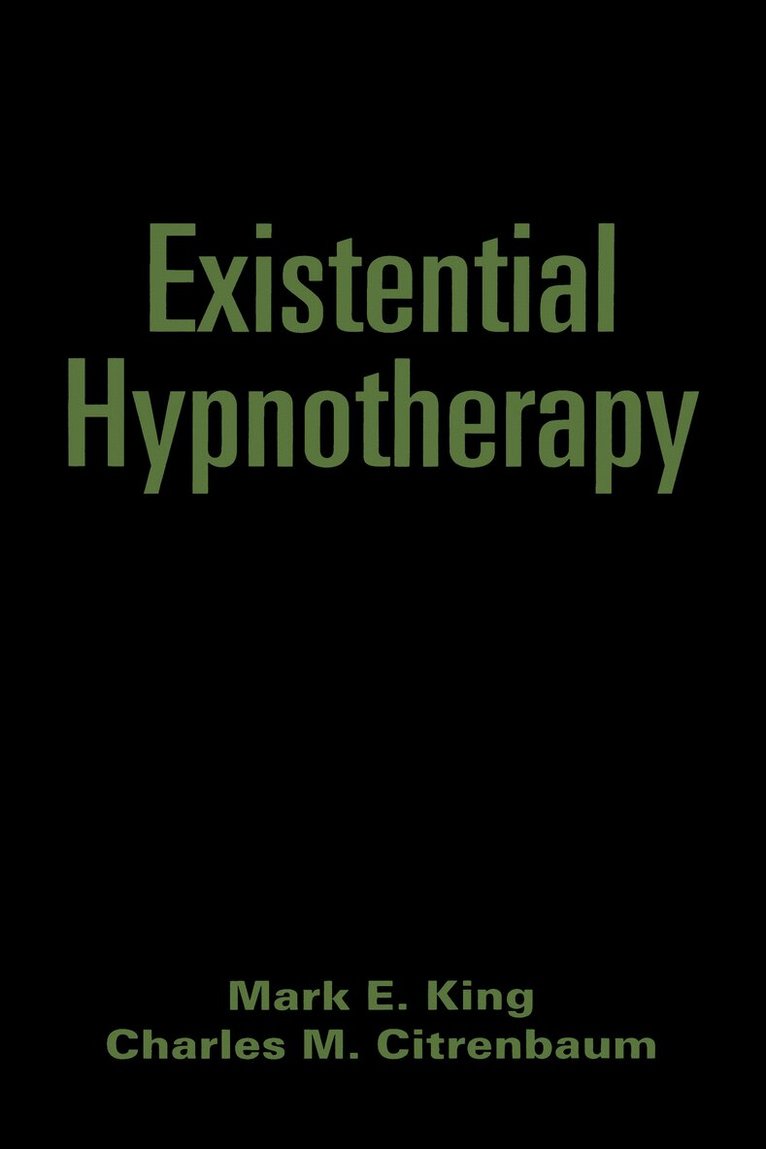
Existential philosophy provides a useful theoretical foundation for successful hypnotherapy because it stresses the importance of the client's experience over any preconceived notions or diagnoses. By using the client's reality as the basis of clinical work, the therapist can help the client break self-destructive habits and maintain healthy patterns of behavior without relying solely on behavioral techniques. Presenting an innovative approach to psychotherapy that is firmly rooted in philosophy, Existential Hypnotherapy bridges the gap between technique and theory. Addressing theoretical themes, the book's initial chapters discuss significant issues for psychotherapy in general, and hypnotherapy in particular, with special attention paid to the nature of diagnosis and concepts of addiction. Chapters introduce the reader to the work of various existential philosophers, including Kierkegaard, Nietzsche, and Sartre. Bound to stir controversy, the authors persuasively argue that hypnosis should not be considered a state or altered consciousness, and that there is no such thing as self-hypnosis. Instead, they demonstrate that all clinical hypnosis belongs to the therapist-patient dialogue. The book then focuses on specific hypnotherapy techniques that may be linked to desired therapeutic outcomes. These strategies include ways to help patients manage anxiety, and empower them to make needed life changes; methods for illuminating the existential meaning of symptoms to help patients break bad habits; and the utilization of patients' metaphors in treatment. Also discussed is the inadequacy of measurement scales that are supposed to determine a patient's ability to be hypnotized. Unique and thought-provoking, Existential Hypnotherapy is an important guide for any practitioner in the mental health field who uses clinical hypnosis as a tool, regardless of his or her training or orientation. Providing an accessible review of the basic principles of existential thought, it is also useful for instructors and students using philosophy to ground their psychological work.