Mark Gorman – författare
Visar alla böcker från författaren . Handla med fri frakt och snabb leverans.
4 produkter
4 produkter
Häftad, Engelska, 2019
178 kr
Skickas inom 5-8 vardagar
Inbunden, Engelska, 2019
364 kr
Skickas inom 5-8 vardagar
E-bok
Engelska, 2019269 kr
Läs direkt efter köp
Jesus is Lord! This scandalous confession is an act of worship, a pledge of allegiance, a call to service, and a saving act. Yet who is Jesus Christ? How should we understand his life, his death, his resurrection, and his work of salvation? This book offers a perspective from the Wesleyan tradition on these vital questions. It introduces readers to christology, the study of Christ. The authors encourage readers to ponder the mystery of salvation at work in Christ's entire life and to make the confession "e;Jesus is Lord"e; their own.
Häftad, Engelska, 2021
250 kr
Skickas
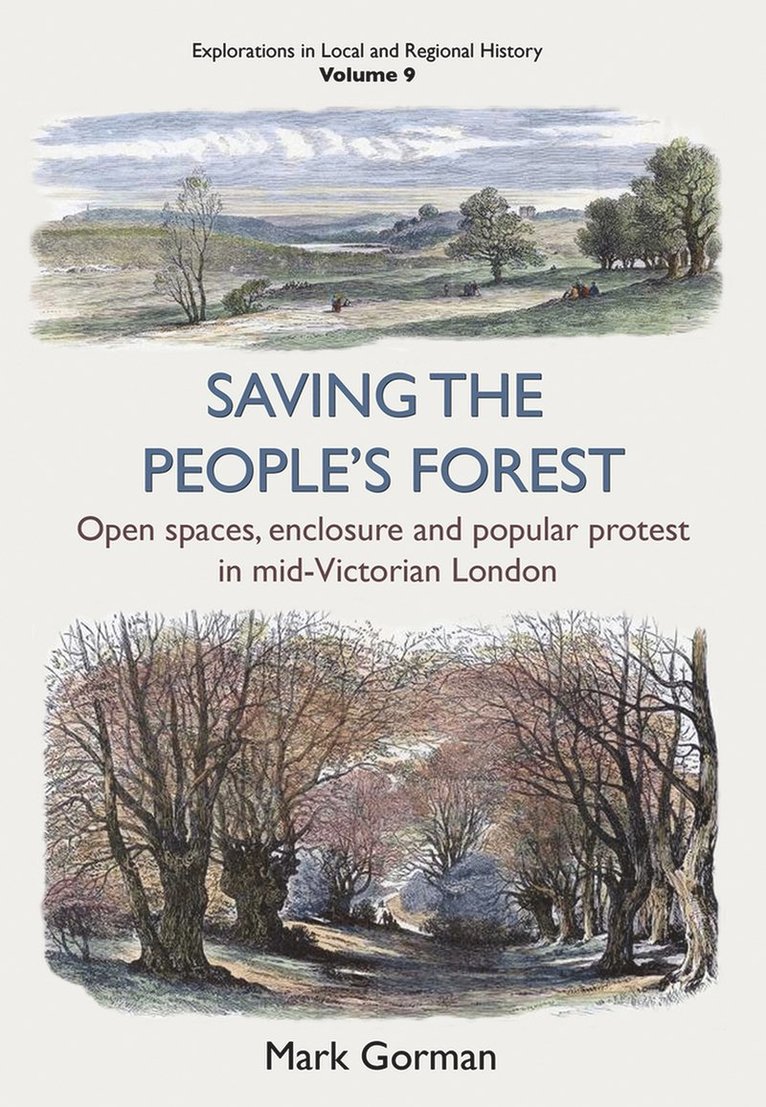
The growth of nineteenth-century London was unprecedented, swallowing up once remote villages, commons and open fields around the metropolitan fringe in largely uncontrolled housing development. In the mid-Victorian period widespread opposition to this unbridled growth coalesced into a movement that campaigned to preserve the London commons. The history of this campaign is usually presented as having been fought by members of the metropolitan upper middle class, who appointed themselves as spokespeople for all Londoners and played out their battles mainly in parliament and the law courts. In this fascinating book Mark Gorman tells a different story – of the key role played by popular protest in the campaigns to preserve Epping Forest and other open spaces in and near London. He shows how throughout the nineteenth century such places were venues for both radical politics and popular leisure, helping to create a sense of public right of access, even ‘ownership’. At the same time, London’s suburban growth was partly a response to the rising aspirations of an artisan and lower middle class who increasingly wanted direct access to open space. This not only created the conditions for the mid-Victorian commons preservation movement, but also gave impetus to distinctive popular protest by proletarian Londoners. In comparing the campaign for Epping Forest with other struggles for London’s commons, the book highlights influences which ranged from the role of charismatic leaders to widely held beliefs regarding the land, in which the rights of freeborn Englishmen had been plundered by the aristocracy since the Norman conquest.Mark Gorman reveals a largely hidden history, since ordinary Londoners left few records behind, but his new research clearly reveals how their protests influenced the actions of the more visible elite groups who appeared in parliament or in court.