Mark Hibben – författare
Visar alla böcker från författaren Mark Hibben. Handla med fri frakt och snabb leverans.
3 produkter
3 produkter
Inbunden, Engelska, 2024
2 697 kr
Skickas inom 5-8 vardagar
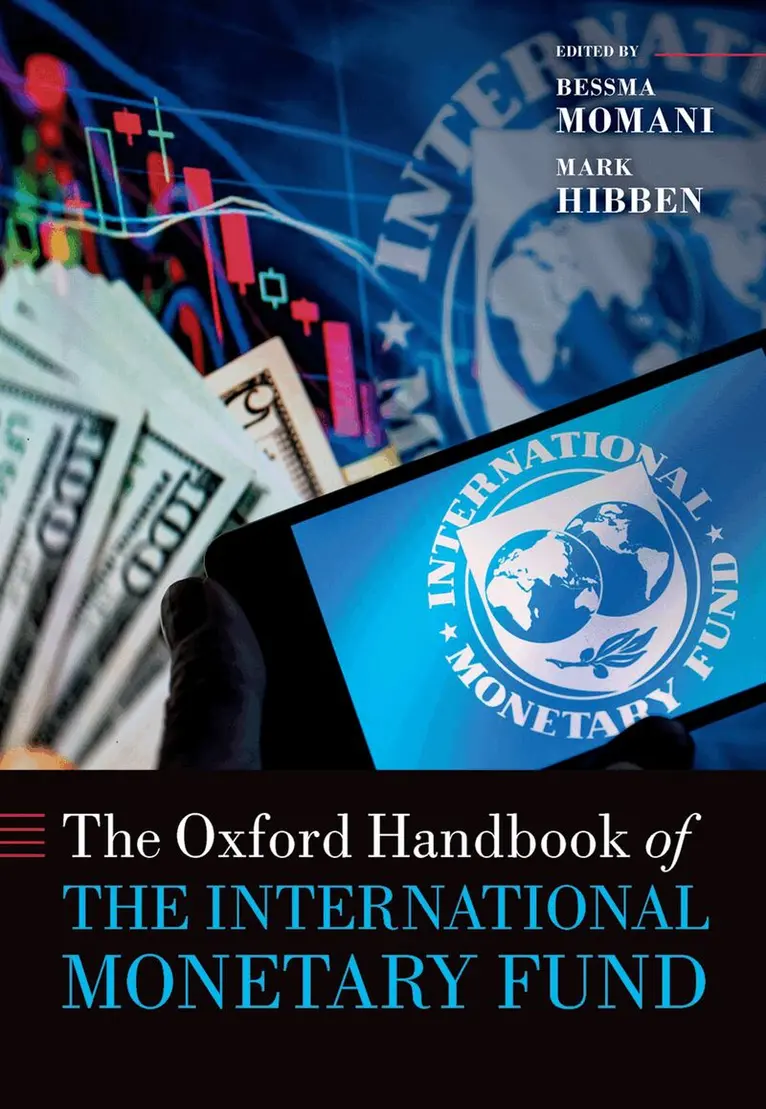
The International Monetary Fund (IMF) is a pivotal institution in global economic governance tasked with ensuring monetary stability and preventing financial crises through promoting balanced trade, economic growth, and poverty reduction. It also plays a powerful normative role by shaping economic policies worldwide through its research and expertise. The IMF played a crucial role in managing crises like the 2008 financial crisis and the COVID-19 pandemic, providing significant financial aid and advocating for stimulus measures. However, the IMF faces both internal and external challenges from reforming its governance structure to better represent emerging economies to finding its place in a world increasingly defying liberal internationalism and multilateralism. Despite reforms, power remains concentrated among advanced economies, hindering inclusivity and trust, particularly in regions like sub-Saharan Africa. Geopolitical tensions, populist nationalism, and economic imbalances further strain the IMF's effectiveness. This handbook aims to uncover these challenges by providing diverse perspectives and proposing policy recommendations that the Fund could undertake to better navigate the complex landscape of 21st-century global governance. Part I delves into its historical origins and key debates of the IMF. Part II focuses on formal operations such as lending, surveillance, and capacity development. Part III explores the involvement of different actors including states, markets, and civil society. Part IV discusses partnerships with other international organizations and collaboration in financial regulation. Part V analyzes shifts in policy instruments and ideological frameworks. Part VI broadens concerns to include gender mainstreaming, labor markets, climate policy, and inclusive growth. Part VII addresses internal challenges including cultural diversity concerns and uniformity of treatment. Part VIII evaluates external challenges such as populist movements, China's influence, global inequality and unresolved issues in Europe. Part IX explores how the IMF can meet the multiple challenges identified in this volume and positively impact 21st century global governance.
Poor States, Power and the Politics of IMF Reform
Drivers of Change in the Post- Washington Consensus
Inbunden, Engelska, 2016
1 116 kr
Skickas inom 10-15 vardagar
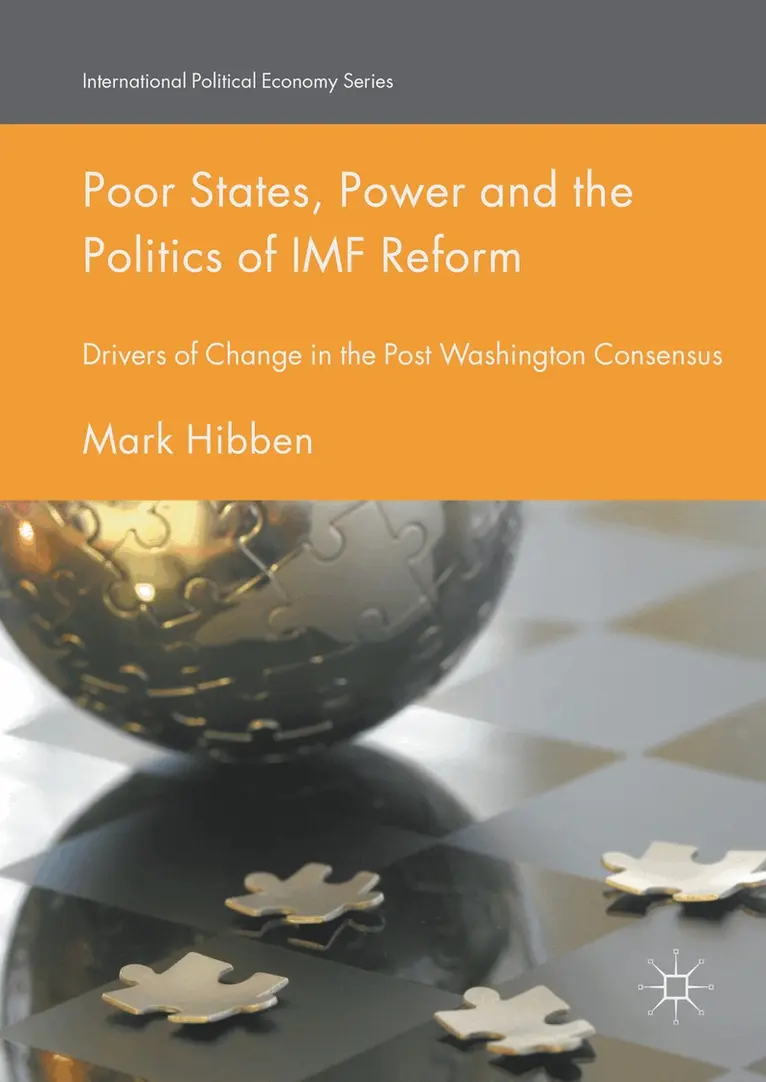
This books provides a timely comparative case study that reveals the factors driving the International Monetary Fund's policy reform in Low Income Developing Countries (LIDCs), as a resurgent IMF expands its footprint in the world's poorest states. Through a research design that employs both mainstream and critical IPE theory, Mark Hibben uncovers three major tendencies. Principal-agent analysis, he argues, demonstrates that coalition formation among powerful states, IMF staff and management, and other influential actors is necessary for policy reform. At the same time, he uses constructivist analysis to show that ideational frameworks of what merits appropriate macroeconomic policy response also have an impact on reform efforts, and that IMF management and staff seek legitimacy in their policy choices. In response to the crises in 1999 and 2008, the author maintains, poverty and inequality now 'matter' in IMF thinking and serve as an opportunity for policy insiders and external actors to deepen the institution's new commitment to 'inclusive' growth. Finally, Hibben draws on neo-Gramscian analysis to highlight how the IMF looked to soften the destabilizing effects of globalization through reforms focused on stakeholder participation in poor states and will continue to do so in its support of the new United Nation Sustainable Development Goals. This means that the 2015-2030 time period will be a critical juncture for IMF LIDC reform. By drawing from diverse theoretical traditions, the author thus provides a unique framework for the study of contemporary IMF change and how best those interested in LIDC policy reform can meet this objective.
Poor States, Power and the Politics of IMF Reform
Drivers of Change in the Post- Washington Consensus
E-bok
PDF, Engelska, 20161 379 kr
Läs direkt efter köp
This books provides a timely comparative case study that reveals the factors driving the International Monetary Fund''s policy reform in Low Income Developing Countries (LIDCs), as a resurgent IMF expands its footprint in the world''s poorest states. Through a research design that employs both mainstream and critical IPE theory, Mark Hibben uncovers three major tendencies. Principal-agent analysis, he argues, demonstrates that coalition formation among powerful states, IMF staff and management, and other influential actors is necessary for policy reform. At the same time, he uses constructivist analysis to show that ideational frameworks of what merits appropriate macroeconomic policy response also have an impact on reform efforts, and that IMF management and staff seek legitimacy in their policy choices. In response to the crises in 1999 and 2008, the author maintains, poverty and inequality now ''matter'' in IMF thinking and serve as an opportunity for policy insiders and external actors to deepen the institution''s new commitment to ''inclusive'' growth. Finally, Hibben draws on neo-Gramscian analysis to highlight how the IMF looked to soften the destabilizing effects of globalization through reforms focused on stakeholder participation in poor states and will continue to do so in its support of the new United Nation Sustainable Development Goals. This means that the 2015-2030 time period will be a critical juncture for IMF LIDC reform. By drawing from diverse theoretical traditions, the author thus provides a unique framework for the study of contemporary IMF change and how best those interested in LIDC policy reform can meet this objective.