
Mark Kanazawa - Böcker
Visar alla böcker från författaren Mark Kanazawa. Handla med fri frakt och snabb leverans.
4 produkter
4 produkter
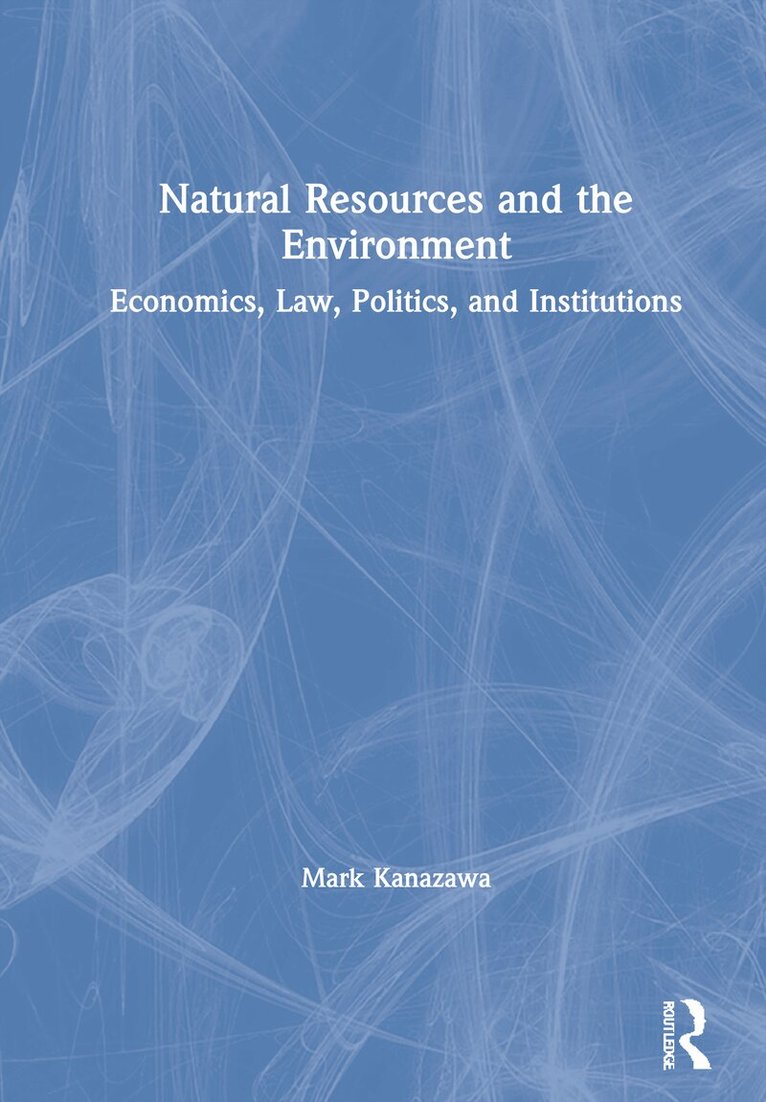
Natural Resources and the Environment
Economics, Law, Politics, and Institutions
Inbunden, Engelska, 2021
2 103 kr
Skickas inom 10-15 vardagar
Natural Resources and the Environment: Economics, Law, Politics, and Institutions provides a new approach to the study of environmental and natural resource economics. It augments current contributions from the fields of public choice, law, and economics, and the burgeoning field of what used to be called the "New Institutional Economics," to describe, explain, and interpret how these new developments have been applied to better understand the economics of natural resources and the environment. This textbook takes a multi-disciplinary approach, which is essential for understanding complex environmental problems, and examines the issue from not only an economic perspective, but also taking into account law, politics, and institutions. In doing so, it provides students with a realistic understanding of how environmental policy is created and presents a comprehensive examination of real-world environmental policy. The book provides a comprehensive coverage of key issues, including renewable energy, climate change, agriculture, water resources, land conservation, and fisheries, with each chapter accompanied by learning resources, such as recommended further reading, discussion questions, and exercises.This textbook is essential reading for students and scholars seeking to build an interdisciplinary understanding of natural resources and the environment.
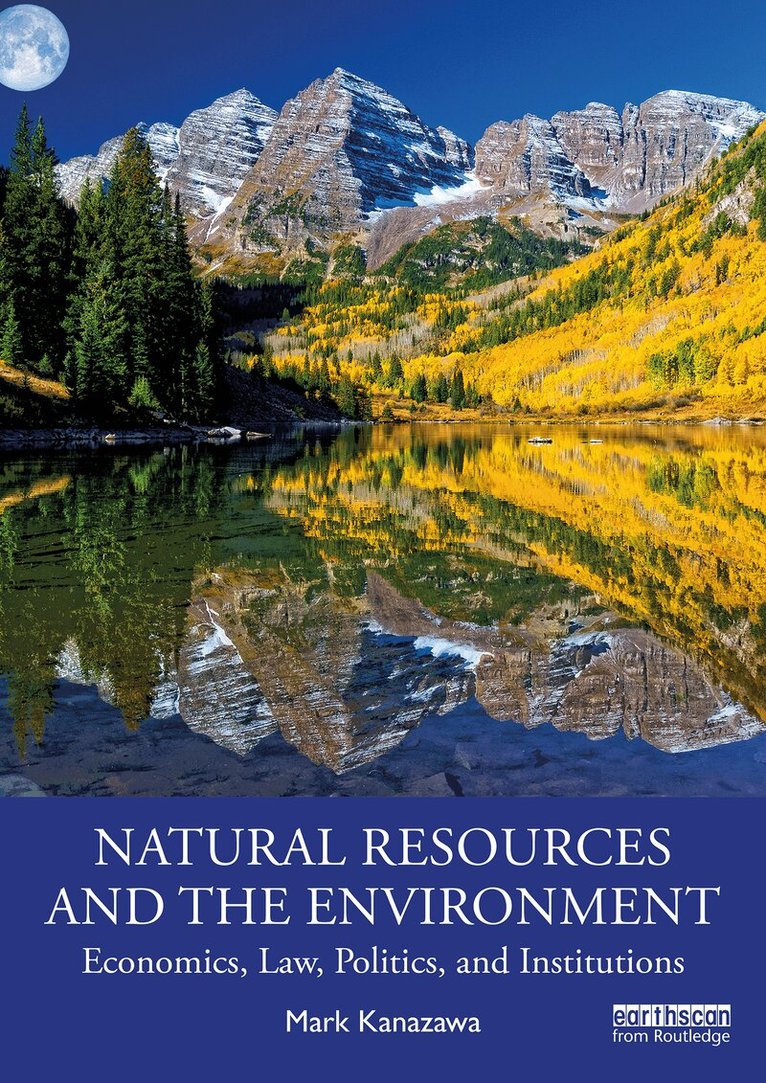
Natural Resources and the Environment
Economics, Law, Politics, and Institutions
Häftad, Engelska, 2021
616 kr
Skickas inom 10-15 vardagar
Natural Resources and the Environment: Economics, Law, Politics, and Institutions provides a new approach to the study of environmental and natural resource economics. It augments current contributions from the fields of public choice, law, and economics, and the burgeoning field of what used to be called the "New Institutional Economics," to describe, explain, and interpret how these new developments have been applied to better understand the economics of natural resources and the environment. This textbook takes a multi-disciplinary approach, which is essential for understanding complex environmental problems, and examines the issue from not only an economic perspective, but also taking into account law, politics, and institutions. In doing so, it provides students with a realistic understanding of how environmental policy is created and presents a comprehensive examination of real-world environmental policy. The book provides a comprehensive coverage of key issues, including renewable energy, climate change, agriculture, water resources, land conservation, and fisheries, with each chapter accompanied by learning resources, such as recommended further reading, discussion questions, and exercises.This textbook is essential reading for students and scholars seeking to build an interdisciplinary understanding of natural resources and the environment.
520 kr
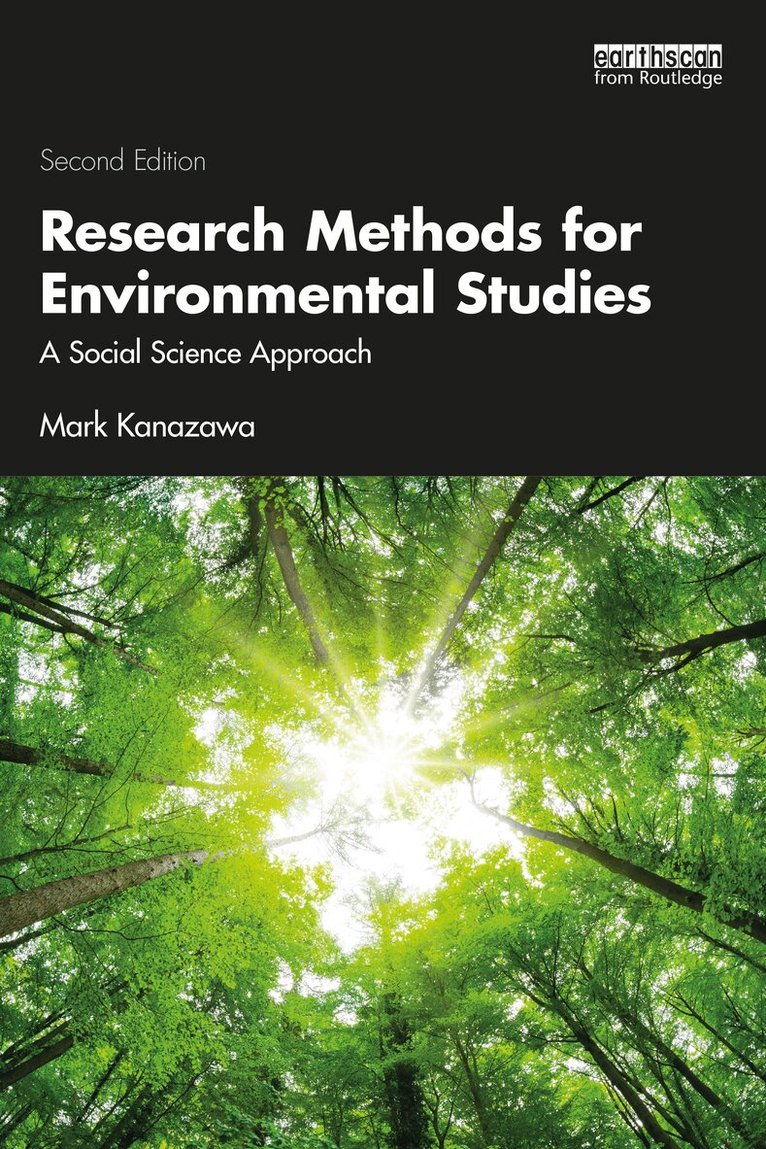
The methodological needs of environmental studies are unique in the breadth of research questions that can be posed, calling for a textbook that covers a broad swath of approaches to conducting research with potentially many different kinds of evidence.Fully updated to address new developments such as the effects of the internet, recent trends in the use of computers, remote sensing, and large data sets, this new edition of Research Methods for Environmental Studies is written specifically for social science-based research into the environment. This revised edition contains new chapters on coding, focus groups, and an extended treatment of hypothesis testing. The textbook covers the best-practice research methods most used to study the environment and its connections to societal and economic activities and objectives. Over five key parts, Kanazawa introduces quantitative and qualitative approaches, mixed methods, and the special requirements of interdisciplinary research, emphasizing that methodological practice should be tailored to the specific needs of the project. Within these parts, detailed coverage is provided on key topics including the identification of a research project, hypothesis testing, spatial analysis, the case study method, ethnographic approaches, discourse analysis, mixed methods, survey and interview techniques, focus groups, and ethical issues in environmental research. Drawing on a variety of extended and updated examples to encourage problem-based learning and fully addressing the challenges associated with interdisciplinary investigation, this book will be an essential resource for students embarking on courses exploring research methods in environmental studies.
2 100 kr
Skickas inom 10-15 vardagar
The methodological needs of environmental studies are unique in the breadth of research questions that can be posed, calling for a textbook that covers a broad swath of approaches to conducting research with potentially many different kinds of evidence.Fully updated to address new developments such as the effects of the internet, recent trends in the use of computers, remote sensing, and large data sets, this new edition of Research Methods for Environmental Studies is written specifically for social science-based research into the environment. This revised edition contains new chapters on coding, focus groups, and an extended treatment of hypothesis testing. The textbook covers the best-practice research methods most used to study the environment and its connections to societal and economic activities and objectives. Over five key parts, Kanazawa introduces quantitative and qualitative approaches, mixed methods, and the special requirements of interdisciplinary research, emphasizing that methodological practice should be tailored to the specific needs of the project. Within these parts, detailed coverage is provided on key topics including the identification of a research project, hypothesis testing, spatial analysis, the case study method, ethnographic approaches, discourse analysis, mixed methods, survey and interview techniques, focus groups, and ethical issues in environmental research. Drawing on a variety of extended and updated examples to encourage problem-based learning and fully addressing the challenges associated with interdisciplinary investigation, this book will be an essential resource for students embarking on courses exploring research methods in environmental studies.