Mark Liu – författare
Visar alla böcker från författaren Mark Liu. Handla med fri frakt och snabb leverans.
15 produkter
Machine Learning, Animated
Av Mark Liu
E-bok, 2023
1320 kr
Lägg i varukorg
The release of ChatGPT has kicked off an arms race in Machine Learning (ML), however ML has also been described as a black box and very hard to understand. Machine Learning, Animated eases you into basic ML concepts and summarizes the learning process in three words: initialize , adjust and repeat …
Machine Learning, Animated
Av Mark Liu
E-bok, 2023
1320 kr
Lägg i varukorg
The release of ChatGPT has kicked off an arms race in Machine Learning (ML), however ML has also been described as a black box and very hard to understand. Machine Learning, Animated eases you into basic ML concepts and summarizes the learning process in three words: initialize , adjust and repeat …
Machine Learning, Animated
Av Mark Liu
Häftad, 2025
1251 kr
Lägg i varukorg
The release of ChatGPT has kicked off an arms race in Machine Learning (ML), however ML has also been described as a black box and very hard to understand. Machine Learning, Animated eases you into basic ML concepts and summarizes the learning process in three words: initialize, adjust and repeat. …
Machine Learning, Animated
Av Mark Liu
Inbunden, 2023
1266 kr
Lägg i varukorg
The release of ChatGPT has kicked off an arms race in Machine Learning (ML), however ML has also been described as a black box and very hard to understand. Machine Learning, Animated eases you into basic ML concepts and summarizes the learning process in three words: initialize, adjust and repeat. …
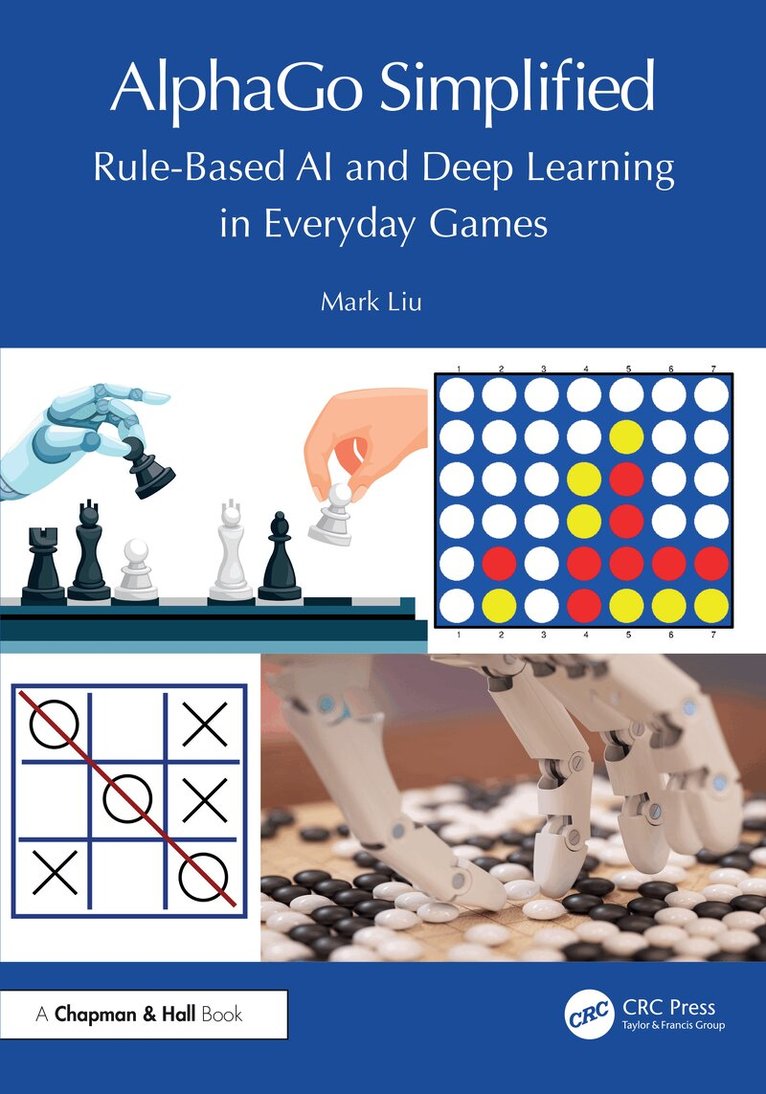
AlphaGo Simplified
Rule-Based AI and Deep Learning in Everyday Games
Av Mark Liu
Häftad, 2024
816 kr
Lägg i varukorg
May 11, 1997, was a watershed moment in the history of artificial intelligence (AI): the IBM supercomputer chess engine, Deep Blue, beat the world Chess champion, Garry Kasparov. It was the first time a machine had triumphed over a human player in a Chess tournament. Fast forward 19 years to May 9, …
AlphaGo Simplified
Rule-Based AI and Deep Learning in Everyday Games
Av Mark Liu
Inbunden, 2024
2195 kr
Lägg i varukorg
May 11, 1997, was a watershed moment in the history of artificial intelligence (AI): the IBM supercomputer chess engine, Deep Blue, beat the world Chess champion, Garry Kasparov. It was the first time a machine had triumphed over a human player in a Chess tournament. Fast forward 19 years to May 9, …
AlphaGo Simplified
Rule-Based AI and Deep Learning in Everyday Games
Av Mark Liu
E-bok, 2024
856 kr
Lägg i varukorg
May 11, 1997, was a watershed moment in the history of artificial intelligence (AI): the IBM supercomputer chess engine, Deep Blue, beat the world Chess champion, Garry Kasparov. It was the first time a machine had triumphed over a human player in a Chess tournament. Fast forward 19 years to May 9, …
AlphaGo Simplified
Rule-Based AI and Deep Learning in Everyday Games
Av Mark Liu
E-bok, 2024
856 kr
Lägg i varukorg
May 11, 1997, was a watershed moment in the history of artificial intelligence (AI): the IBM supercomputer chess engine, Deep Blue, beat the world Chess champion, Garry Kasparov. It was the first time a machine had triumphed over a human player in a Chess tournament. Fast forward 19 years to May 9, …
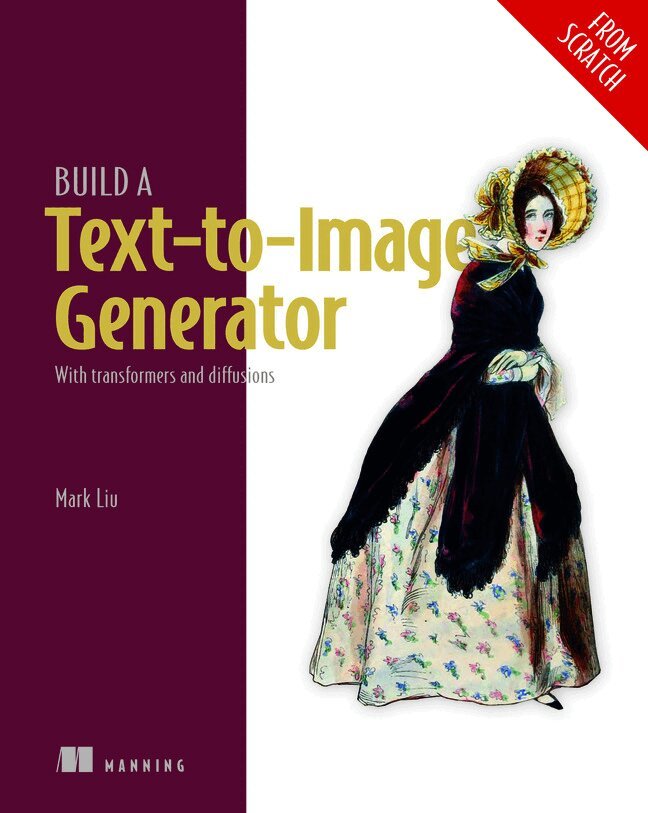
Build a Text-to-Image Generator (from Scratch)
Av Mark Liu
Inbunden, 2026
432 kr
Lägg i varukorg
AI images flood feeds, yet the models behind them feel mysterious. Relying on black boxes risks bias, errors, and costly creative dead ends. You deserve hands-on skills to build, audit, and improve these generators yourself. This book starts from a blank notebook, guiding every line of Python code. …
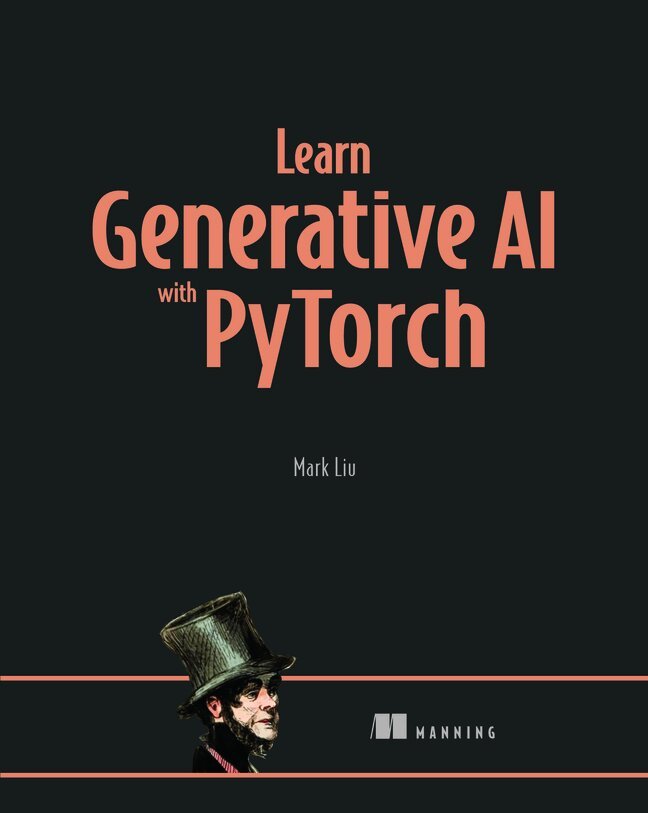
Learn Generative AI with PyTorch
Av Mark Liu
Inbunden, 2024
442 kr
Lägg i varukorg
Learn how generative AI works by building your very own models that can write coherent text, create realistic images, and even make lifelike music. Learn Generative AI with PyTorch teaches the underlying mechanics of generative AI by building working AI models from scratch. Throughout, you'll use …
Learn Generative AI with PyTorch
Build GANs, transformers, and diffusion models
Av Mark Liu
E-bok, 2025
665 kr
Lägg i varukorg
Learn how generative AI works by building your very own models that can write coherent text, create realistic images, and even make lifelike music. Learn Generative AI with PyTorch teaches the underlying mechanics of generative AI by building working AI models from scratch. Throughout, you’ll use …
Build a Text-to-Image Generator (from Scratch)
Av Mark Liu
E-bok, 2026
585 kr
Lägg i varukorg
This book takes you step-by-step through creating your own AI models that can generate images from text. Youll explore two methods of image generationvision transformers and diffusion modelsand learn vital AI development techniques as you go.Dive into the powerful models behind AI image generators. …
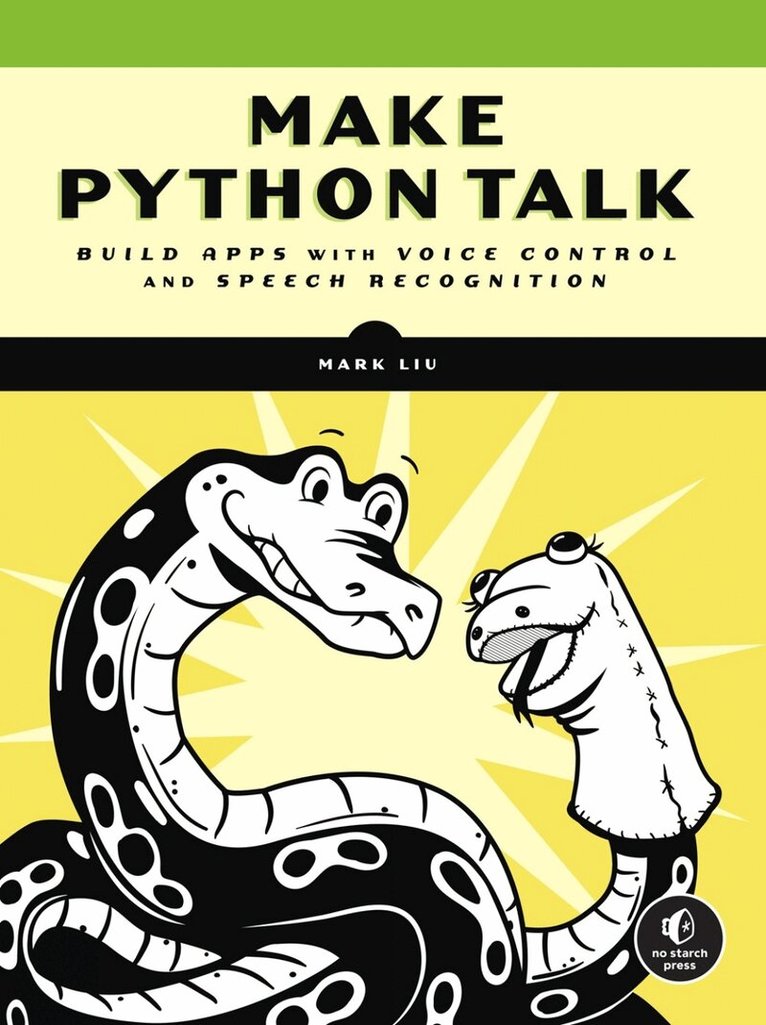
Make Python Talk
Build Apps with Voice Control and Speed Recognition
Av Mark Liu
Häftad, 2021
369 kr
Lägg i varukorg
This fun, hands-on book will take your basic Python skills to the next level as you build voice-controlled apps to use in your daily life. Starting with a Python refresher and an introduction to speech-recognition/text-to-speech functionalities, you'll soon ease into more advanced topics, like …
Financial Risk Management
An Analytical Approach
Häftad, 2025
2537 kr
Lägg i varukorg
Financial Risk Management: An Analytical Approach guides readers on a comprehensive journey through varied dimensions of financial risk, including market risk, credit risk, operational risk, and liquidity risk. It presents a cogent exploration of mathematical models, statistical methods, and …