Mark Neuzil – författare
Visar alla böcker från författaren Mark Neuzil. Handla med fri frakt och snabb leverans.
13 produkter
Biodiversity, Conservation and Environmental Management in the Great Lakes Basin
Häftad, 2019
725 kr
Lägg i varukorg
The Great Lakes Basin in North America holds more than 20 percent of the world's fresh water. Threats to habitats and biodiversity have economic, political, national security, and cultural implications and ramifications that cross the US-Canadian border. This multidisciplinary book presents the …
Mass Media and Environmental Conflict
America's Green Crusades
Av Mark Neuzil, William Kovarik
Häftad, 1996
2011 kr
Lägg i varukorg
This is a good treatment of a very timely topic. The historical detail the authors amass here is impressive and the case studies are both interesting and instructive. The strengths of the book are its interesting and original documentation of the role of different interest groups and their …
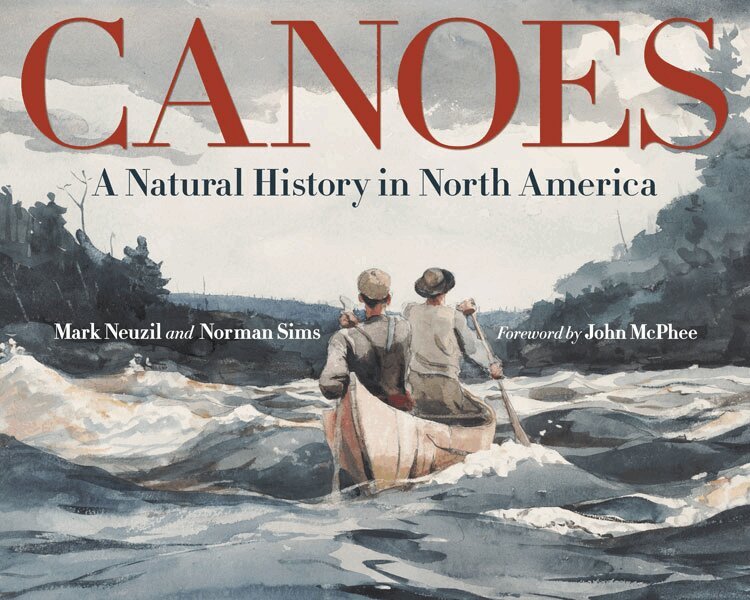
Canoes
A Natural History in North America
Inbunden, 2016
477 kr
Lägg i varukorg
Ancient records of canoes are found from the Pacific Northwest to the coast of Maine, in Minnesota and Mexico, in the Southeast and across the Caribbean. And if a native of those distant times might encounter a canoe of our day-whether birch bark or dugout or a modern marvel made of carbon …
Biodiversity, Conservation and Environmental Management in the Great Lakes Basin
Inbunden, 2017
2526 kr
Lägg i varukorg
The Great Lakes Basin in North America holds more than 20 percent of the world's fresh water. Threats to habitats and biodiversity have economic, political, national security, and cultural implications and ramifications that cross the US-Canadian border. This multidisciplinary book presents the …
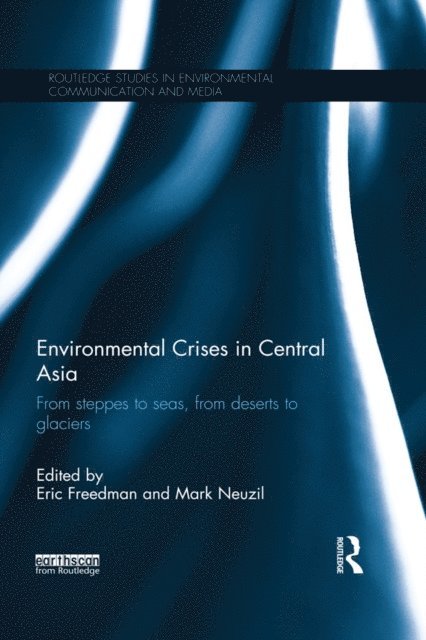
Environmental Crises in Central Asia
From steppes to seas, from deserts to glaciers
Häftad, 2018
754 kr
Lägg i varukorg
Environmental conditions do not exist in a vacuum. They are influenced by science, politics, history, public policy, culture, economics, public attitudes, and competing priorities, as well as past human decisions. In the case of Central Asia, such Soviet-era decisions include irrigation systems and …
Environmental Crises in Central Asia
From steppes to seas, from deserts to glaciers
Inbunden, 2015
2526 kr
Lägg i varukorg
Environmental conditions do not exist in a vacuum. They are influenced by science, politics, history, public policy, culture, economics, public attitudes, and competing priorities, as well as past human decisions. In the case of Central Asia, such Soviet-era decisions include irrigation systems and …
Environmental Crises in Central Asia
From steppes to seas, from deserts to glaciers
E-bok, 2015
910 kr
Lägg i varukorg
Environmental conditions do not exist in a vacuum. They are influenced by science, politics, history, public policy, culture, economics, public attitudes, and competing priorities, as well as past human decisions. In the case of Central Asia, such Soviet-era decisions include irrigation systems and …
Environmental Crises in Central Asia
From steppes to seas, from deserts to glaciers
E-bok, 2015
910 kr
Lägg i varukorg
Environmental conditions do not exist in a vacuum. They are influenced by science, politics, history, public policy, culture, economics, public attitudes, and competing priorities, as well as past human decisions. In the case of Central Asia, such Soviet-era decisions include irrigation systems and …
Biodiversity, Conservation and Environmental Management in the Great Lakes Basin
E-bok, 2017
849 kr
Lägg i varukorg
The Great Lakes Basin in North America holds more than 20 percent of the world''s fresh water. Threats to habitats and biodiversity have economic, political, national security, and cultural implications and ramifications that cross the US-Canadian border. This multidisciplinary book presents the …
Biodiversity, Conservation and Environmental Management in the Great Lakes Basin
E-bok, 2017
830 kr
Lägg i varukorg
The Great Lakes Basin in North America holds more than 20 percent of the world''s fresh water. Threats to habitats and biodiversity have economic, political, national security, and cultural implications and ramifications that cross the US-Canadian border. This multidisciplinary book presents the …
Rooted in the North
The Lives and Lore of Twenty Minnesota Nature Writers
Av Mark Neuzil
Häftad, 2026
246 kr
Kommande
Discover unforgettable writers who taught Minnesota how to see its wild heartIn this engaging collection, environmental journalist Mark Neuzil revives the voices that showed generations how to appreciate Minnesota's wild places. Comprising twenty vivid biographical essays, Rooted in the North …
Environment and the Press
From Adventure Writing to Advocacy
Av Mark Neuzil
Häftad, 2008
272 kr
Tillfälligt slut
This history of environmental journalism looks at how the practice now defines issues and sets the public agenda, evolving from a tradition that includes the works of authors such as Pliny the Elder, John Muir, and Rachel Carson. It makes the case that the relationship between the media and its …
Views on the Mississippi
The Photography of Henry Peter Bosse
Av Mark Neuzil
Häftad, 2002
341 kr
Tillfälligt slut
The first comprehensive collection of photographs by the foremost nineteenth-century photographer of the Mississippi River-now in paperback! As mapmaker and photographer for the U.S. Army Corps of Engineers, Henry Peter Bosse (1844-1903) took more than three hundred photographs of the Upper …