Mark Risjord - Böcker
Visar alla böcker från författaren Mark Risjord. Handla med fri frakt och snabb leverans.
5 produkter
5 produkter
656 kr
Skickas inom 10-15 vardagar
Normativity and Naturalism in the Social Sciences engages with a central debate within the philosophy of social science: whether social scientific explanation necessitates an appeal to norms, and if so, whether appeals to normativity can be rendered "scientific." This collection brings together contributions from a diverse group of philosophers who explore a broad but thematically unified set of questions, many of which stem from an ongoing debate between Stephen Turner and Joseph Rouse (both contributors to this volume) on the role of naturalism in the philosophy of the social sciences. Informed by recent developments in both philosophy and the social sciences, this volume will set the benchmark for contemporary discussions about normativity and naturalism. This collection will be relevant to philosophers of social science, philosophers in interested in the rule following and metaphysics of normativity, and theoretically oriented social scientists.
629 kr
Skickas inom 10-15 vardagar
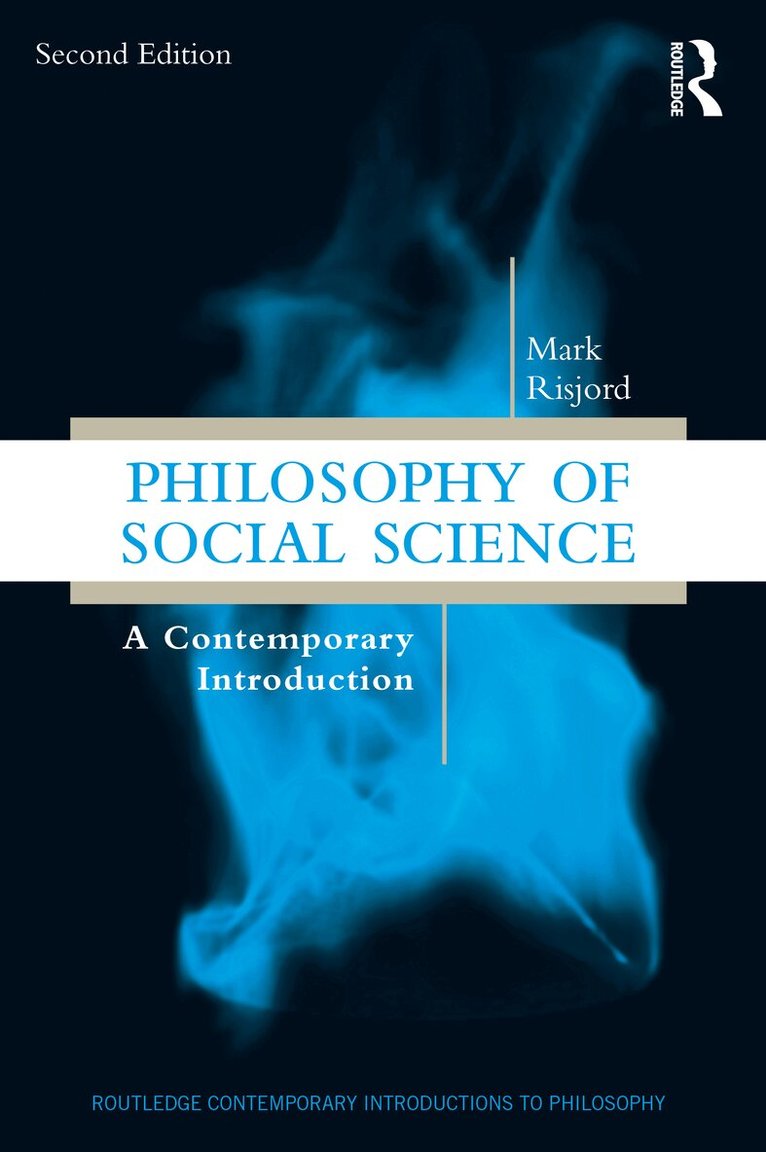
Philosophy of Social Science: A Contemporary Introduction examines perennial questions of philosophy through engaging the empirical study of society. Questions of normativity concern the place of values in social scientific inquiry. Questions of naturalism concern the relationship between the natural and the social sciences. And questions of reductionism ask how social institutions relate to the people who constitute them. This accessible text offers a comprehensive overview of debates in the field, with special attention to new research programs. Topics include the relationship of social policy to social science, interpretive research, cognitive and evolutionary explanations, intentional action explanation, rational choice theory, conventions and social norms, joint intentionality, causal inference, and experimentation. Detailed examples of social scientific research motivate the philosophical questions and illustrate the important concepts. Treating philosophical commitments as implicit in social science, students of the social sciences will benefit from its application of philosophical argument to methodological and theoretical problems. The text argues that social science transforms philosophical questions, and students of philosophy will benefit from its direct engagement with contemporary debates.The Second Edition provides updates with the most recent literature and adds two new chapters: one on modeling and one on the role of race and gender in the social sciences.Key Updates to the Second Edition: A new chapter on "Modeling and Explaining," which explores how models represent social systems and whether highly idealized models explain A new chapter on "Race and Other Social Constructions," capturing much of the recent empirical research and philosophical interest in the social construction of categories like race and gender Revised and updated chapters throughout, clarifying earlier presentations and bringing discussions from the First Edition into line with new research Updated annotated Further Reading lists, which now include relevant publications from 2013 to 2022.
2 713 kr
Skickas inom 10-15 vardagar
Philosophy of Social Science: A Contemporary Introduction examines perennial questions of philosophy through engaging the empirical study of society. Questions of normativity concern the place of values in social scientific inquiry. Questions of naturalism concern the relationship between the natural and the social sciences. And questions of reductionism ask how social institutions relate to the people who constitute them. This accessible text offers a comprehensive overview of debates in the field, with special attention to new research programs. Topics include the relationship of social policy to social science, interpretive research, cognitive and evolutionary explanations, intentional action explanation, rational choice theory, conventions and social norms, joint intentionality, causal inference, and experimentation. Detailed examples of social scientific research motivate the philosophical questions and illustrate the important concepts. Treating philosophical commitments as implicit in social science, students of the social sciences will benefit from its application of philosophical argument to methodological and theoretical problems. The text argues that social science transforms philosophical questions, and students of philosophy will benefit from its direct engagement with contemporary debates.The Second Edition provides updates with the most recent literature and adds two new chapters: one on modeling and one on the role of race and gender in the social sciences.Key Updates to the Second Edition: A new chapter on "Modeling and Explaining," which explores how models represent social systems and whether highly idealized models explain A new chapter on "Race and Other Social Constructions," capturing much of the recent empirical research and philosophical interest in the social construction of categories like race and gender Revised and updated chapters throughout, clarifying earlier presentations and bringing discussions from the First Edition into line with new research Updated annotated Further Reading lists, which now include relevant publications from 2013 to 2022.
2 307 kr
Skickas inom 10-15 vardagar
Normativity and Naturalism in the Social Sciences engages with a central debate within the philosophy of social science: whether social scientific explanation necessitates an appeal to norms, and if so, whether appeals to normativity can be rendered "scientific." This collection brings together contributions from a diverse group of philosophers who explore a broad but thematically unified set of questions, many of which stem from an ongoing debate between Stephen Turner and Joseph Rouse (both contributors to this volume) on the role of naturalism in the philosophy of the social sciences. Informed by recent developments in both philosophy and the social sciences, this volume will set the benchmark for contemporary discussions about normativity and naturalism. This collection will be relevant to philosophers of social science, philosophers in interested in the rule following and metaphysics of normativity, and theoretically oriented social scientists.
547 kr
Skickas inom 7-10 vardagar
Nurses who conduct research have a longstanding interest in questions of nursing knowledge. Nursing Knowledge is a clear and well-informed exposition of the philosophical background to nursing theory and research. Nursing Knowledge answers such fundamental questions as: How is nursing theory related to nursing practice? What are the core elements of nursing knowledge? What makes nursing research distinctive as nursing research? It examines the history of the philosophical debates within nursing, critiques the arguments, explains the implications and sets out to rethink the philosophical foundation of nursing science.Nursing Knowledge begins with philosophical problems that arise within nursing science. It then considers various solutions with the help of philosophical ideas arguingargues that nurses ought to adopt certain philosophical positions because they are the best solutions to the problems that nurses encounter. The book argues claims that the nursing standpoint has the potential to disclose a more complete understanding of human health than the common disease-and-dysfunction views. Because of the relationship to practice, nursing science may freely draw theory from other disciplines and nursing practice unifies nursing research. By redefining theory and philosophy,With a new philosophical perspective on nursing science, the so-called relevance gap between nursing theory and practice can be closed.The final chapter of the book ‘redraws the map’, to create a new picture of nursing science based on the following principles: Problems of practice should guide nursing researchPractice and theory are dynamically relatedTheory research must provide the knowledge base necessary for nurse interventions, training, patient education, etc.Nursing research should develop midrange theories and its results are nursing theory is strengthened when it uses theories confirmed by is integrated with other disciplinesKey features Clear and accessibly writtenAccurate and philosophically well-informed,Discusses philosophical problems in contexts familiar to nursesSystematically examines the philosophical issues involved in nursing researchExamines epistemology (how we know what we know), theory development, and the philosophical foundations of scientific methodology.Develops a new model of nursing knowledgeDr. Mark Risjord is Associate Professor in Philosophy at Emory University, and has a faculty appointment in the Nell Hodgson Woodruff School of Nursing. His main research areas have been in the philosophy of social science and the philosophy of medicine. He was invited to has been teaching philosophy of science and theory development in the new PhD program in the Nell Hodgson School of Nursing at Emory University insince 1999. He has been awarded two competitive teaching prizes: Emory Williams Distinguished Teaching Award (2004) and the Excellence in Teaching Award (1997). He is presently serving as the Masse-Martin/NEH Distinguished Teaching Chair (2006-2010).