Mark S. Wagner – författare
Visar alla böcker från författaren Mark S. Wagner. Handla med fri frakt och snabb leverans.
3 produkter
Jews and Islamic Law in Early 20th-Century Yemen
Av Mark S. Wagner, Sarah Abrevaya Stein
Inbunden, 2014
880 kr
Lägg i varukorg
In early 20th-century Yemen, a sizable Jewish population was subject to sumptuary laws and social restrictions. Jews regularly came into contact with Islamic courts and Muslim jurists, by choice and by necessity, became embroiled in the most intimate details of their Jewish neighbors' lives. Mark …
Jews and Islamic Law in Early 20th-Century Yemen
Av Mark S. Wagner, Sarah Abrevaya Stein
Häftad, 2014
324 kr
Lägg i varukorg
In early 20th-century Yemen, a sizable Jewish population was subject to sumptuary laws and social restrictions. Jews regularly came into contact with Islamic courts and Muslim jurists, by choice and by necessity, became embroiled in the most intimate details of their Jewish neighbors' lives. Mark …
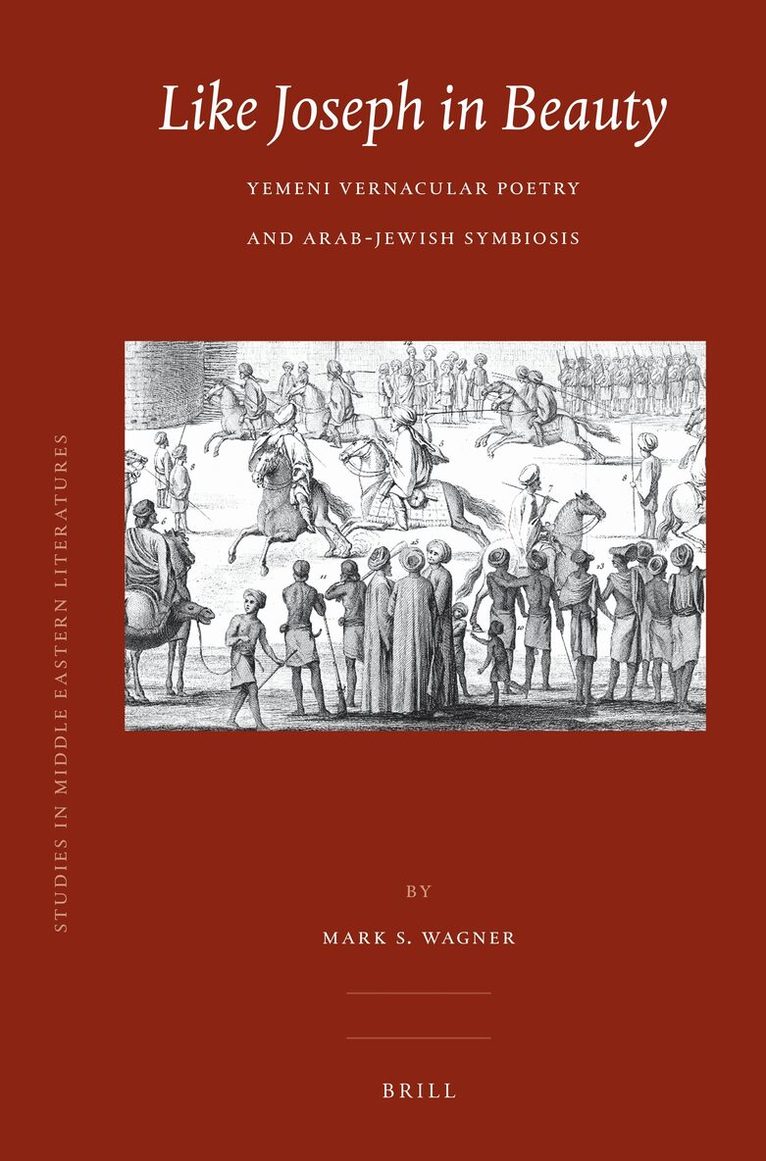
Like Joseph in Beauty
Yemeni Vernacular Poetry and Arab-Jewish Symbiosis
Inbunden, 2008
3414 kr
Lägg i varukorg
Like Joseph in Beauty traces the evolution of an Arabic poetic form called ‘Humayni poetry’. From Muslim mystical circles, the courts of aristocrats in Highland Yemen, and kabbalist circles of Yemenite Jews, Humayni poetry distinguishes itself with lyricism, musicality, and eroticism. It also plays …