Mark T. Mitchell – författare
Visar alla böcker från författaren Mark T. Mitchell. Handla med fri frakt och snabb leverans.
14 produkter
14 produkter
Inbunden, Engelska, 2018
613 kr
Skickas inom 10-15 vardagar
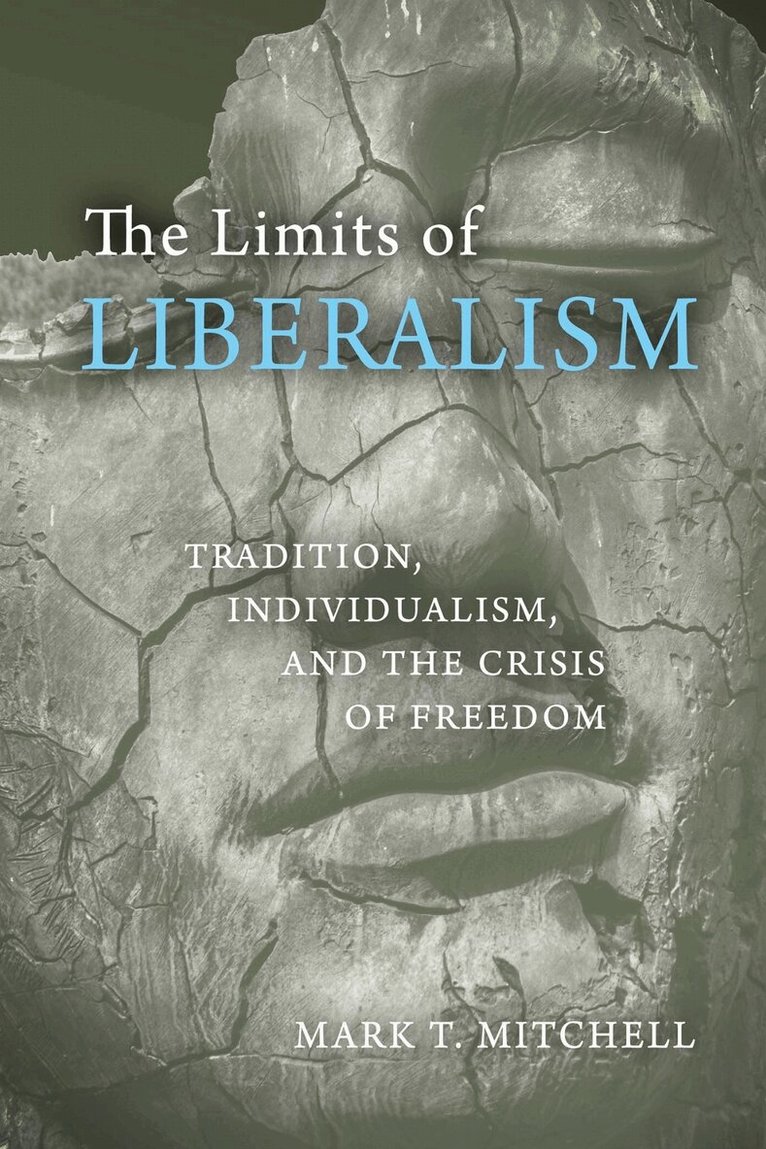
In The Limits of Liberalism, Mark T. Mitchell argues that a rejection of tradition is both philosophically incoherent and politically harmful.The Limits of Liberalism identifies why most modern thinkers have denied the essential role of tradition and explains how tradition can be restored to its proper place. Mitchell demonstrates that the rejection of tradition as an epistemic necessity has produced a false conception of the human person—the liberal self—which in turn has produced a false conception of freedom. Together, these false conceptions have facilitated both liberal cosmopolitanism and identity politics.Mitchell uses the philosophies of Michael Oakeshott, Alasdair MacIntyre, and Michael Polanyi to construct a compelling argument for a reconstructed view of tradition and, as a result, a reconstructed view of freedom. The Limits of Liberalism reveals that only by finding an alternative to the liberal self can we escape the incoherencies and pathologies inherent therein.
Häftad, Engelska, 2025
454 kr
Skickas
In The Limits of Liberalism, Mark T. Mitchell argues that a rejection of tradition is both philosophically incoherent and politically harmful.The Limits of Liberalism identifies why most modern thinkers have denied the essential role of tradition and explains how tradition can be restored to its proper place. Mitchell demonstrates that the rejection of tradition as an epistemic necessity has produced a false conception of the human person—the liberal self—which in turn has produced a false conception of freedom. Together, these false conceptions have facilitated both liberal cosmopolitanism and identity politics.Mitchell uses the philosophies of Michael Oakeshott, Alasdair MacIntyre, and Michael Polanyi to construct a compelling argument for a reconstructed view of tradition and, as a result, a reconstructed view of freedom. The Limits of Liberalism reveals that only by finding an alternative to the liberal self can we escape the incoherencies and pathologies inherent therein.
Häftad, Engelska, 2018
319 kr
Skickas inom 5-8 vardagar
E-bok
Engelska, 2018520 kr
Läs direkt efter köp
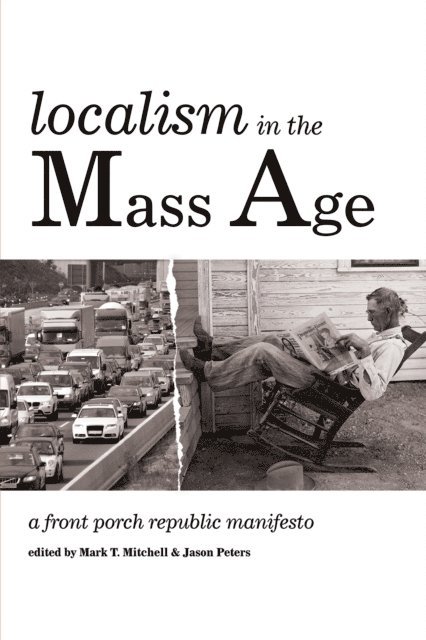
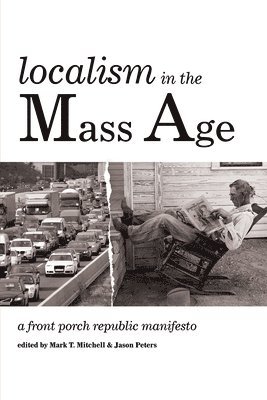
In the United States the conventional left/right distinction has become increasingly irrelevant, if not harmful. The reigning political, cultural, and economic visions of both the Democrats and the Republicans have reached obvious dead ends. Liberalism, with its hostility to any limits, is collapsing. So-called Conservatism has abandoned all pretense of conserving anything at all. Both dominant parties seem fundamentally incapable of offering coherent solutions for the problems that beset us. In light of this intellectual, cultural, and political stalemate, there is a need for a new vision. Localism in the Mass Age: A Front Porch Republic Manifesto assembles thirty-one essays by a variety of scholars and practitioners--associated with Front Porch Republic--seeking to articulate a new vision for a better future. The writers are convinced that human apprehension of the true, the good, and the beautiful is best realized within a dense web of meaningful family, neighborhood, and community relationships. These writers seek to advance human flourishing through the promotion of political decentralism, economic localism, and cultural regionalism. In short, Front Porch Republic is dedicated to renewing American culture by fostering the ideals necessary for strong communities.
Inbunden, Engelska, 2018
515 kr
Skickas inom 5-8 vardagar
Inbunden, Engelska, 2012
448 kr
Skickas inom 10-15 vardagar
Many Americans are longing for an alternative politics that is rooted in strong communities, a recognition of limits, and respect for the natural world. These issues are not the possession of one political party. Rather, they refer to ideas rooted deeply in the best aspects of our common tradition, and they represent yearnings that many, regardless of political affiliation, share. This book articulates a cultural and political vision that leads off the couch and into the garden, out of the shopping mall and into the farmer's market, away from Washington and in the direction of home.In this postpartisan call to action, Mitchell develops the concept of the "politics of gratitude," which is centered around four ideas: creatureliness, gratitude, human scale, and place, culminating in a distinctive, fruitful view of human nature and community at odds with the prevailing norms of individualism (and, not so paradoxically, statism), giantism, and hypermobility. Going beyond the liberal-conservative factionalism that has reduced our political and cultural discourse to clichés and vitriol, he urges us to become responsible stewards of the earth who are committed to family and community and who abide in gratitude, taking nothing for granted.The result is a political and cultural vision that is at once local, limited, modest, republican, green—and grateful.
E-bok
Engelska, 2011382 kr
Läs direkt efter köp
Many Americans are longing for an alternative politics that is rooted in strong communities, a recognition of limits, and respect for the natural world. These issues are not the possession of one political party. Rather, they refer to ideas rooted deeply in the best aspects of our common tradition, and they represent yearnings that many, regardless of political affiliation, share. This book articulates a cultural and political vision that leads off the couch and into the garden, out of the shopping mall and into the farmer's market, away from Washington and in the direction of home.In this postpartisan call to action, Mitchell develops the concept of the "politics of gratitude," which is centered around four ideas: creatureliness, gratitude, human scale, and place, culminating in a distinctive, fruitful view of human nature and community at odds with the prevailing norms of individualism (and, not so paradoxically, statism), giantism, and hypermobility. Going beyond the liberal-conservative factionalism that has reduced our political and cultural discourse to clichés and vitriol, he urges us to become responsible stewards of the earth who are committed to family and community and who abide in gratitude, taking nothing for granted.The result is a political and cultural vision that is at once local, limited, modest, republican, green—and grateful.
Häftad, Engelska, 2022
232 kr
Skickas inom 5-8 vardagar
Inbunden, Engelska, 2022
410 kr
Skickas inom 5-8 vardagar
E-bok
Engelska, 2022286 kr
Läs direkt efter köp
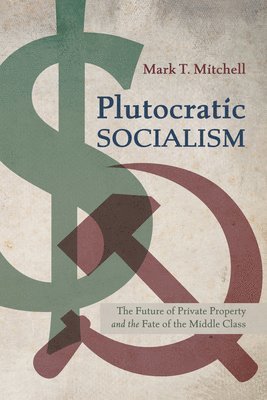
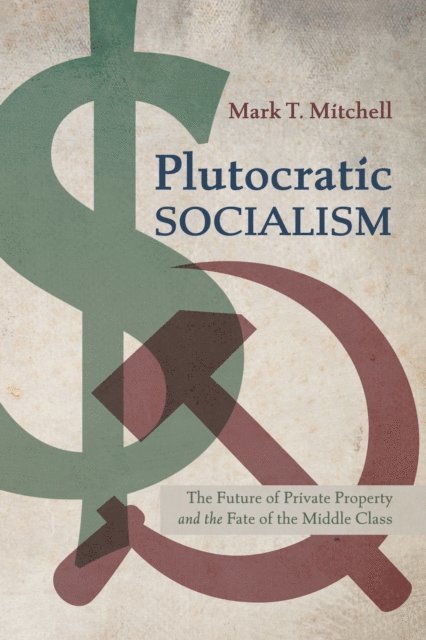
A proletarianized citizenry ruled by a class of insolent plutocrats is incompatible with the republican form of government established by the US Constitution. Without an effective majority of citizens who own property and whose character has been shaped by property ownership--a vibrant middle class--the Founders'' Constitution will not survive. Our current age of Plutocratic Socialism is a specific manifestation of a pathology the Founders feared. Recovery must begin with a simple, yet profound, axiom: private property and political freedom stand or fall together.
E-bok
Engelska, 2020198 kr
Läs direkt efter köp
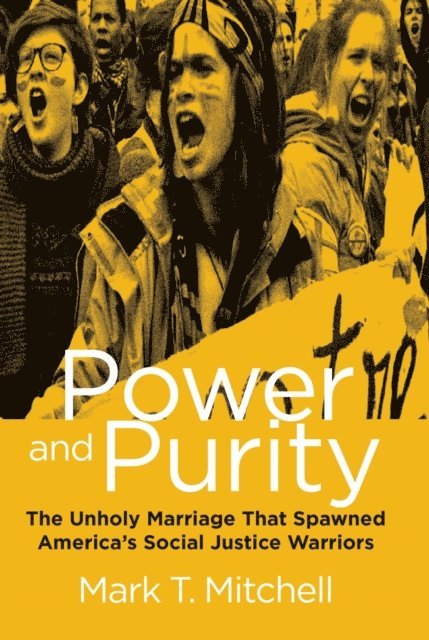
A Marriage Made in Hell Where did they come from, these furiously self-righteous “social justice warriors”? The growing radicalism and intolerance on the American left is the result of the strange union of Nietzsche’s “will to power” and a secularized Puritan moralism. In this penetrating study, Mark T. Mitchell explains how this marriage made in hell gave birth to a powerful and destructive political and social movement. Having declared that “God is dead,” Friedrich Nietzsche identified the “will to power” as the fundamental force of human life. There is no good or evil in a Nietzschean world—only the interests of the strong. Reason and the common good have no place there. The Puritan, by contrast, is morally rigorous, zealous to promote virtue and punish vice. America’s Puritan tradition, now thoroughly de-Christianized, has been reduced to a self-righteous moral absolutism that focuses on the faults of others, intent on avenging the sins of society, institutions, and the past in pursuit of the secularized ideals of equality, diversity, and social justice. As Nietzsche’s ideas have permeated our culture, a new generation of radicals has embraced the rhetoric and tactics of the will to power. But the strength of America’s residual Puritanism keeps them only half-baked Nietzscheans. More Christian than they care to admit, they cling to a moralism that Nietzsche would despise. The incoherence of their mixed creed dooms social justice warriors to perpetual frustration. Their identity politics generates ever more radical demands that can never be satisfied, further fracturing a society in desperate need of a unifying myth. We seem to be left with only two options, Mitchell concludes—Nietzsche or Christ, the will to power or the will to truth. The choice is bracingly simple.
E-bok
Engelska, 2023130 kr
Läs direkt efter köp
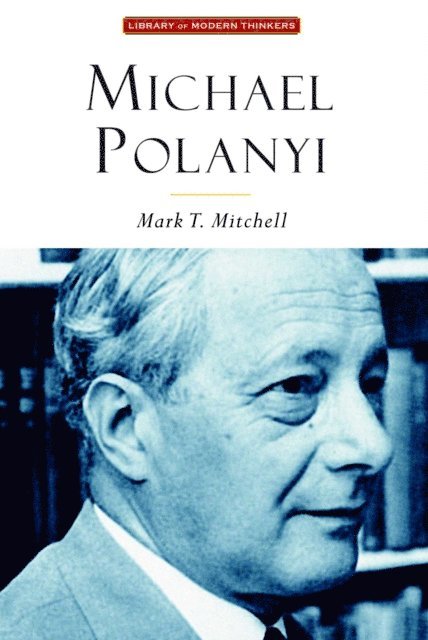
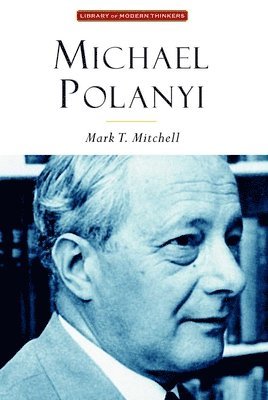
The polymath Michael Polanyi first made his mark as a physical chemist, but his interests gradually shifted to economics, politics, and philosophy, in which field he would ultimately propose a revolutionary theory of knowledge that grew out of his firsthand experience with both the scientific method and political totalitarianism. In this sixth entry in ISI Books’ Library of Modern Thinkers’ series, Mark T. Mitchell reveals how Polanyi came to recognize that the roots of the modern political and spiritual crisis lay in an errant conception of knowledge that served to foreclose any possibility of making meaningful statements about truth, goodness, or beauty. Polanyi’s theory of knowledge as ineluctably personal but also grounded in reality is not merely of historical interest, writes Mitchell, for it proposes an attractive alternative for anyone who would reject both the hubris of modern rationalism and the ultimately nihilistic implications of academic postmodernism.
Inbunden, Engelska, 2026
344 kr
Kommande
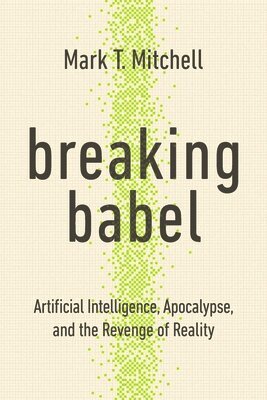
A profound analysis of the terrifying technologicalproject on which our world has embarked—and the ancient myth it recapitulates.Digital technology is hijacking our attention, colonizingour consciousness, harvesting our personal data, and destroying our souls. Wehave become a nation of addicts, unable to turn away from the glowing light ofthose digital devices which enchant and possess us. Furthermore, our disease isfacilitating the greatest concentration of power in history—except this timeour Tower of Babel is taking the form of a web composed of silicon andelectricity, a captivating and ubiquitous presence from which there is noescape.Or is there?As Mark T. Mitchell explains in Breaking Babel: How a Mysterious Biblical Story Can Help Christians Survivethe AI Revolution just asthe biblical Babel toppled, collapsing under the weight of its own hubris, theattempt to overcome human limits is fated to fail. Techno-optimists’ feverdreams of immortality and unparalleled power will ultimately be frustrated.Although we are bound to experience a period of intense chaos and confusion,reality will not be cheated.Including practical advice for holding fast to the trulyhuman in this troubling moment. Breaking Babel is essential reading foranyone who wishes to stay sane in an era of increasing madness.
Häftad, Engelska, 2006
229 kr
Tillfälligt slut
The polymath Michael Polanyi first made his mark as a physical chemist, but his interests gradually shifted to economics, politics, and philosophy, in which field he would ultimately propose a revolutionary theory of knowledge that grew out of his firsthand experience with both the scientific method and political totalitarianism. In this sixth entry in ISI Books' Library of Modern Thinkers' series, Mark T. Mitchell reveals how Polanyi came to recognize that the roots of the modern political and spiritual crisis lay in an errant conception of knowledge that served to foreclose any possibility of making meaningful statements about truth, goodness, or beauty. Polanyi’s theory of knowledge as ineluctably personal but also grounded in reality is not merely of historical interest, writes Mitchell, for it proposes an attractive alternative for anyone who would reject both the hubris of modern rationalism and the ultimately nihilistic implications of academic postmodernism.