Mark Toher – författare
Visar alla böcker från författaren Mark Toher. Handla med fri frakt och snabb leverans.
5 produkter
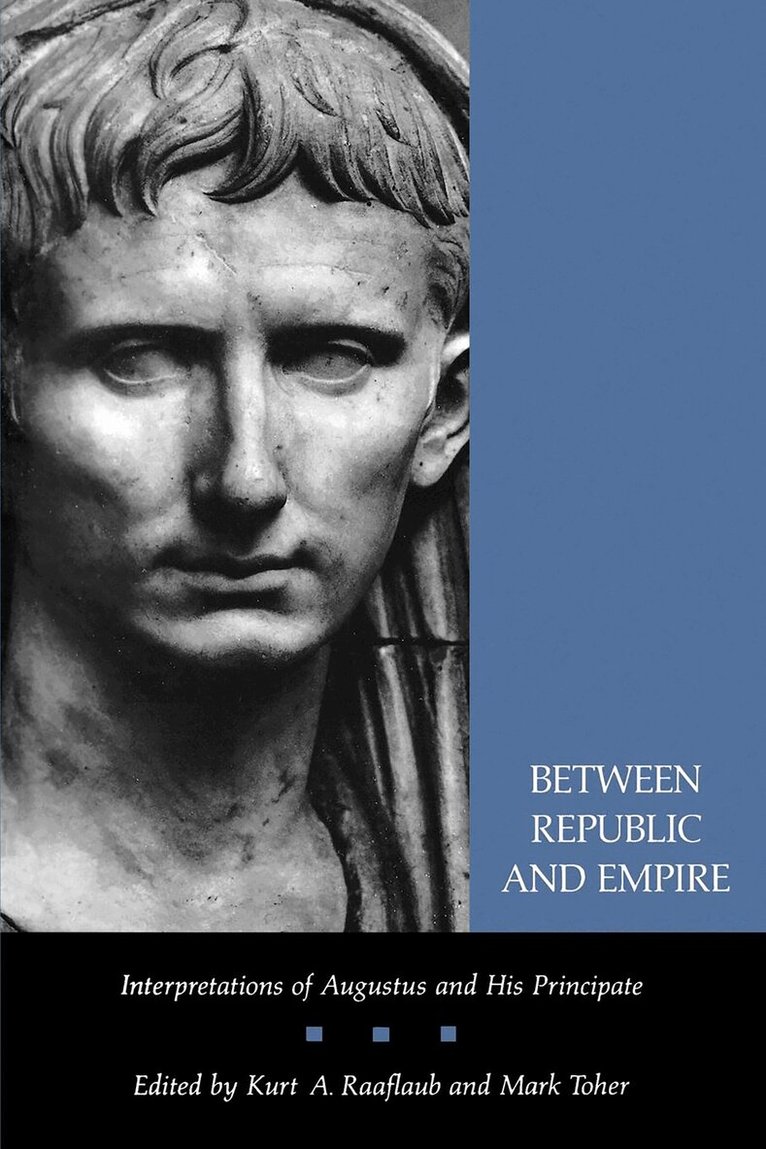
Between Republic and Empire
Interpretations of Augustus and His Principate
Av Kurt A. Raaflaub, Mark Toher
Häftad, 1993
603 kr
Lägg i varukorg
Representing five major areas of Augustan scholarship - historiography, poetry, art, religion, and politics - the nineteen contributors to this volume bring us closer to a balanced, up-to-date account of Augustus and his principate.
Between Republic and Empire
Interpretations of Augustus and His Principate
Av Mark Toher, Kurt A. Raaflaub
E-bok, 1993
714 kr
Lägg i varukorg
Representing five major areas of Augustan scholarship—historiography, poetry, art, religion, and politics—the nineteen contributors to this volume bring us closer to a balanced, up-to-date account of Augustus and his principate. Representing five major areas of Augustan scholarship—historiography, …
Nicolaus of Damascus: The Life of Augustus and The Autobiography
Edited with Introduction, Translations and Historical Commentary
Av Nicolaus of Damascus, Mark Toher
Inbunden, 2016
2336 kr
Lägg i varukorg
Nicolaus of Damascus, the chief minister of Herod the Great, was an exact contemporary of the first Roman emperor Augustus; he spent considerable time in Roman society and knew Augustus. The extensive remains of his Bios Kaisaros contain the earliest and most detailed account of the conspiracy …
Nicolaus of Damascus: The Life of Augustus and The Autobiography
Edited with Introduction, Translations and Historical Commentary
Av Nicolaus of Damascus, Mark Toher
Häftad, 2021
879 kr
Lägg i varukorg
Nicolaus of Damascus, the chief minister of Herod the Great, was an exact contemporary of the first Roman emperor Augustus; he spent considerable time in Roman society and knew Augustus. The extensive remains of his Bios Kaisaros contain the earliest and most detailed account of the conspiracy …
Lost Memoirs of Augustus and the Development of Roman Autobiography
Av C. Smith, Powell, A. m. fl.
Häftad, 2008
491 kr
Lägg i varukorg
Augustus' Memoirs, written probably in the mid 20s BC, might have been one of the most revealing texts of Roman history - had they survived. Far longer than his surviving Res Gestae, the Memoirs seem to date from a period at which the wounds of Rome's civil wars were fresh, and the emperor's …