Markku Lehtonen - Böcker
Visar alla böcker från författaren Markku Lehtonen. Handla med fri frakt och snabb leverans.
5 produkter
5 produkter
671 kr
Skickas inom 10-15 vardagar
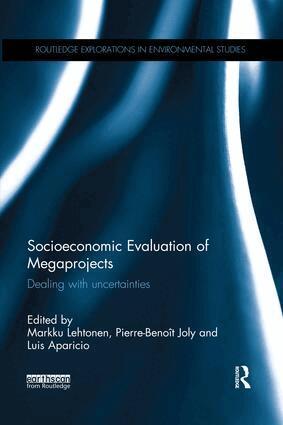
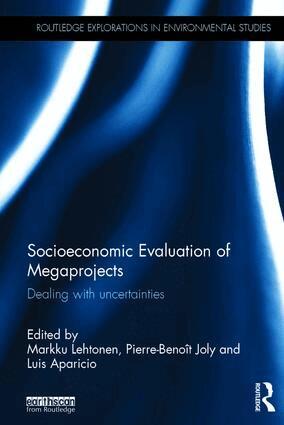
The governance and evaluation of ‘megaprojects’ – that is, large-scale, complex, high-stakes infrastructure projects usually commissioned by governments and delivered through partnerships between public and private organisations – is receiving increased attention. However, megaproject evaluation has hitherto largely adopted a linear-rationalist perspective to explain the frequent failure of such projects to meet the ‘iron triangle’ of performance criteria: delivering on time, within budget, and according to specifications. This approach recommends greater control and accountability to remedy megaproject ‘pathologies’.Drawing on empirical examples mainly from the transport sector and radioactive waste disposal, this book offers new perspectives to megaproject evaluation. Comprising contributions from leading experts in project evaluation and appraisal, this collection opens up new avenues by suggesting two ways of improving megaproject evaluation: 1) approaches that go beyond the dominant linearrationalist notion of policy processes, and emphasise instead the objective of opening up appraisal processes in order to enhance learning and reflexivity; and 2) approaches that extend evaluative criteria beyond the ‘iron triangle’, to cover the various socioeconomic impacts and preconditions for project success.This volume will be of great relevance to scholars and practitioners with an interest in megaprojects, energy and climate policy, radioactive waste management, urban design, and project planning and management.
Trust, Mistrust, Distrust, and Trust-building in the Nuclear Sector
Historical and Comparative Experience from Europe
Inbunden, Engelska, 2026
2 258 kr
Kommande
As nuclear energy experiences renewed global interest amid climate concerns and energy security challenges, understanding the social foundations of nuclear governance becomes increasingly critical for policymakers, industry leaders, and civil society organisations. This book explores the complex dynamics of trust, mistrust, and distrust in European nuclear energy and radioactive waste management through rigorous transnational, comparative, and historical analysis.Drawing on empirical cases from eight European countries—Denmark, Finland, France, Germany, Russia, Spain, Sweden, and the UK—the contributors apply a sophisticated conceptual framework that distinguishes between trust, mistrust, and distrust across social, institutional, and ideological dimensions. The collection reveals how excessive trust can be as problematic as outright distrust, whilst demonstrating the democratic virtues of prudent scepticism and mistrustful civic vigilance in high-risk technological governance. It addresses critical gaps in social science scholarship by exploring when constructive mistrust transforms into dysfunctional distrust, examining trust dynamics in non-democratic contexts, and analysing the complex interactions between interpersonal, institutional, and ideological trust dimensions. Contributors provide context-sensitive analyses of nuclear waste governance, transboundary nuclear risks, and the evolution of civic engagement in nuclear policymaking.This volume will be essential reading for scholars of science and technology studies, public policy researchers, nuclear industry professionals, and policymakers seeking evidence-based approaches to participatory governance in high-risk industries. This book was originally published as a special issue of Journal of Risk Research.
2 155 kr
Skickas inom 10-15 vardagar
The governance and evaluation of ‘megaprojects’ – that is, large-scale, complex, high-stakes infrastructure projects usually commissioned by governments and delivered through partnerships between public and private organisations – is receiving increased attention. However, megaproject evaluation has hitherto largely adopted a linear-rationalist perspective to explain the frequent failure of such projects to meet the ‘iron triangle’ of performance criteria: delivering on time, within budget, and according to specifications. This approach recommends greater control and accountability to remedy megaproject ‘pathologies’.Drawing on empirical examples mainly from the transport sector and radioactive waste disposal, this book offers new perspectives to megaproject evaluation. Comprising contributions from leading experts in project evaluation and appraisal, this collection opens up new avenues by suggesting two ways of improving megaproject evaluation: 1) approaches that go beyond the dominant linearrationalist notion of policy processes, and emphasise instead the objective of opening up appraisal processes in order to enhance learning and reflexivity; and 2) approaches that extend evaluative criteria beyond the ‘iron triangle’, to cover the various socioeconomic impacts and preconditions for project success.This volume will be of great relevance to scholars and practitioners with an interest in megaprojects, energy and climate policy, radioactive waste management, urban design, and project planning and management.
Engaging the Atom
The History of Nuclear Energy and Society in Europe from the 1950s to the Present
Inbunden, Engelska, 2021
1 106 kr
Skickas inom 10-15 vardagar
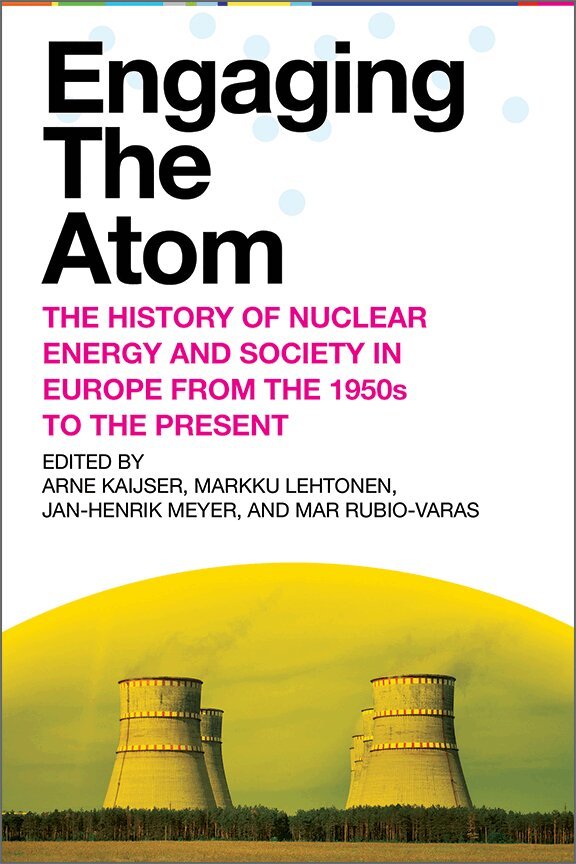
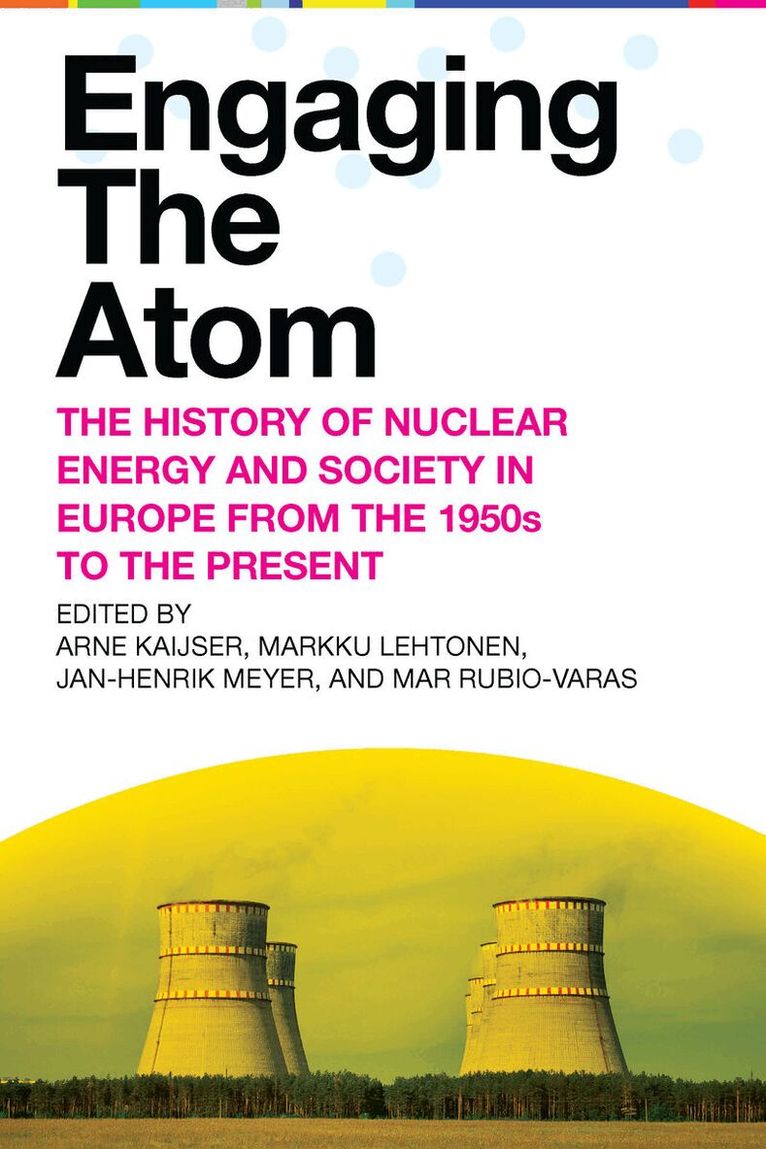
Transnational perspectives on the relationship between nuclear energy and society.With the aim of overcoming the disciplinary and national fragmentation that characterizes much research on nuclear energy, Engaging the Atom brings together specialists from a variety of fields to analyze comparative case studies across Europe and the United States. It explores evolving relationships between society and the nuclear sector from the origins of civilian nuclear power until the present, asking why nuclear energy has been more contentious in some countries than in others and why some countries have never gone nuclear, or have decided to phase out nuclear, while their neighbors have committed to the so-called nuclear renaissance. Contributors examine the challenges facing the nuclear sector in the context of aging reactor fleets, pressing climate urgency, and increasing competition from renewable energy sources.Written by leading academics in their respective disciplines, the nine chapters of Engaging the Atom place the evolution of nuclear energy within a broader set of national and international configurations, including its role within policies and markets.
Engaging the Atom
The History of Nuclear Energy and Society in Europe from the 1950s to the Present
Häftad, Engelska, 2021
378 kr
Skickas inom 10-15 vardagar
Transnational perspectives on the relationship between nuclear energy and society.With the aim of overcoming the disciplinary and national fragmentation that characterizes much research on nuclear energy, Engaging the Atom brings together specialists from a variety of fields to analyze comparative case studies across Europe and the United States. It explores evolving relationships between society and the nuclear sector from the origins of civilian nuclear power until the present, asking why nuclear energy has been more contentious in some countries than in others and why some countries have never gone nuclear, or have decided to phase out nuclear, while their neighbors have committed to the so-called nuclear renaissance. Contributors examine the challenges facing the nuclear sector in the context of aging reactor fleets, pressing climate urgency, and increasing competition from renewable energy sources.Written by leading academics in their respective disciplines, the nine chapters of Engaging the Atom place the evolution of nuclear energy within a broader set of national and international configurations, including its role within policies and markets.