Marko Stojanović – författare
Visar alla böcker från författaren Marko Stojanović. Handla med fri frakt och snabb leverans.
3 produkter
3 produkter
Häftad, Engelska, 2022, 15+ år
172 kr
Skickas
Jack the Ripper was never caught because no one was looking for him in the Wild West...No one accept The Order. An organization made up of the descendants of Crusaders sworn to eradicate the unnatural, The Order will stop at nothing to fulfill the pledge their forefathers made, even if it means crossing the ocean or a line or two...The book is about Jack the Ripper fleeing to America in 1889 and heading straight to the Wild West – because his own savagery can avoid detection at the still savage frontier. He is pursued by The Order, made up from the descendants of Crusader knights set on eradicating the unnatural – and what could be more unnatural than the first documented serial killer grabbing all the headlines and causing mass hysteria? Only thing is, these crusaders are far from their usual haunts and they’ll need help from a man who severed his ties with The Order at the price of abandoning his own family…
Inbunden, Engelska, 2017
558 kr
Skickas inom 10-15 vardagar
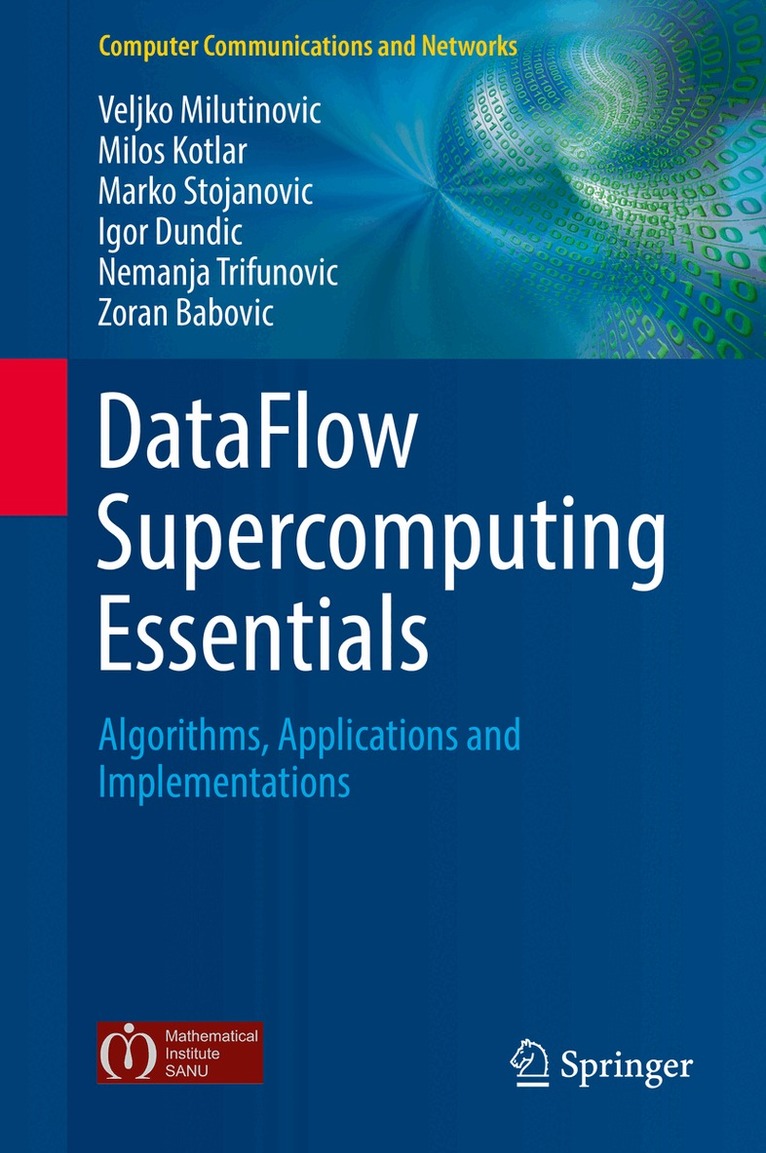
This illuminating text/reference reviews the fundamentals of programming for effective DataFlow computing. The DataFlow paradigm enables considerable increases in speed and reductions in power consumption for supercomputing processes, yet the programming model requires a distinctly different approach. The algorithms and examples showcased in this book will help the reader to develop their understanding of the advantages and unique features of this methodology.This work serves as a companion title to DataFlow Supercomputing Essentials: Research, Development and Education, which analyzes the latest research in this area, and the training resources available.Topics and features: presents an implementation of Neural Networks using the DataFlow paradigm, as an alternative to the traditional ControlFlow approach; discusses a solution to the three-dimensional Poisson equation, using the Fourier method and DataFlow technology; examines how the performance of the Binary Search algorithm can be improved through implementation on a DataFlow architecture; reviews the different way of thinking required to best configure the DataFlow engines for the processing of data in space flowing through the devices; highlights how the DataFlow approach can efficiently support applications in big data analytics, deep learning, and the Internet of Things.This indispensable volume will benefit all researchers interested in supercomputing in general, and DataFlow computing in particular. Advanced undergraduate and graduate students involved in courses on Data Mining, Microprocessor Systems, and VLSI Systems, will also find the book to be an invaluable resource.
Häftad, Engelska, 2018
558 kr
Skickas inom 10-15 vardagar
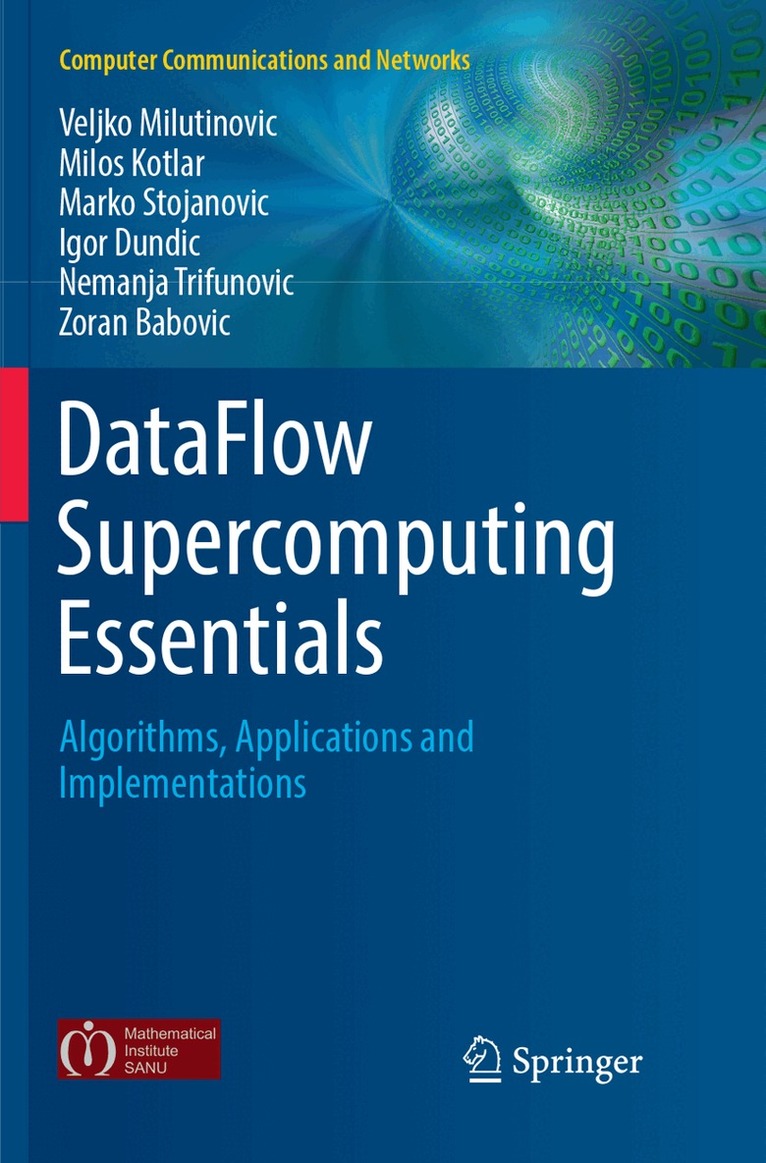
This illuminating text/reference reviews the fundamentals of programming for effective DataFlow computing. The DataFlow paradigm enables considerable increases in speed and reductions in power consumption for supercomputing processes, yet the programming model requires a distinctly different approach. The algorithms and examples showcased in this book will help the reader to develop their understanding of the advantages and unique features of this methodology.This work serves as a companion title to DataFlow Supercomputing Essentials: Research, Development and Education, which analyzes the latest research in this area, and the training resources available.Topics and features: presents an implementation of Neural Networks using the DataFlow paradigm, as an alternative to the traditional ControlFlow approach; discusses a solution to the three-dimensional Poisson equation, using the Fourier method and DataFlow technology; examines how the performance of the Binary Search algorithm can be improved through implementation on a DataFlow architecture; reviews the different way of thinking required to best configure the DataFlow engines for the processing of data in space flowing through the devices; highlights how the DataFlow approach can efficiently support applications in big data analytics, deep learning, and the Internet of Things.This indispensable volume will benefit all researchers interested in supercomputing in general, and DataFlow computing in particular. Advanced undergraduate and graduate students involved in courses on Data Mining, Microprocessor Systems, and VLSI Systems, will also find the book to be an invaluable resource.