Marko Zlomislic – författare
Visar alla böcker från författaren Marko Zlomislic. Handla med fri frakt och snabb leverans.
10 produkter
10 produkter
Inbunden, Engelska, 2007
1 815 kr
Skickas inom 10-15 vardagar
Jacques Derrida's Aporetic Ethics offers a new approach to the study of Derrida's philosophy. Challenging many scholarly articles and books, Marko Zlomislic argues against the popular conception of Derrida as a philosophical relativist. By evaluating objective evidence and through logical arguments, Zlomislic argues that Derrida has been concerned with ethics since his first published works. Indeed, Derrida's arguments have presented a new understanding of ethics and the concept of decision. Zlomislic provides a substantive in-depth argument for reading Derrida's ethics and, due to the central ethical concerns, Derrida's entire philosophy.Jacques Derrida's Aporetic Ethics is essential reading for anyone with an interest in this essential thinker of the twentieth century.
Inbunden, Engelska, 2010
691 kr
Skickas inom 5-8 vardagar
Inbunden, Engelska, 2012
488 kr
Skickas inom 5-8 vardagar
Häftad, Engelska, 2018
240 kr
Skickas inom 5-8 vardagar
E-bok
Engelska, 2018337 kr
Läs direkt efter köp
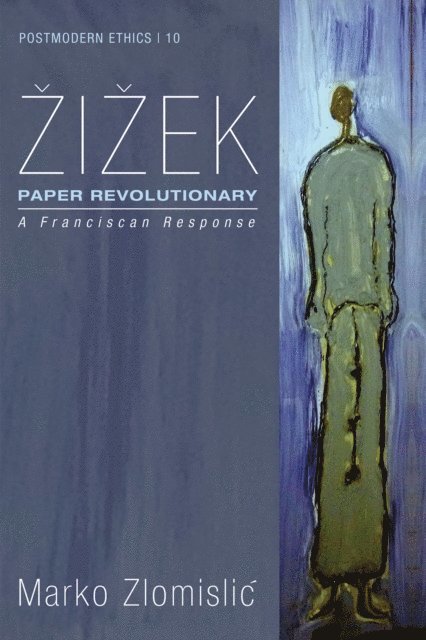
In this new book, Marko Zlomislić argues that Slavoj Žižek''s work does not contain any sort of radical emancipatory project, especially as it passes through the ideology of communism and Lacanian psychoanalysis. The evidence for the failure of communism is vast and includes the more than six hundred mass graves recently located in Žižek''s homeland of Slovenia. Zlomislić demonstrates that the way out of the capitalist dilemma is not a repetition of communism but a return to the late medieval notion of haecceity or "individual thisness" that was rejected by modernity. Haecceity, or the indescribable and indefinite here and now of the person, shows that the late medieval Franciscans were already "postmodernists." It is no wonder that the totalitarianism of the modernist Hegel is embraced by thinkers such as Žižek, Badiou, Hardt, Negri, and Laclau and was already rejected by Leibnitz, Kierkegaard, Nietzsche, Levinas, Deleuze, and Derrida. This important book shows that Žižek''s work must be rejected because it does not uphold the dignity, worth, and uniqueness of the person.
Inbunden, Engelska, 2018
412 kr
Skickas inom 5-8 vardagar
Häftad, Engelska, 2010
432 kr
Skickas inom 5-8 vardagar
Häftad, Engelska, 2012
331 kr
Skickas inom 5-8 vardagar
E-bok
Engelska, 2012505 kr
Läs direkt efter köp
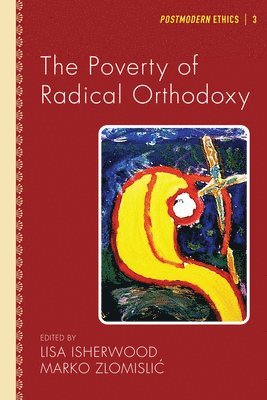
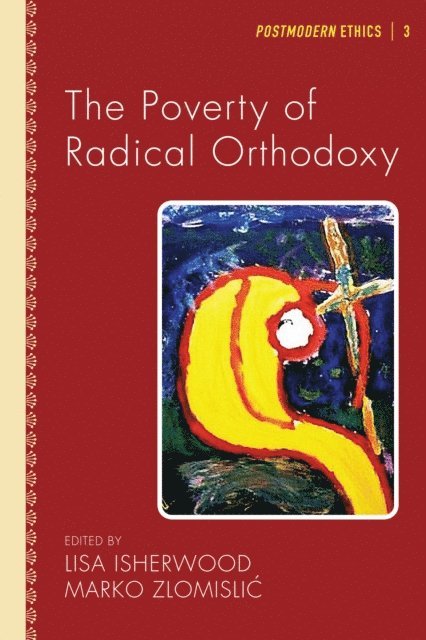
Radical Orthodoxy, whose founding father is John Milbank, claims that God has been pushed to the margins in modernity and that a false and misleading neo-theology has taken hold that needs to be revisited and contested. It is this return to the premodern that often leads theologians to have reservations about Radical Orthodoxy when they might otherwise have some sympathy for many of its positions. Radical Orthodoxy, like most traditional theology, claims that the power of God is in all creation and that God sits everywhere for all to partake of. But there appears to be a failure to see that the church and theology do not set in place systems that live out this basic assumption. Liberation theology, while sharing much of the same assumption that God is everywhere and to be shared, at the same time engages in a critique of the structures that claim to facilitate this vision, and finds them wanting. From here, then, liberation theologians attempt to refigure our understanding of shared power in order to broaden the vision, while it may be argued that Radical Orthodoxy simply restates the assumption with little political critique of the issues. Perhaps this point explains why this book is titled The Poverty of Radical Orthodoxy rather than Radical Error!
E-bok
Engelska, 2010706 kr
Läs direkt efter köp
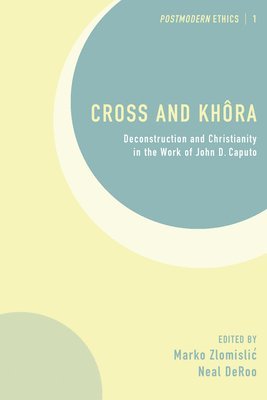
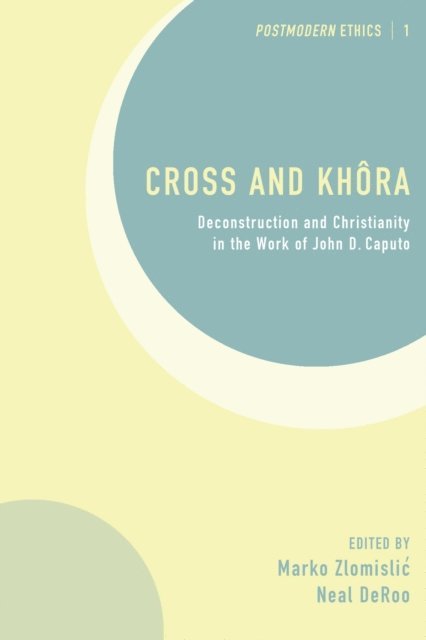
This volume poses the question of the relationship between the two main influences on the thought of John D. Caputo, one of the most well-known philosophers of religion working in North America today: Jacques Derrida and Jesus Christ. Given the seemingly abstract character of Derrida''s account of the messianic, how can one reconcile deconstruction and the concrete messianism of Christianity, as Caputo tries to do over and over again? How can one hold together the love of a God willing to be crucified and the dry, desert khôra, which doesn''t care?This collection of essays from world-renowned scholars seeks to illuminate the difficulties inherent in this seemingly contradictory pair of influences. With his trademark wit and humor, Caputo responds to his interlocutors while clarifying his position on numerous matters of interest to the church and in the academy. In addition to dealing with the concern for issues of hermeneutics, phenomenology, and negative theology for which Caputo has become famous, these essays also evaluate Caputo''s legacy in fields previously not thought to be affected by his deconstructive version of religion: feminism, sacramental theology, Analytic philosophy of religion, and Christology.