Markus Eberhardt – författare
Visar alla böcker från författaren Markus Eberhardt. Handla med fri frakt och snabb leverans.
6 produkter
6 produkter
Inbunden, Engelska, 2014
2 809 kr
Skickas inom 10-15 vardagar
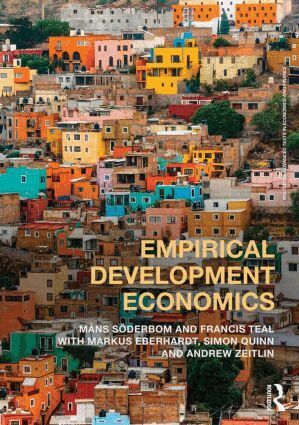
Understanding why so many people across the world are so poor is one of the central intellectual challenges of our time. This book provides the tools and data that will enable students, researchers and professionals to address that issue.Empirical Development Economics has been designed as a hands-on teaching tool to investigate the causes of poverty. The book begins by introducing the quantitative approach to development economics. Each section uses data to illustrate key policy issues. Part One focuses on the basics of understanding the role of education, technology and institutions in determining why incomes differ so much across individuals and countries. In Part Two, the focus is on techniques to address a number of topics in development, including how firms invest, how households decide how much to spend on their children’s education, whether microcredit helps the poor, whether food aid works, who gets private schooling and whether property rights enhance investment.A distinctive feature of the book is its presentation of a range of approaches to studying development questions. Development economics has undergone a major change in focus over the last decade with the rise of experimental methods to address development issues; this book shows how these methods relate to more traditional ones.Please visit the book's website at www.empiricalde.com for online supplements including Stata files and solutions to the exercises.
Häftad, Engelska, 2014
1 114 kr
Skickas inom 10-15 vardagar
Understanding why so many people across the world are so poor is one of the central intellectual challenges of our time. This book provides the tools and data that will enable students, researchers and professionals to address that issue.Empirical Development Economics has been designed as a hands-on teaching tool to investigate the causes of poverty. The book begins by introducing the quantitative approach to development economics. Each section uses data to illustrate key policy issues. Part One focuses on the basics of understanding the role of education, technology and institutions in determining why incomes differ so much across individuals and countries. In Part Two, the focus is on techniques to address a number of topics in development, including how firms invest, how households decide how much to spend on their children’s education, whether microcredit helps the poor, whether food aid works, who gets private schooling and whether property rights enhance investment.A distinctive feature of the book is its presentation of a range of approaches to studying development questions. Development economics has undergone a major change in focus over the last decade with the rise of experimental methods to address development issues; this book shows how these methods relate to more traditional ones.Please visit the book's website at www.empiricalde.com for online supplements including Stata files and solutions to the exercises.
E-bok
Engelska, 20141 282 kr
Läs direkt efter köp
Understanding why so many people across the world are so poor is one of the central intellectual challenges of our time. This book provides the tools and data that will enable students, researchers and professionals to address that issue.Empirical Development Economics has been designed as a hands-on teaching tool to investigate the causes of poverty. The book begins by introducing the quantitative approach to development economics. Each section uses data to illustrate key policy issues. Part One focuses on the basics of understanding the role of education, technology and institutions in determining why incomes differ so much across individuals and countries. In Part Two, the focus is on techniques to address a number of topics in development, including how firms invest, how households decide how much to spend on their children’s education, whether microcredit helps the poor, whether food aid works, who gets private schooling and whether property rights enhance investment.A distinctive feature of the book is its presentation of a range of approaches to studying development questions. Development economics has undergone a major change in focus over the last decade with the rise of experimental methods to address development issues; this book shows how these methods relate to more traditional ones.Please visit the book's website at www.empiricalde.com for online supplements including Stata files and solutions to the exercises.
E-bok
PDF, Engelska, 20141 282 kr
Läs direkt efter köp
Understanding why so many people across the world are so poor is one of the central intellectual challenges of our time. This book provides the tools and data that will enable students, researchers and professionals to address that issue.Empirical Development Economics has been designed as a hands-on teaching tool to investigate the causes of poverty. The book begins by introducing the quantitative approach to development economics. Each section uses data to illustrate key policy issues. Part One focuses on the basics of understanding the role of education, technology and institutions in determining why incomes differ so much across individuals and countries. In Part Two, the focus is on techniques to address a number of topics in development, including how firms invest, how households decide how much to spend on their children’s education, whether microcredit helps the poor, whether food aid works, who gets private schooling and whether property rights enhance investment.A distinctive feature of the book is its presentation of a range of approaches to studying development questions. Development economics has undergone a major change in focus over the last decade with the rise of experimental methods to address development issues; this book shows how these methods relate to more traditional ones.Please visit the book's website at www.empiricalde.com for online supplements including Stata files and solutions to the exercises.
Häftad, Tyska, 2026
190 kr
Skickas inom 3-6 vardagar
E-bok
PDF, Tyska, 2020434 kr
Läs direkt efter köp
Johann Joseph Friebert (1724–1799) wirkte über drei Jahrzehnte als Kapellmeister am Hof des Passauer Fürstbischofs. Er war in seiner Zeit ein gut vernetzter Musiker, der keine Geringeren als Mozart oder Haydn zu eigenen Kompositionen inspirierte.Die vorliegende Studie arbeitet Frieberts Biographie basierend auf neuesten Forschungsergebnissen kritisch auf und gibt einen Überblick zu seinem kompositorischen Schaffen. Einen Schwerpunkt bildet dabei die Bearbeitung der Sieben letzten Worte unseres Erlösers am Kreuze von Joseph Haydn zu einem Oratorium. Anhand der Darstellung der Strukturen, des Personals und Repertoires der Passauer Hofmusikkapelle während seiner Amtszeit kann überdies verdeutlicht werden, wie Friebert ein neues Kapitel in der Passauer Musikgeschichte aufschlug.