Markus König – författare
Visar alla böcker från författaren . Handla med fri frakt och snabb leverans.
8 produkter
8 produkter
Häftad, Engelska, 2018
868 kr
Skickas inom 10-15 vardagar
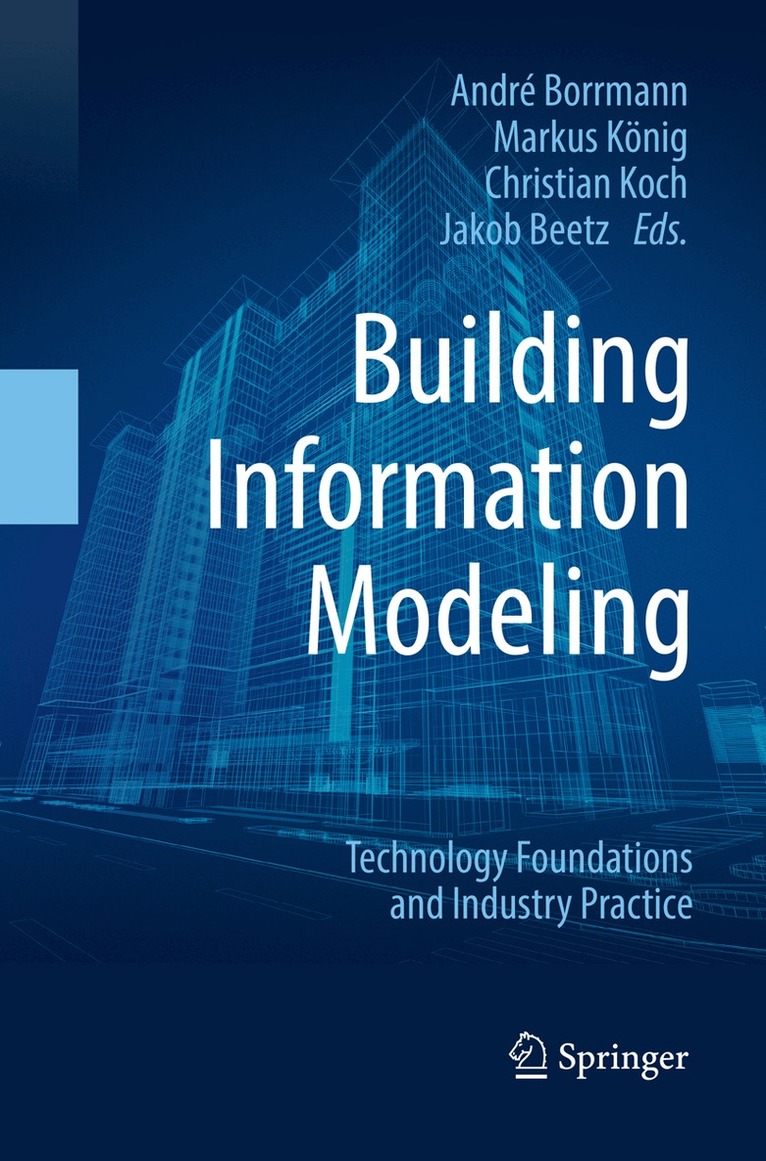
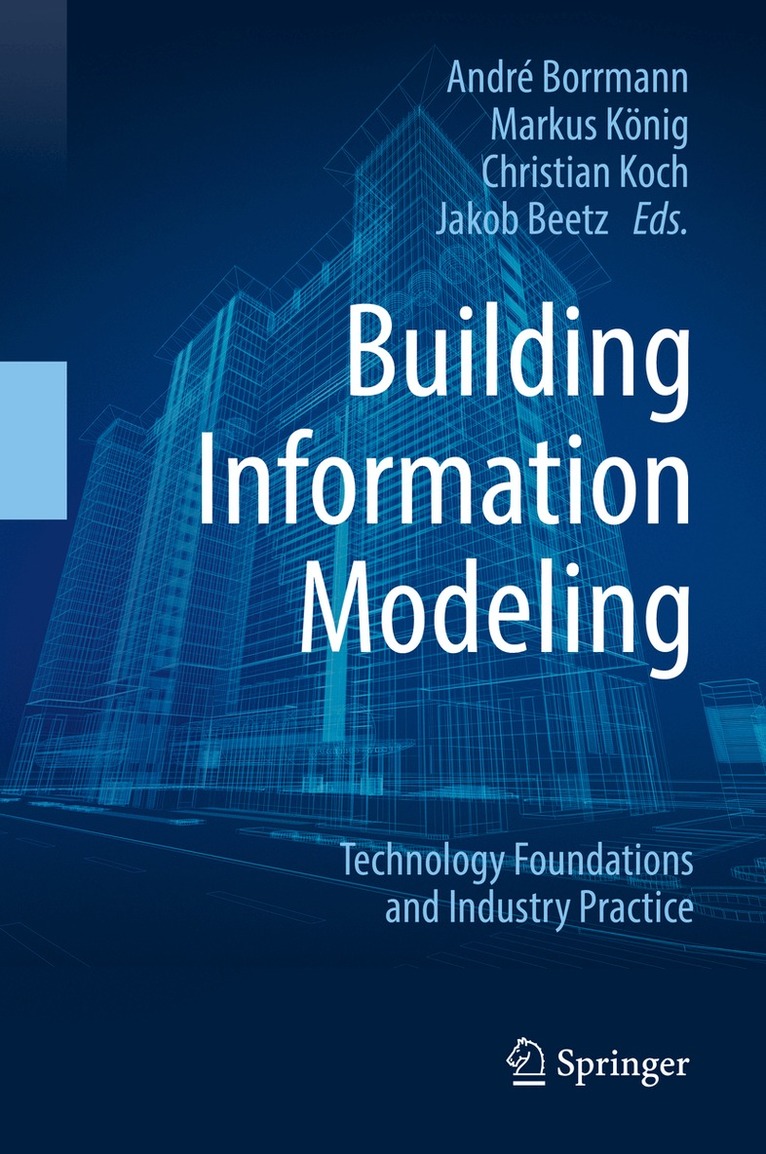
Building Information Modeling (BIM) refers to the consistent and continuous use of digital information throughout the entire lifecycle of a built facility, including its design, construction and operation. In order to exploit BIM methods to their full potential, a fundamental grasp of their key principles and applications is essential. Accordingly, this book combines discussions of theoretical foundations with reports from the industry on currently applied best practices.The book’s content is divided into six parts: Part I discusses the technological basics of BIM and addresses computational methods for the geometric and semantic modeling of buildings, as well as methods for process modeling. Next, Part II covers the important aspect of the interoperability of BIM software products and describes in detail the standardized data format Industry Foundation Classes. It presents the different classification systems, discusses the data format CityGML for describing 3D city models and COBie for handing over data to clients, and also provides an overview of BIM programming tools and interfaces. Part III is dedicated to the philosophy, organization and technical implementation of BIM-based collaboration, and discusses the impact on legal issues including construction contracts. In turn, Part IV covers a wide range of BIM use cases in the different lifecycle phases of a built facility, including the use of BIM for design coordination, structural analysis, energy analysis, code compliance checking, quantity take-off, prefabrication, progress monitoring and operation. In Part V, a number of design and construction companies report on the current state of BIM adoption in connection with actual BIM projects, and discuss the approach pursued for the shift toward BIM, including the hurdles taken. Lastly, Part VI summarizes the book’s content and provides an outlook on future developments.The book was written both for professionals using or programming such tools, and for students in Architecture and Construction Engineering programs.
Inbunden, Engelska, 2023
545 kr
Skickas inom 10-15 vardagar
This open access book compiles the research results of the Collaborative Research Center SFB 837, which has been running since 2010 and will end in 2022, with the topic "Interaction Modeling in Mechanized Tunneling". The Collaborative Research Center is funded by the German Research Foundation (DFG) and is currently the world's largest research facility in the field of tunneling. The aim of the publication is to make our scientific findings accessible to the international professional community. The individual chapters deal with all subsystems relevant in mechanized tunneling and their interaction. The latest results of digital planning and real-time tunneling support have been included.
Häftad, Engelska, 2023
437 kr
Skickas inom 10-15 vardagar
This open access book compiles the research results of the Collaborative Research Center SFB 837, which has been running since 2010 and will end in 2022, with the topic "Interaction Modeling in Mechanized Tunneling". The Collaborative Research Center is funded by the German Research Foundation (DFG) and is currently the world's largest research facility in the field of tunneling. The aim of the publication is to make our scientific findings accessible to the international professional community. The individual chapters deal with all subsystems relevant in mechanized tunneling and their interaction. The latest results of digital planning and real-time tunneling support have been included.
Inbunden, Engelska, 2018
1 226 kr
Skickas inom 10-15 vardagar
Building Information Modeling (BIM) refers to the consistent and continuous use of digital information throughout the entire lifecycle of a built facility, including its design, construction and operation. In order to exploit BIM methods to their full potential, a fundamental grasp of their key principles and applications is essential. Accordingly, this book combines discussions of theoretical foundations with reports from the industry on currently applied best practices.The book’s content is divided into six parts: Part I discusses the technological basics of BIM and addresses computational methods for the geometric and semantic modeling of buildings, as well as methods for process modeling. Next, Part II covers the important aspect of the interoperability of BIM software products and describes in detail the standardized data format Industry Foundation Classes. It presents the different classification systems, discusses the data format CityGML for describing 3D city models and COBie for handing over data to clients, and also provides an overview of BIM programming tools and interfaces. Part III is dedicated to the philosophy, organization and technical implementation of BIM-based collaboration, and discusses the impact on legal issues including construction contracts. In turn, Part IV covers a wide range of BIM use cases in the different lifecycle phases of a built facility, including the use of BIM for design coordination, structural analysis, energy analysis, code compliance checking, quantity take-off, prefabrication, progress monitoring and operation. In Part V, a number of design and construction companies report on the current state of BIM adoption in connection with actual BIM projects, and discuss the approach pursued for the shift toward BIM, including the hurdles taken. Lastly, Part VI summarizes the book’s content and provides an outlook on future developments.The book was written both for professionals using or programming such tools, and for students in Architecture and Construction Engineering programs.
1 549 kr
Skickas inom 5-8 vardagar
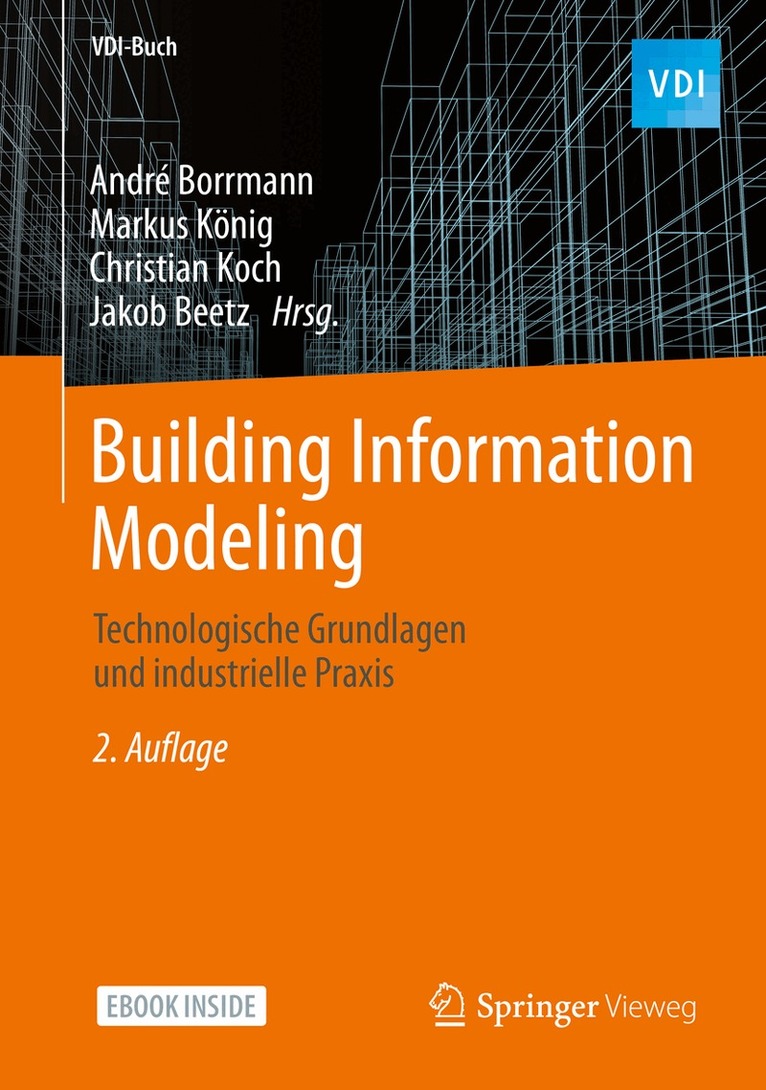
Building Information Modeling (BIM) ist eine innovative Technologie, die auf der durchgängigen Verwendung digitaler Bauwerksmodelle für alle Planungs-, Ausführungs- und Betriebsprozesse beruht. Das Buch erläutert ausführlich die informationstechnischen Grundlagen der BIM-Methode und vermittelt dem Leser fundiertes Wissen zu allen wesentlichen Aspekten. Die stark überarbeitete zweite Auflage geht ausführlich auf neuste Entwicklungen, u. a. im Bereich der Ausarbeitungsgrade, der BIM-Rollen und der Standardisierung ein und gibt einen vertieften Einblick in die erfolgreiche Einführung von BIM bei namhaften Auftraggebern, Planungsbüros und Bauunternehmen.
Häftad, Tyska, 2003
610 kr
Skickas inom 10-15 vardagar
Häftad, Tyska, 2023
147 kr
Skickas inom 3-6 vardagar
Häftad, Tyska, 2025
109 kr
Skickas inom 3-6 vardagar