Markus Kröger - Böcker
Visar alla böcker från författaren Markus Kröger. Handla med fri frakt och snabb leverans.
6 produkter
6 produkter
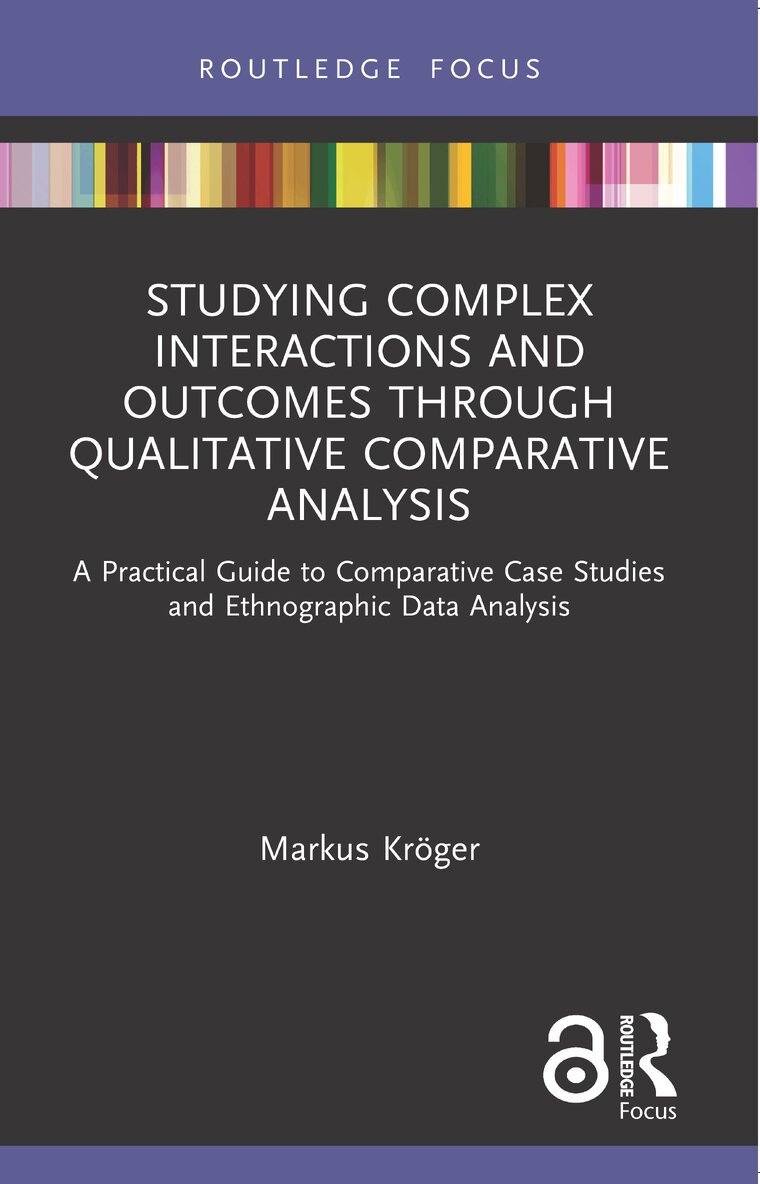
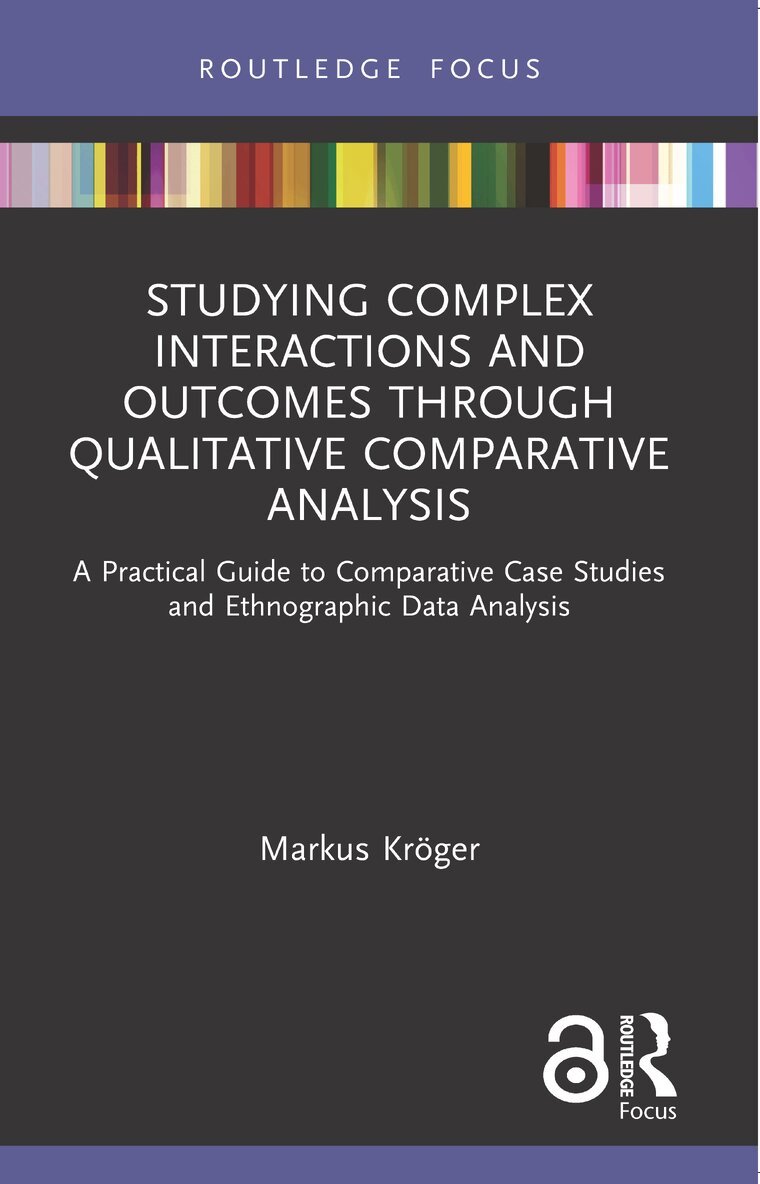
Studying Complex Interactions and Outcomes Through Qualitative Comparative Analysis
A Practical Guide to Comparative Case Studies and Ethnographic Data Analysis
Inbunden, Engelska, 2021
758 kr
Skickas inom 10-15 vardagar
Studying Complex Interactions and Outcomes Through Qualitative Comparative Analysis: A Practical Guide to Comparative Case Studies and Ethnographic Data Analysis offers practical, methodological, and theoretically robust guidelines to systematically study the causalities, dynamics, and outcomes of complex social interactions in multiple source data sets. It demonstrates how to convert data from multisited ethnography of investment politics, mobilizations, and citizen struggles into a Qualitative Comparative Analysis (QCA). In this book, Markus Kröger focuses on how data collected primarily via multisited political ethnography, supplemented by other materials and verified by multiple forms of triangulation, can be systematically analyzed through QCA. The results of this QCA offer insight on how to study the political and economic outcomes in natural resource conflicts, across different contexts and political systems. This book applies the method in practice using examples from the author’s own research. With a focus on social movement studies, it shows how QCA can be used to analyze a multiple data source database, that includes results from multiple case studies.This book is a practical guide for researchers and students in social movement studies and other disciplines that produce ethnographic data from multiple sources on how to analyze complex databases through the QCA.
Extractivisms, Existences and Extinctions
Monoculture Plantations and Amazon Deforestation
Inbunden, Engelska, 2021
2 103 kr
Skickas inom 10-15 vardagar
This book explores the existential redistributions that extractivist frontiers create, going beyond existing studies by bringing into the English-language discussion much of the wisdom from Latin American rural and forest communities’ understandings of extractivist phenomena, and the destruction and changes in lives and lived environments they create.The author explores the many different types of extractivism, ranging from agroextractivist monocultures to mineral extraction, and analyzes the differences between them. The existential transformations of Brazil's Amazon and Cerrado regions, previously inhabited by Indigenous people but now being deforested by colonizers who expand soybean plantations, are analyzed in detail. The author also compares extractivisms with the local and broader existential changes through global production networks and their shifts, produced by monoculture plantation-based extractivist operations. Anchored in the author’s own ethnographic data and comparison of lessons across multiple extractivist frontiers, the chapters integrate the many accounts of violence, and onto-epistemic and moral changes in extractivist enclaves, looking at these with the help of political ontology. The book offers details on how to characterize and compare different types and degrees of extractivisms and anti-extractivisms.This transdisciplinary book provides new organizing concepts and theoretical frameworks for starting to analyze the unfolding natural resource politics of the post-coronavirus era, the advancing climate emergency, and the ever more chaotic multi-polar world. It will be of interest to students and scholars in the fields of international development, global value chains, political economy, Latin American Studies, political ecology, and international trade, as well as anyone engaged with the practical and political issues related to globalization.The Open Access version of this book, available at www.taylorfrancis.com, has been made available under a Creative Commons Attribution-Non Commercial-No Derivatives 4.0 license.
Extractivisms, Existences and Extinctions
Monoculture Plantations and Amazon Deforestation
Häftad, Engelska, 2023
580 kr
Skickas inom 10-15 vardagar
This book explores the existential redistributions that extractivist frontiers create, going beyond existing studies by bringing into the English-language discussion much of the wisdom from Latin American rural and forest communities’ understandings of extractivist phenomena, and the destruction and changes in lives and lived environments they create.The author explores the many different types of extractivism, ranging from agroextractivist monocultures to mineral extraction, and analyzes the differences between them. The existential transformations of Brazil's Amazon and Cerrado regions, previously inhabited by Indigenous people but now being deforested by colonizers who expand soybean plantations, are analyzed in detail. The author also compares extractivisms with the local and broader existential changes through global production networks and their shifts, produced by monoculture plantation-based extractivist operations. Anchored in the author’s own ethnographic data and comparison of lessons across multiple extractivist frontiers, the chapters integrate the many accounts of violence, and onto-epistemic and moral changes in extractivist enclaves, looking at these with the help of political ontology. The book offers details on how to characterize and compare different types and degrees of extractivisms and anti-extractivisms.This transdisciplinary book provides new organizing concepts and theoretical frameworks for starting to analyze the unfolding natural resource politics of the post-coronavirus era, the advancing climate emergency, and the ever more chaotic multi-polar world. It will be of interest to students and scholars in the fields of international development, global value chains, political economy, Latin American Studies, political ecology, and international trade, as well as anyone engaged with the practical and political issues related to globalization.The Open Access version of this book, available at www.taylorfrancis.com, has been made available under a Creative Commons Attribution-Non Commercial-No Derivatives 4.0 license.
2 170 kr
Skickas inom 10-15 vardagar
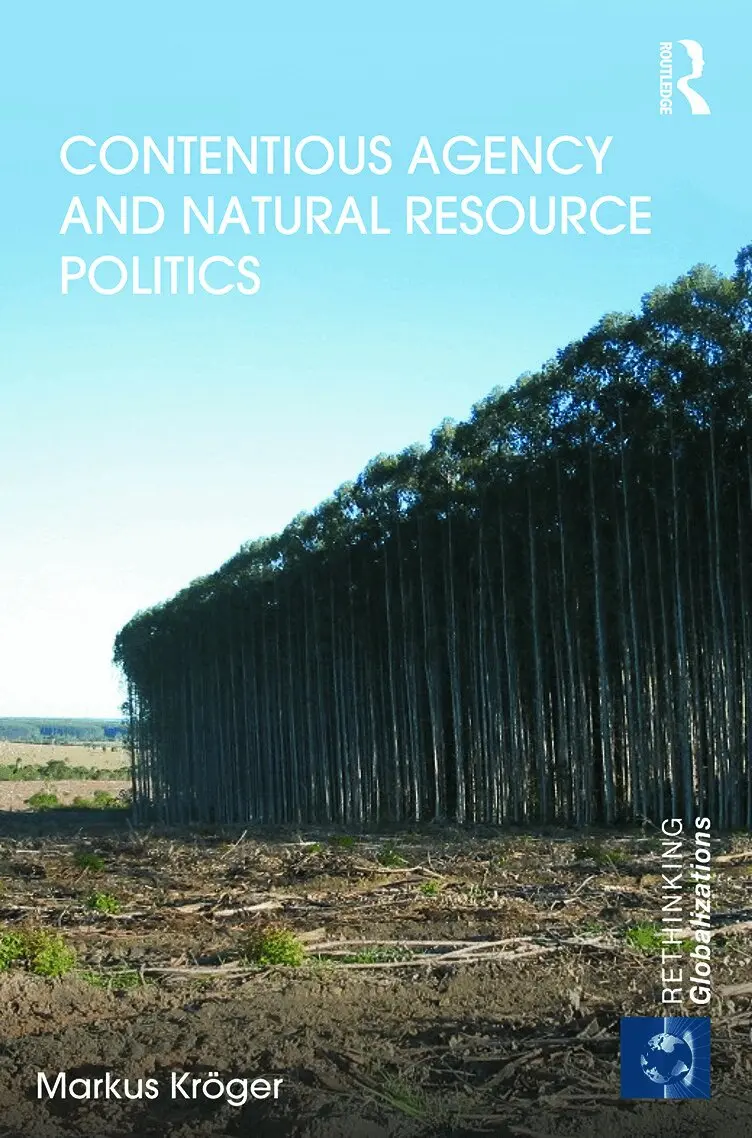
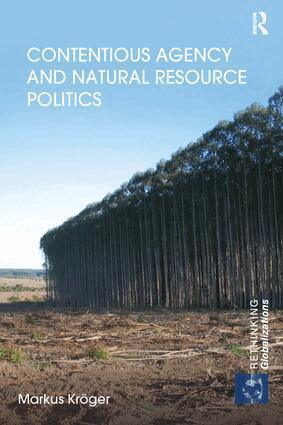
The looming depletion of non-renewable resources has increased the global land grab in the past decade. So far however, the question of how and when people can influence economic outcomes has received little attention in the study of social movements.Based on in-depth ethnographic field research since 2003 in the industrial forestry expansion frontiers in Brazil and elsewhere in the global South, this book presents a novel theory to explain how the interaction between resistance, companies and the state determines investment outcomes. The promotion of contentious agency by organizing and politicizing, campaigning, protesting, networking and engaging in state and corporate-remediated politics whilst maintaining autonomy is central to explaining how impacted people influence resource flows, and block or slow projects they deem harmful to their livelihoods and the environment. The conflicts between globalizing paper and pulp corporations and the landless peasants, indigenous communities and other parties with alternative projects for the planet’s future are studied to illustrate how a great transformation can be built upon progressive counter-movements. This systematic comparison of several cases illustrates the broader principles and problems endemic to the global political economy.Contentious Agency and Natural Resource Politics will be of strong interest to students and scholars of international relations, international political economy, environmental studies, environmental politics, sociology and social movement studies.
Studying Complex Interactions and Outcomes Through Qualitative Comparative Analysis
A Practical Guide to Comparative Case Studies and Ethnographic Data Analysis
Häftad, Engelska, 2024
294 kr
Skickas inom 10-15 vardagar
Studying Complex Interactions and Outcomes Through Qualitative Comparative Analysis: A Practical Guide to Comparative Case Studies and Ethnographic Data Analysis offers practical, methodological, and theoretically robust guidelines to systematically study the causalities, dynamics, and outcomes of complex social interactions in multiple source data sets. It demonstrates how to convert data from multisited ethnography of investment politics, mobilizations, and citizen struggles into a Qualitative Comparative Analysis (QCA). In this book, Markus Kröger focuses on how data collected primarily via multisited political ethnography, supplemented by other materials and verified by multiple forms of triangulation, can be systematically analyzed through QCA. The results of this QCA offer insight on how to study the political and economic outcomes in natural resource conflicts, across different contexts and political systems. This book applies the method in practice using examples from the author’s own research. With a focus on social movement studies, it shows how QCA can be used to analyze a multiple data source database, that includes results from multiple case studies.This book is a practical guide for researchers and students in social movement studies and other disciplines that produce ethnographic data from multiple sources on how to analyze complex databases through the QCA.
580 kr
Skickas inom 10-15 vardagar
The looming depletion of non-renewable resources has increased the global land grab in the past decade. So far however, the question of how and when people can influence economic outcomes has received little attention in the study of social movements.Based on in-depth ethnographic field research since 2003 in the industrial forestry expansion frontiers in Brazil and elsewhere in the global South, this book presents a novel theory to explain how the interaction between resistance, companies and the state determines investment outcomes. The promotion of contentious agency by organizing and politicizing, campaigning, protesting, networking and engaging in state and corporate-remediated politics whilst maintaining autonomy is central to explaining how impacted people influence resource flows, and block or slow projects they deem harmful to their livelihoods and the environment. The conflicts between globalizing paper and pulp corporations and the landless peasants, indigenous communities and other parties with alternative projects for the planet’s future are studied to illustrate how a great transformation can be built upon progressive counter-movements. This systematic comparison of several cases illustrates the broader principles and problems endemic to the global political economy.Contentious Agency and Natural Resource Politics will be of strong interest to students and scholars of international relations, international political economy, environmental studies, environmental politics, sociology and social movement studies.