Markus Rupp – författare
1 422 kr
Skickas inom 11-20 vardagar
1 422 kr
Skickas inom 11-20 vardagar
1 664 kr
Läs direkt efter köp
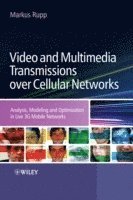
Video and Multimedia Transmissions over Cellular Networks describes the state-of-the-art in the transmission of multimedia over cellular networks, evaluates the performance of the running system based on the measurements and monitoring of live networks, and finally presents concepts and methods for improving of the quality in such systems.
Key Features:
Addresses the transmission of different media over cellular networks, with a focus on evolving UMTS transmission systems Provides in-depth coverage of UMTS network architecture, and an overview of 3GPP video services Describes the characteristics of the link layer errors in the UMTS Terrestrial radio Access Network (UTRAN), obtained by extensive measurements in live UMTS networks Covers video encoding and decoding, introducing H.264/AVC video codec, as well as addressing various novel concepts for increased error resilience Discusses the real-time capable algorithms that are suitable for implementation in power and size limited terminals Presents the methods for monitoring quality, as well as analyzing and modelling traffic evolution in the cellular mobile networkThis book provides a valuable reference for researchers and students working in the field of multimedia transmission over wireless networks. Industry experts and professionals working within the field will also find this book of interest.
1 664 kr
Läs direkt efter köp
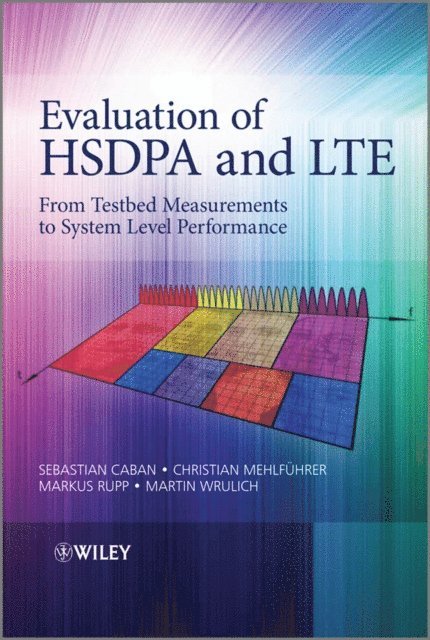
With the roll-out of LTE, high data throughput is promised to be available to cellular users. In case you have ever wondered how high this throughput really is, this book is the right read for you: At first, it presents results from experimental research and simulations of the physical layer of HSDPA, WiMAX, and LTE. Next, it explains in detail how measurements on such systems need to be performed in order to achieve reproducible and repeatable results. The book further addresses how wireless links can be evaluated by means of standard-compliant link-level simulation. The major challenge in this context is their complexity when investigating complete wireless cellular networks. Consequently, it is shown how system-level simulators with a higher abstraction level can be designed such that their results still match link-level simulations. Exemplarily, the book finally presents optimizations of wireless systems over several cells.
This book:
Explains how the performance of modern cellular wireless networks can be evaluated by measurements and simulations Discusses the concept of testbeds, highlighting the challenges and expectations when building them Explains measurement techniques, including the evaluation of the measurement quality by statistical inference techniques Presents throughput results for HSDPA, WiMAX, and LTE Demonstrates simulators at both, link- level and system-level Provides system-level and link-level simulators (for WiMAX and LTE) on an accompanying website (https://www.nt.tuwien.ac.at/downloads/featured-downloads)This book is an insightful guide for researchers and engineers working in the field of mobile radio communication as well as network planning. Advanced students studying related courses will also find the book interesting.
1 664 kr
Läs direkt efter köp
With the roll-out of LTE, high data throughput is promised to be available to cellular users. In case you have ever wondered how high this throughput really is, this book is the right read for you: At first, it presents results from experimental research and simulations of the physical layer of HSDPA, WiMAX, and LTE. Next, it explains in detail how measurements on such systems need to be performed in order to achieve reproducible and repeatable results. The book further addresses how wireless links can be evaluated by means of standard-compliant link-level simulation. The major challenge in this context is their complexity when investigating complete wireless cellular networks. Consequently, it is shown how system-level simulators with a higher abstraction level can be designed such that their results still match link-level simulations. Exemplarily, the book finally presents optimizations of wireless systems over several cells.
This book:
Explains how the performance of modern cellular wireless networks can be evaluated by measurements and simulations Discusses the concept of testbeds, highlighting the challenges and expectations when building them Explains measurement techniques, including the evaluation of the measurement quality by statistical inference techniques Presents throughput results for HSDPA, WiMAX, and LTE Demonstrates simulators at both, link- level and system-level Provides system-level and link-level simulators (for WiMAX and LTE) on an accompanying website (https://www.nt.tuwien.ac.at/downloads/featured-downloads)This book is an insightful guide for researchers and engineers working in the field of mobile radio communication as well as network planning. Advanced students studying related courses will also find the book interesting.
840 kr
Skickas inom 10-15 vardagar
818 kr
Läs direkt efter köp
320 kr
Skickas inom 10-15 vardagar
315 kr
Läs direkt efter köp
1 143 kr
Läs direkt efter köp
1 073 kr
Skickas inom 10-15 vardagar
1 367 kr
Läs direkt efter köp
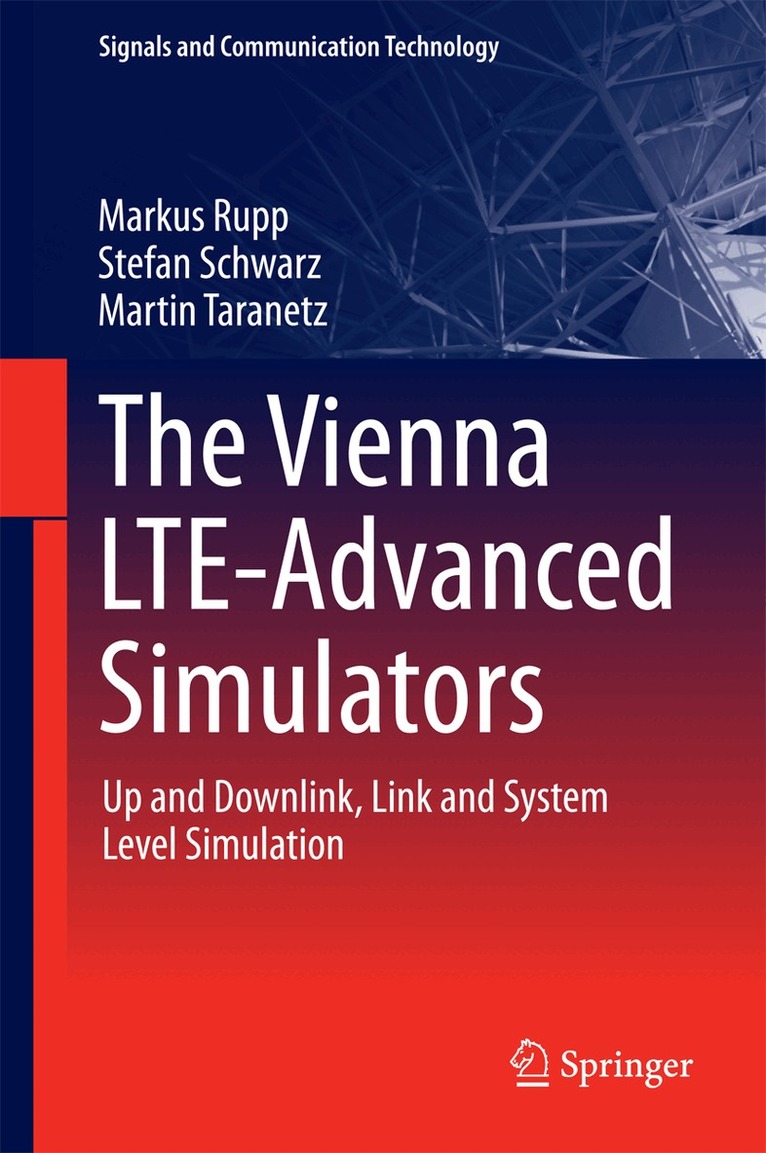
This book introducesthe Vienna Simulator Suite for 3rd-Generation Partnership Project(3GPP)-compatible Long Term Evolution-Advanced (LTE-A) simulators and presentsapplications to demonstrate their uses for describing, designing, and optimizingwireless cellular LTE-A networks.
Part One addresses LTEand LTE-A link level techniques. As there has been high demand for the downlink(DL) simulator, it constitutes the central focus of the majority of thechapters. This part of the book reports on relevant highlights, includingsingle-user (SU), multi-user (MU) and single-input-single-output (SISO) as wellas multiple-input-multiple-output (MIMO) transmissions. Furthermore, itsummarizes the optimal pilot pattern for high-speed communications as well asdifferent synchronization issues. One chapter is devoted to experiments thatshow how the link level simulator can provide input to a testbed. This sectionalso uses measurements to present and validate fundamental results onorthogonal frequency division multiplexing (OFDM) transmissions that are notlimited to LTE-A. One chapter exclusively deals with the newest tool, theuplink (UL) link level simulator, and presents cutting-edge results.
In turn, Part Twofocuses on system-level simulations. From early on, system-level simulations havebeen in high demand, as people are naturally seeking answers when scenarioswith numerous base stations and hundreds of users are investigated. This partnot only explains how mathematical abstraction can be employed to speed upsimulations by several hundred times without sacrificing precision, but alsoillustrates new theories on how to abstract large urban heterogeneous networkswith indoor small cells. It also reports on advanced applications such as trainand car transmissions to demonstrate the tools’ capabilities.
1 401 kr
Skickas inom 5-8 vardagar