Marouf Hasian – författare
Visar alla böcker från författaren Marouf Hasian. Handla med fri frakt och snabb leverans.
4 produkter
4 produkter
Häftad, Engelska, 2012
385 kr
Skickas inom 5-8 vardagar
E-bok
Engelska, 2014639 kr
Läs direkt efter köp
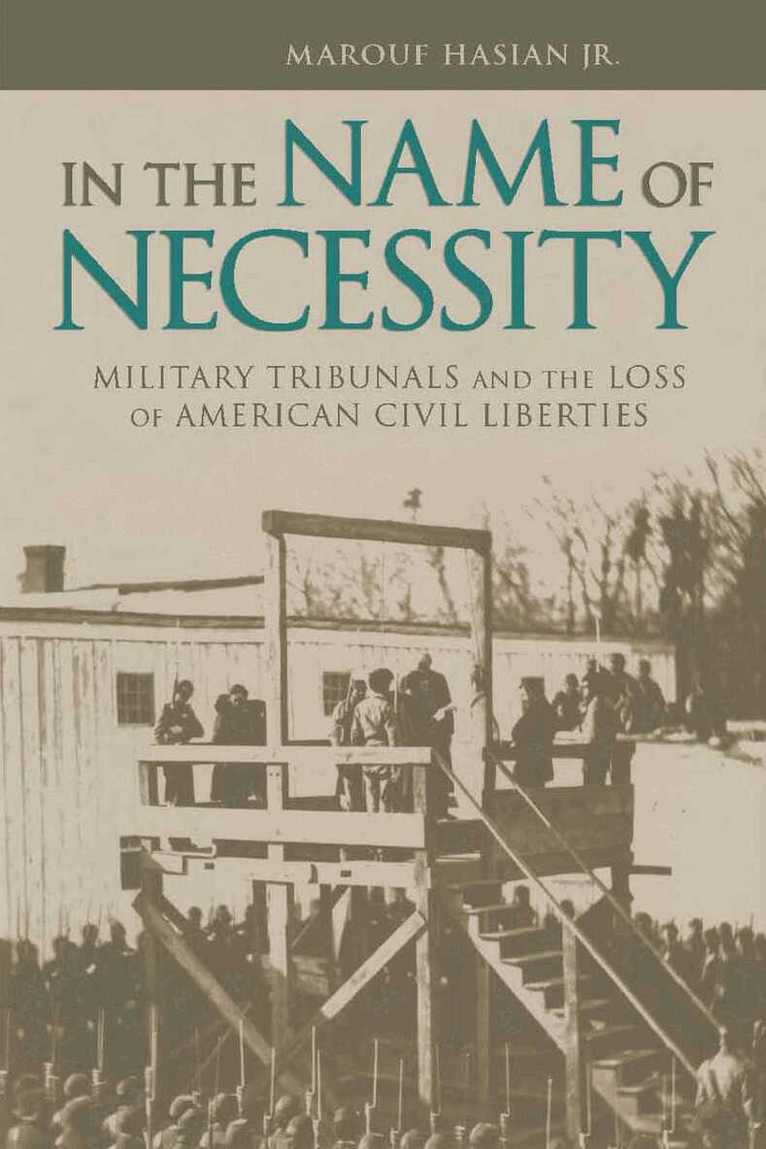
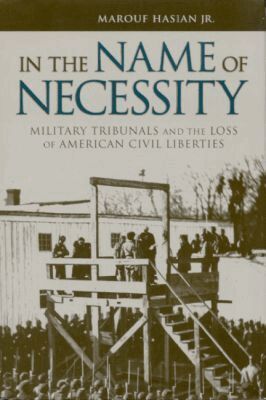
Analyses the ways American leaders have justified the use of military tribunals, the suspension of due process, and the elimination of habeas corpus Though the war on terrorism is said to have generated unprecedented military situations, arguments for the Patriot Act and military tribunals following 9/11 resemble many historical claims for restricting civil liberties, more often than not in the name of necessity. Marouf Hasian Jr. examines the major legal cases that show how various generations have represented the need for military tribunals, and how officials historically have applied the term “necessity.” George Washington cited the necessity of martial discipline in executing the British operative Major André. Tribunals tried and convicted more than 200 Sioux warriors during the Dakota Wars. President Lincoln suspended habeas corpus for many civilian and military prisoners during the Civil War. Twentieth Century military and civilian leaders selectively drafted their own codes, leading to the execution of German saboteurs during World War II. Further, General MacArthur’s tribunal to investigate the wartime activities of Japanese General Yamashita raised the specter of “victor’s justice,” anticipating the outcry that attended the Nuremberg trials. In those cases as in current debates about the prosecution of terrorists, Hasian argues that the past is often cited selectively, neglecting historical contexts and the controversies these cases engendered.
E-bok
Engelska, 2016887 kr
Läs direkt efter köp
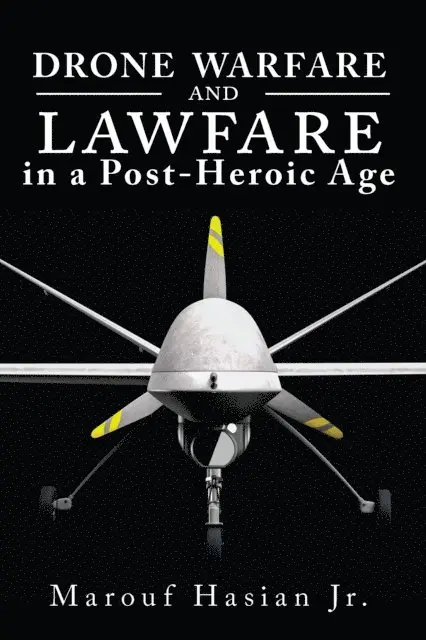
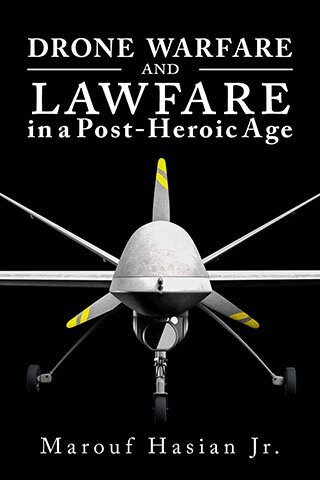
In the past decade, the United States has rapidly deployed militarized drones in theaters of war for surveillance as well as targeted killing. The swiftness with which drones were created and put into service has outstripped the development of an associated framework for discussing them, with the result that basic conversations about these lethal weapons have been stymied for a lack of a shared rhetoric. Marouf Hasian’s Drone Warfare and Lawfare in a Post-Heroic Age fills that critical gap. With a growing fleet of more than 7,500 drones, these emblems of what one commentary has dubbed “push-button, bloodless wars” comprise as much as a third of the US aircraft force. Their use is hotly debated, some championing air power that doesn’t risk the lives of pilots, others arguing that drone strikes encourage cycles of violence against the United States, its allies, and interests. In this landmark study, Hasian illuminates both the discursive and visual argumentative strategies that drone supporters and critics both rely on. He comprehensively reviews how advocates and detractors parse and re-contextualize drone images, casualty figures, governmental “white papers,” NGO reports, documentaries, and blogs to support their points of view. He unpacks the ideological reflexes and assumptions behind these legal, ethical, and military arguments. Visiting both formal legal language used by legislators, political leaders, and policy makers as well as public, vernacular commentaries about drones, Drone Warfare and Lawfare in a Post-Heroic Age dispassionately illuminates the emotive, cognitive, and behavioral strategies partisans use to influence public and official opinion.
Inbunden, Engelska, 2019
559 kr
Skickas inom 10-15 vardagar
The Securitization of Memorial Space argues that the National September 11 Memorial and Memorial Museum is a securitized site of memory-what Foucault called a dispositif-that polices visitors and publics to remember trauma, darkness, and victimage in ways that perpetuate the “necessity” of the Global War on Terrorism.Contributing to studies in public memory, rhetoric and argumentation, and critical security studies, Nicholas S. Paliewicz and Marouf Hasian Jr. show how various human and nonhuman actors participated in complicated argumentative formations that have mobilized political, performative, and militaristic practices of anti-terroristic violence in other parts of the world. While there were times that certain argumentative stakeholders-such as local New Yorkers-questioned the necessity of securitizing this site of memory, agentic factions including the families of those who died on 9/11, public supporters, security agents, and politicians created an ideologically oriented security assemblage that remembers 9/11 through counter-terroristic performances at Ground Zero.In chronological order from the 2001 “dustbowl” to the present popularization of 9/11 memories, the authors present seven chapters of rich rhetorical analysis that show how the National September 11 Memorial and Memorial Museum perpetuates grief, uncertainty, and angst that affects public memory in multidirectional ways.