Marshall Peter Marshall – författare
Visar alla böcker från författaren . Handla med fri frakt och snabb leverans.
6 produkter
6 produkter
E-bok
Engelska, 2017407 kr
Läs direkt efter köp
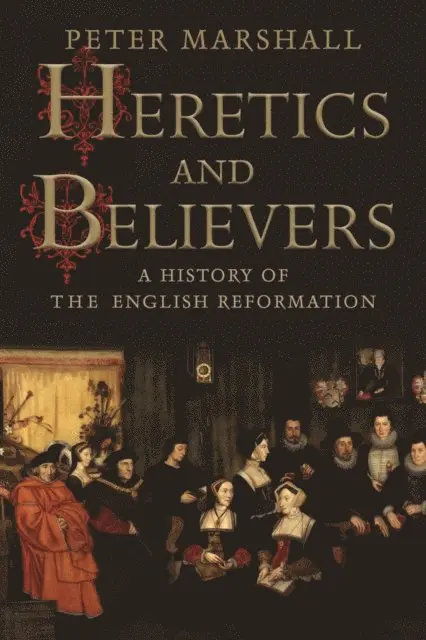
WINNER OF THE 2018 WOLFSON HISTORY PRIZE Centuries on, what the Reformation was and what it accomplished remain deeply contentious. Peter Marshall’s sweeping new history—the first major overview for general readers in a generation—argues that sixteenth-century England was a society neither desperate for nor allergic to change, but one open to ideas of “reform” in various competing guises. King Henry VIII wanted an orderly, uniform Reformation, but his actions opened a Pandora’s Box from which pluralism and diversity flowed and rooted themselves in English life. With sensitivity to individual experience as well as masterfully synthesizing historical and institutional developments, Marshall frames the perceptions and actions of people great and small, from monarchs and bishops to ordinary families and ecclesiastics, against a backdrop of profound change that altered the meanings of “religion” itself. This engaging history reveals what was really at stake in the overthrow of Catholic culture and the reshaping of the English Church.
E-bok
Engelska, 2021320 kr
Läs direkt efter köp
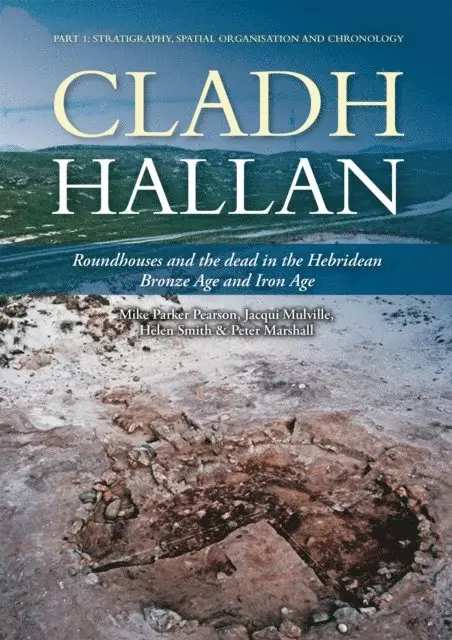
This first of two volumes presents the archaeological evidence of a long sequence of settlement and funerary activity from the Beaker period (Early Bronze Age c. 2000 BC) to the Early Iron Age (c. 500 BC) at the unusually long-occupied site of Cladh Hallan on South Uist in the Western Isles of Scotland. Particular highlights of its sequence are a cremation burial ground and pyre site of the 18th–16th centuries BC and a row of three Late Bronze Age sunken-floored roundhouses constructed in the 10th century BC. Beneath these roundhouses, four inhumation graves contained skeletons, two of which were remains of composite collections of body parts with evidence for post-mortem soft tissue preservation prior to burial. They have proved to be the first evidence for mummification in Bronze Age Britain.Cladh Hallan’s remarkable stratigraphic sequence, preserved in the machair sand of South Uist, includes a unique 500-year sequence of roundhouse life in Late Bronze Age and Iron Age Britain. One of the most important results of the excavation has come from intensive environmental and micro-debris sampling of house floors and outdoor areas to recover patterns of discard and to interpret the spatial use of 15 domestic interiors from the Late Bronze Age to the Early Iron Age. From Cladh Hallan’s roundhouse floors we gain intimate insights into how daily life was organized within the house – where people cooked, ate, worked and slept. Such evidence rarely survives from prehistoric houses in Britain or Europe, and the results make a profound contribution to long-running debates about the sunwise organisation of roundhouse activities. Activity at Cladh Hallan ended with the construction and abandonment of two unusual double-roundhouses in the Early Iron Age. One appears to have been a smokery and steam room, and the other was used for metalworking.
E-bok
PDF, Engelska, 2021320 kr
Läs direkt efter köp
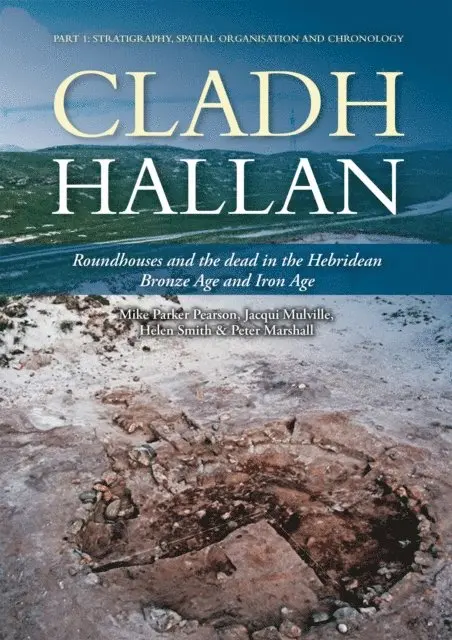
This first of two volumes presents the archaeological evidence of a long sequence of settlement and funerary activity from the Beaker period (Early Bronze Age c. 2000 BC) to the Early Iron Age (c. 500 BC) at the unusually long-occupied site of Cladh Hallan on South Uist in the Western Isles of Scotland. Particular highlights of its sequence are a cremation burial ground and pyre site of the 18th–16th centuries BC and a row of three Late Bronze Age sunken-floored roundhouses constructed in the 10th century BC. Beneath these roundhouses, four inhumation graves contained skeletons, two of which were remains of composite collections of body parts with evidence for post-mortem soft tissue preservation prior to burial. They have proved to be the first evidence for mummification in Bronze Age Britain.Cladh Hallan’s remarkable stratigraphic sequence, preserved in the machair sand of South Uist, includes a unique 500-year sequence of roundhouse life in Late Bronze Age and Iron Age Britain. One of the most important results of the excavation has come from intensive environmental and micro-debris sampling of house floors and outdoor areas to recover patterns of discard and to interpret the spatial use of 15 domestic interiors from the Late Bronze Age to the Early Iron Age. From Cladh Hallan’s roundhouse floors we gain intimate insights into how daily life was organized within the house – where people cooked, ate, worked and slept. Such evidence rarely survives from prehistoric houses in Britain or Europe, and the results make a profound contribution to long-running debates about the sunwise organisation of roundhouse activities. Activity at Cladh Hallan ended with the construction and abandonment of two unusual double-roundhouses in the Early Iron Age. One appears to have been a smokery and steam room, and the other was used for metalworking.
E-bok
PDF, Engelska, 2012366 kr
Läs direkt efter köp
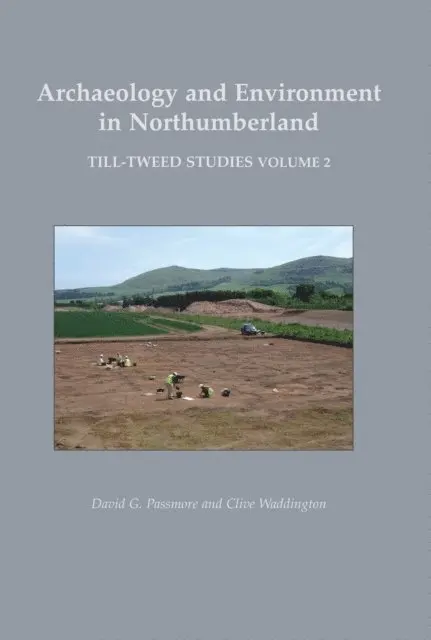
Eventful, influential and absorbing, the early history of Northumberland is a fascinating story that has rarely been brought together under one cover. In this authoritative historical account, the authors bring to bear a huge quantity of old and new data and craft it into an in-depth synthesis. The authors deliver this history in chronological order from a perspective that places human activity and environment at its core. The narrative extends from the Palaeolithic through to, and including, the Anglo-Saxon period. This enormous sweep of history is supported by a robust radiocarbon chronology, with all available dates for the region brought together and calibrated against the most recent calibration curves for the first time. The geographic focus of the volume is North Northumberland but the narrative frequently extends to cover the whole county and occasionally further afield into neighbouring areas so as to deal with key topics at an appropriate geographic scale and to take account of important information from nearby areas. This second volume in the Till-Tweed monograph series follows on from the first volume, Managing Archaeological Landscapes in Northumberland , which provided a considerable quantity of new field data, in addition to presenting a landscape management methodology based around the "landform element" approach.
E-bok
Engelska, 2015320 kr
Läs direkt efter köp
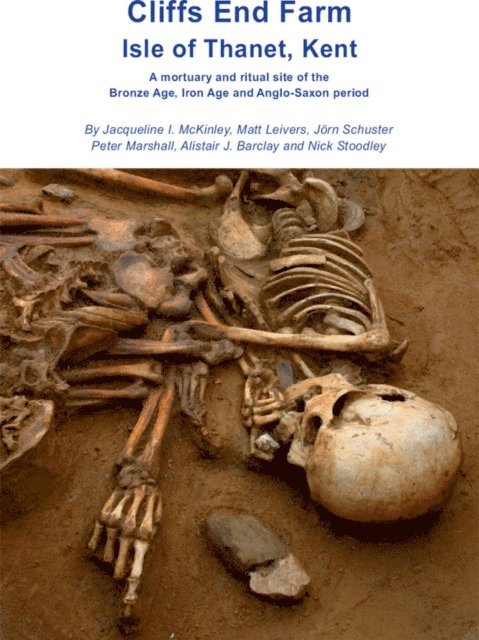
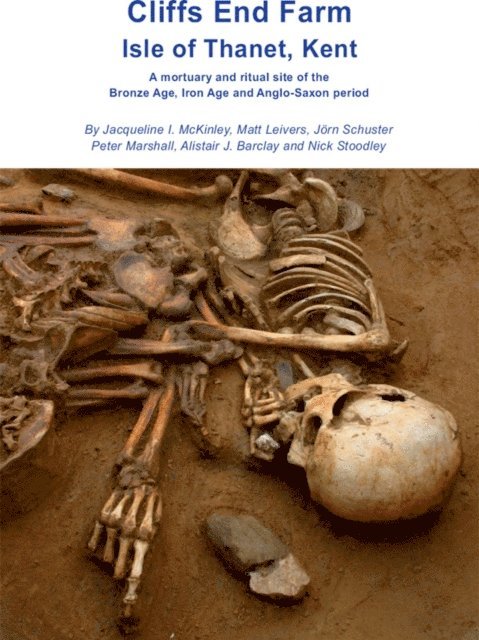
Excavations at Cliffs End Farm, Thanet, Kent, undertaken in 2004/5 uncovered a dense area of archaeological remains including Bronze Age barrows and enclosures, and a large prehistoric mortuary feature, as well as a small early 6th to late 7th century Anglo-Saxon inhumation cemetery. An extraordinary series of human and animal remains were recovered from the Late Bronze Age–Middle Iron Age mortuary feature, revealing a wealth of evidence for mortuary rites including exposure, excarnation and curation. The site seems to have been largely abandoned in the later Iron Age and very little Romano-British activity was identified. In the early 6th century a small inhumation cemetery was established. Very little human bone survived within the 21 graves, where the burial environment differed from that within the prehistoric mortuary feature, but grave goods indicate ‘females’ and ‘males’ were buried here. Richly furnished graves included that of a ‘female’ buried with a necklace, a pair of brooches and a purse, as well as a ‘male’ with a shield covering his face, a knife and spearhead. In the Middle Saxon period lines of pits, possibly delineating boundaries, were dug, some of which contained large deposits of marine shells. English Heritage funded an extensive programme of radiocarbon and isotope analyses, which have produced some surprising results that shed new light on long distance contacts, mobility and mortuary rites during later prehistory. This volume presents the results of the investigations together with the scientific analyses, human bone, artefact and environmental reports.
E-bok
PDF, Engelska, 2015320 kr
Läs direkt efter köp
Excavations at Cliffs End Farm, Thanet, Kent, undertaken in 2004/5 uncovered a dense area of archaeological remains including Bronze Age barrows and enclosures, and a large prehistoric mortuary feature, as well as a small early 6th to late 7th century Anglo-Saxon inhumation cemetery. An extraordinary series of human and animal remains were recovered from the Late Bronze Age–Middle Iron Age mortuary feature, revealing a wealth of evidence for mortuary rites including exposure, excarnation and curation. The site seems to have been largely abandoned in the later Iron Age and very little Romano-British activity was identified. In the early 6th century a small inhumation cemetery was established. Very little human bone survived within the 21 graves, where the burial environment differed from that within the prehistoric mortuary feature, but grave goods indicate ‘females’ and ‘males’ were buried here. Richly furnished graves included that of a ‘female’ buried with a necklace, a pair of brooches and a purse, as well as a ‘male’ with a shield covering his face, a knife and spearhead. In the Middle Saxon period lines of pits, possibly delineating boundaries, were dug, some of which contained large deposits of marine shells. English Heritage funded an extensive programme of radiocarbon and isotope analyses, which have produced some surprising results that shed new light on long distance contacts, mobility and mortuary rites during later prehistory. This volume presents the results of the investigations together with the scientific analyses, human bone, artefact and environmental reports.