Martijn G. Rietbergen – författare
Visar alla böcker från författaren Martijn G. Rietbergen. Handla med fri frakt och snabb leverans.
3 produkter
3 produkter
Inbunden, Engelska, 2004
1 116 kr
Skickas inom 10-15 vardagar
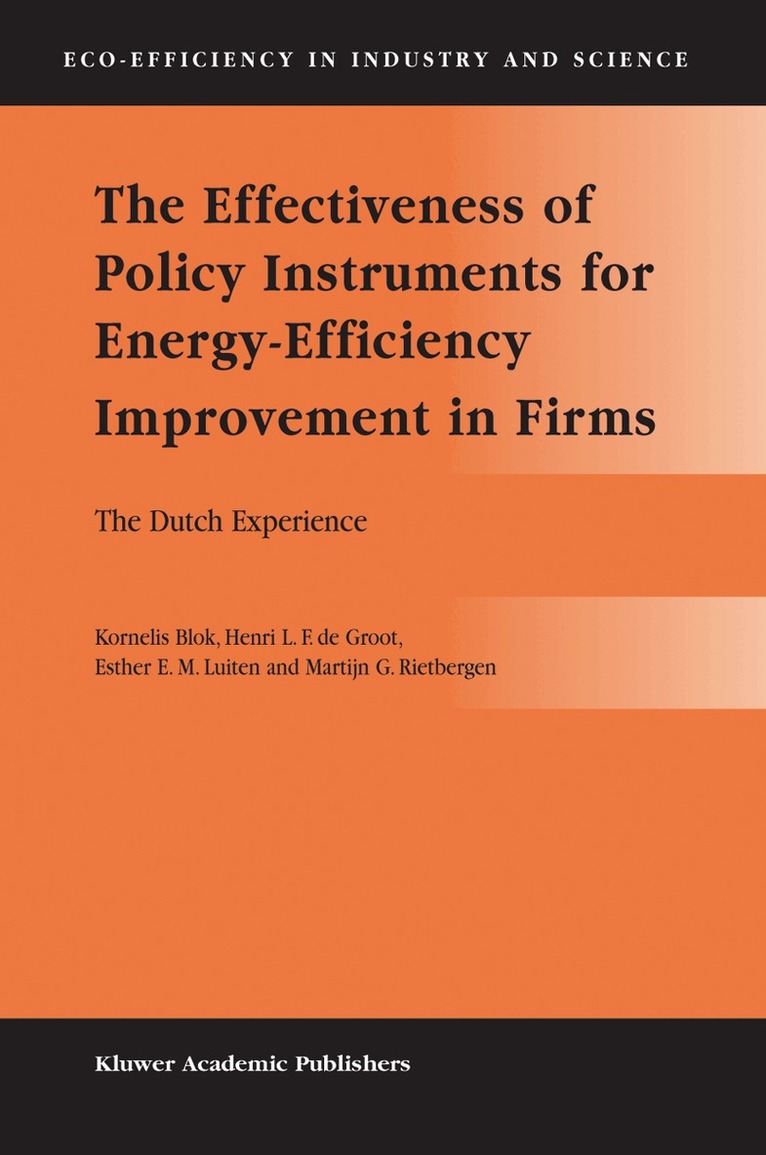
It is widely believed that energy efficiency improvement is one of the most interesting options to limit the emissions of the greenhouse gas carbon dioxide. But, it also has become clear that it is not easy to stimulate companies to adopt measures in this area. Therefore, a main question is: how can governments implement effective policies to stimulate energy-efficiency improvement? The Netherlands and some neighbouring countries in Europe have implemented a variety of policy instruments since 1990. These include investment subsidies, voluntary agreements on energy-efficiency, direct regulation and taxes. How effective are these measures? This book presents improved theoretical insight in the investment behaviour of firms, and moreover it provides a wealth of empirical results on the effectiveness of policy instruments. It discusses issues such as free-rider effects of subsidies, the credibility of voluntary agreements, the art of regulation and the fate of R&D money. It tells stories of success, but also stories of failure. For everyone active in energy and climate policy, this volume is an indispensable source of knowledge. The book is written by a multidisciplinary team with bac
E-bok
PDF, Engelska, 20041 416 kr
Läs direkt efter köp
Improvement of energy efficiency is one of the important options for reducing greenhouse gas emissions. According to the Third Assessment Report of the Intergovernmental Panel on Climate Change, hundreds of technologies for improving the end-use energy efficiency make up more than half of the global potential for greenhouse gas emission reduction in the short and medium term (2010 -2020). (IPCC, 2001; see also WEA, 2000). An important next question is how these options can actually be deployed. More specifically, one may ask what role governments can play by using policy instruments to promote the deployment of energy efficient technologies. In this introductory Chapter, we will first set out the aim of the research described in this book. Then we will discuss the various policy instruments that may playa role in energy-efficiency improvement. Next the various aspects important for characterising policy instruments will be discussed and the various disciplinary approaches are listed. Finally, the outline of the complete book will be given.
Häftad, Engelska, 2010
1 084 kr
Skickas inom 10-15 vardagar
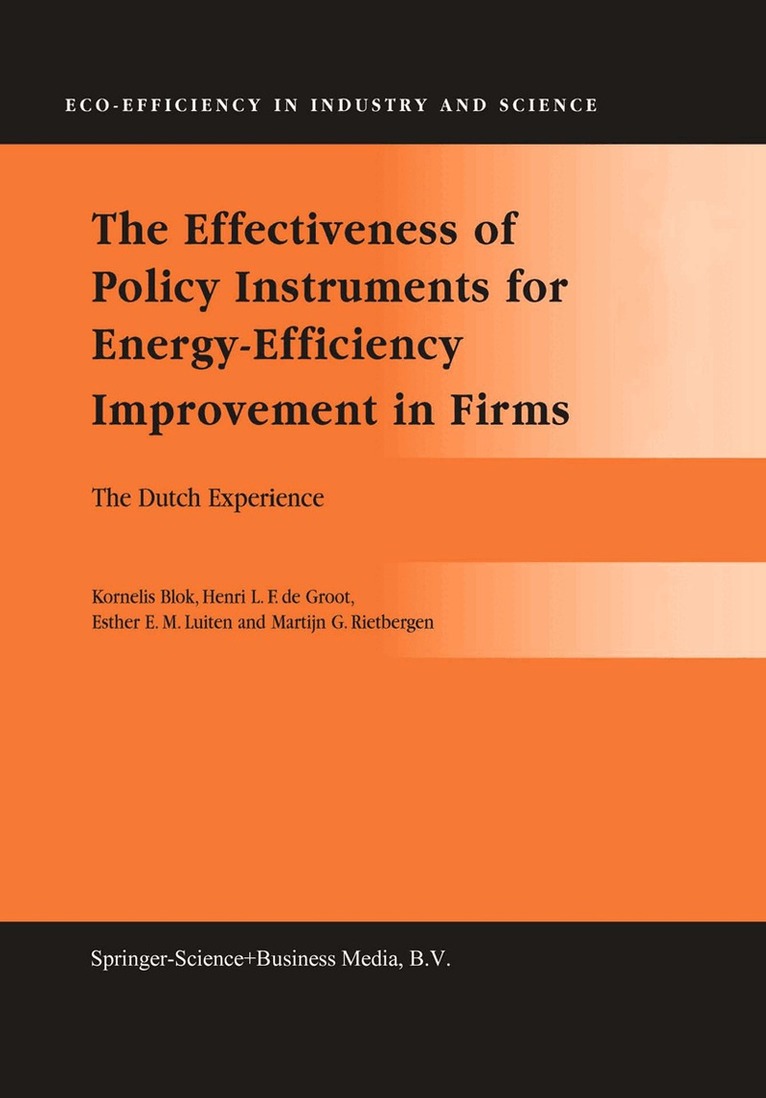
Improvement of energy efficiency is one of the important options for reducing greenhouse gas emissions. According to the Third Assessment Report of the Intergovernmental Panel on Climate Change, hundreds of technologies for improving the end-use energy efficiency make up more than half of the global potential for greenhouse gas emission reduction in the short and medium term (2010 -2020). (IPCC, 2001; see also WEA, 2000). An important next question is how these options can actually be deployed. More specifically, one may ask what role governments can play by using policy instruments to promote the deployment of energy efficient technologies. In this introductory Chapter, we will first set out the aim of the research described in this book. Then we will discuss the various policy instruments that may playa role in energy-efficiency improvement. Next the various aspects important for characterising policy instruments will be discussed and the various disciplinary approaches are listed. Finally, the outline of the complete book will be given.