Martin Beckerman – författare
Visar alla böcker från författaren Martin Beckerman. Handla med fri frakt och snabb leverans.
9 produkter
Molecular and Cellular Signaling
Inbunden, 2005
1685 kr
Lägg i varukorg
The text is aimed at a broad audience of students and other individuals interested in furthering their understanding of how cells regulate and coordinate their core activities. Malfunction in the control layer is responsible for a host of human disorders ranging from neurological disorders to …
Molecular and Cellular Signaling
E-bok, 2006
1670 kr
Lägg i varukorg
Biophysicists and medical doctors have learned that malfunction of the control layer in cells is responsible for a host of human disorders ranging from neurological disorders to cancers. Most drugs target components in the control layer, and difficulties in drug design are intimately related to the …
Cellular Signaling in Health and Disease
Inbunden, 2009
1685 kr
Lägg i varukorg
In today’s world, three great classes of non-infectious diseases – the metabolic syndromes (such as type 2 diabetes and atherosclerosis), the cancers, and the neurodegenerative disorders – have risen to the fore. These diseases, all associated with increasing age of an individual, have proven to be …
Cellular Signaling in Health and Disease
E-bok, 2009
2174 kr
Lägg i varukorg
In today’s world, three great classes of non-infectious diseases – the metabolic syndromes (such as type 2 diabetes and atherosclerosis), the cancers, and the neurodegenerative disorders – have risen to the fore. These diseases, all associated with increasing age of an individual, have proven to be …
Molecular and Cellular Signaling
Häftad, 2010
1237 kr
Lägg i varukorg
Biophysicists and medical doctors have learned that malfunction of the control layer in cells is responsible for a host of human disorders ranging from neurological disorders to cancers. Most drugs target components in the control layer, and difficulties in drug design are intimately related to the …
Cellular Signaling in Health and Disease
Häftad, 2010
1685 kr
Lägg i varukorg
In today’s world, three great classes of non-infectious diseases – the metabolic syndromes (such as type 2 diabetes and atherosclerosis), the cancers, and the neurodegenerative disorders – have risen to the fore. These diseases, all associated with increasing age of an individual, have proven to be …
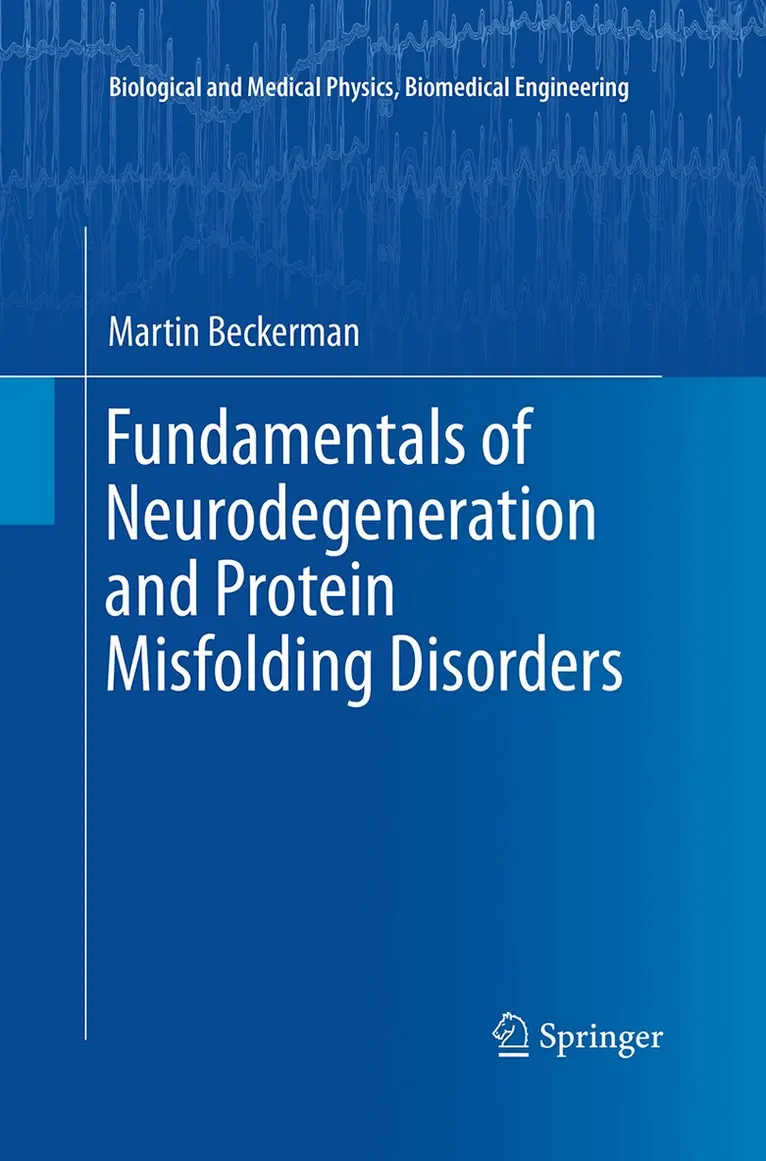
Fundamentals of Neurodegeneration and Protein Misfolding Disorders
Inbunden, 2015
1126 kr
Lägg i varukorg
This unique text introduces students and researchers to the world of misfolded proteins, toxic oligomers, and amyloid assemblages, and the diseases of the brain that result. During the past few years the connections between failures in protein quality control and neurological disorders have been …
Fundamentals of Neurodegeneration and Protein Misfolding Disorders
E-bok, 2015
1470 kr
Lägg i varukorg
This unique text introduces students and researchers to the world of misfolded proteins, toxic oligomers, and amyloid assemblages, and the diseases of the brain that result. During the past few years the connections between failures in protein quality control and neurological disorders have been …
Fundamentals of Neurodegeneration and Protein Misfolding Disorders
Häftad, 2016
1262 kr
Lägg i varukorg
This unique text introduces students and researchers to the world of misfolded proteins, toxic oligomers, and amyloid assemblages, and the diseases of the brain that result. During the past few years the connections between failures in protein quality control and neurological disorders have been …