Martin Erickson – författare
Visar alla böcker från författaren Martin Erickson. Handla med fri frakt och snabb leverans.
12 produkter
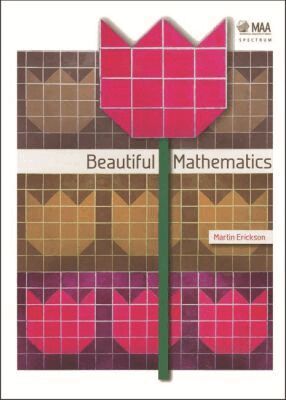
Beautiful Mathematics
Inbunden, 2011
790 kr
Lägg i varukorg
This book is about beautiful mathematical concepts and creations. Mathematical ideas have an aesthetic appeal that can be appreciated by those who have the time and dedication to investigate. Mathematical topics are presented in the categories of words, images, formulas, theorems, proofs, …
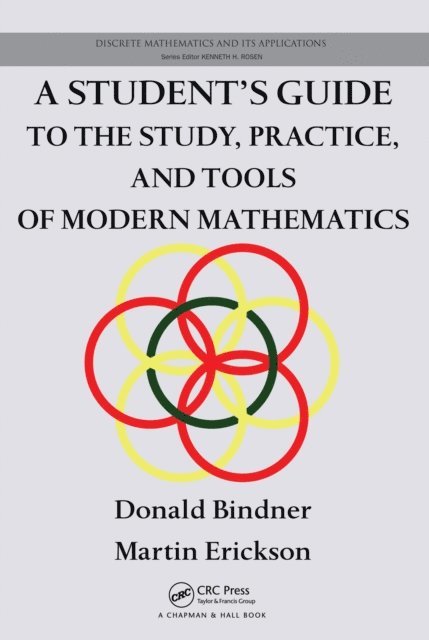
Student's Guide to the Study, Practice, and Tools of Modern Mathematics
Av Martin Erickson, Donald Bindner
E-bok, 2010
883 kr
Lägg i varukorg
A Student''s Guide to the Study, Practice, and Tools of Modern Mathematics provides an accessible introduction to the world of mathematics. It offers tips on how to study and write mathematics as well as how to use various mathematical tools, from LaTeX and Beamer to Mathematica and Maple to MATLAB …
Student's Guide to the Study, Practice, and Tools of Modern Mathematics
Av Donald Bindner, Martin Erickson
Inbunden, 2017
3427 kr
Lägg i varukorg
A Student‘s Guide to the Study, Practice, and Tools of Modern Mathematics provides an accessible introduction to the world of mathematics. It offers tips on how to study and write mathematics as well as how to use various mathematical tools, from LaTeX and Beamer to Mathematica and Maple to MATLAB …
Pearls of Discrete Mathematics
Inbunden, 2017
3427 kr
Lägg i varukorg
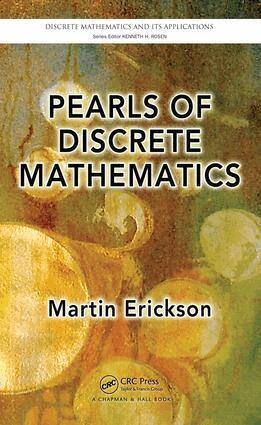
Methods Used to Solve Discrete Math ProblemsInteresting examples highlight the interdisciplinary nature of this area Pearls of Discrete Mathematics presents methods for solving counting problems and other types of problems that involve discrete structures. Through intriguing examples, problems, …
Pearls of Discrete Mathematics
Häftad, 2009
1040 kr
Lägg i varukorg
Methods Used to Solve Discrete Math ProblemsInteresting examples highlight the interdisciplinary nature of this areaPearls of Discrete Mathematics presents methods for solving counting problems and other types of problems that involve discrete structures. Through intriguing examples, problems, …
Pearls of Discrete Mathematics
E-bok, 2009
1203 kr
Lägg i varukorg
Methods Used to Solve Discrete Math ProblemsInteresting examples highlight the interdisciplinary nature of this areaPearls of Discrete Mathematics presents methods for solving counting problems and other types of problems that involve discrete structures. Through intriguing examples, problems, …
Student's Guide to the Study, Practice, and Tools of Modern Mathematics
Av Donald Bindner, Martin Erickson
Häftad, 2010
749 kr
Lägg i varukorg
A Student’s Guide to the Study, Practice, and Tools of Modern Mathematics provides an accessible introduction to the world of mathematics. It offers tips on how to study and write mathematics as well as how to use various mathematical tools, from LaTeX and Beamer to Mathematica® and Maple™ to …
Pearls of Discrete Mathematics
E-bok, 2009
1230 kr
Lägg i varukorg
Methods Used to Solve Discrete Math ProblemsInteresting examples highlight the interdisciplinary nature of this areaPearls of Discrete Mathematics presents methods for solving counting problems and other types of problems that involve discrete structures. Through intriguing examples, problems, …
Mathematische Appetithäppchen
Faszinierende Bilder. Packende Formeln. Reizvolle Sätze.
E-bok, 2015
177 kr
Lägg i varukorg
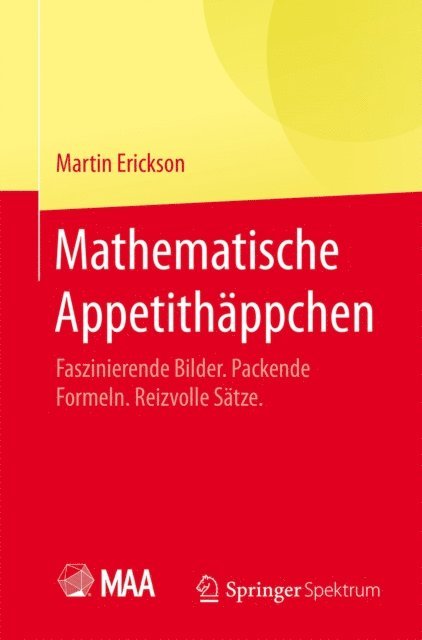
Mathematische Gedankengänge besitzen einen ästhetischen Reiz, den jeder zu schätzen weiß, der die Zeit und die Hingabe hat, sich in die Materie zu vertiefen. In seinem Buch präsentiert Martin Erickson mathematische Themen, die nach den Kategorien Wörter, Bilder, Formeln, Sätze, Beweise, Lösungen …
¡Ajá! Soluciones
E-bok, 2015
109 kr
Lägg i varukorg
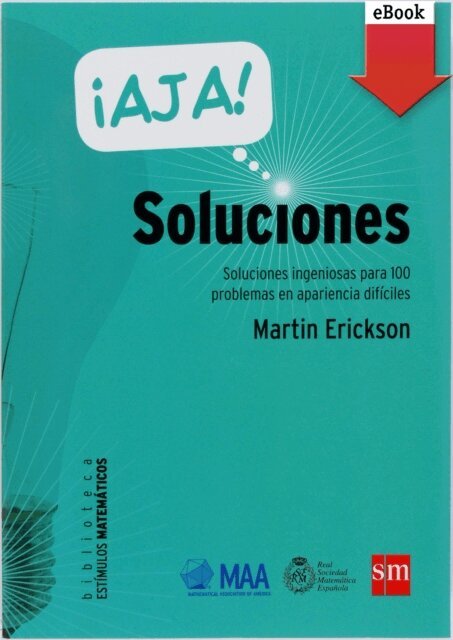
A cualquier matemático, tanto principiante como aficionado o profesional, le emociona encontrar soluciones sencillas y elegantes para problemas aparentemente difíciles. Estas soluciones "felices" son denominadas "soluciones ¡Ajá!", una expresión popularizada por el matemático y científico Martin …
¡Ajá! Soluciones
E-bok, 2015
113 kr
Lägg i varukorg
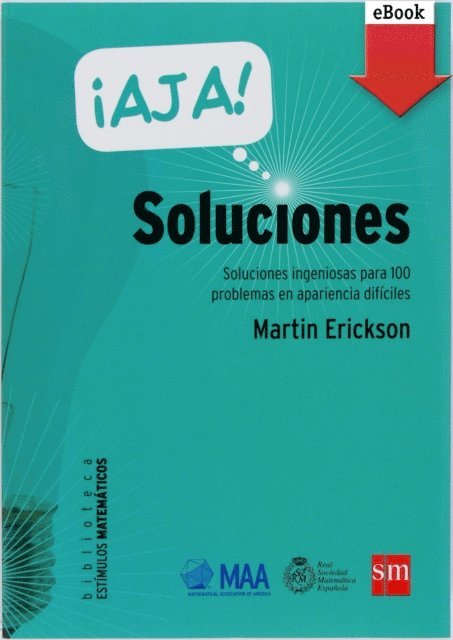
A cualquier matemático, tanto principiante como aficionado o profesional, le emociona encontrar soluciones sencillas y elegantes para problemas aparentemente difíciles. Estas soluciones "felices" son denominadas "soluciones ¡Ajá!", una expresión popularizada por el matemático y científico Martin …