Martin Gander - Böcker
Visar alla böcker från författaren Martin Gander. Handla med fri frakt och snabb leverans.
3 produkter
3 produkter
1 073 kr
Skickas inom 10-15 vardagar
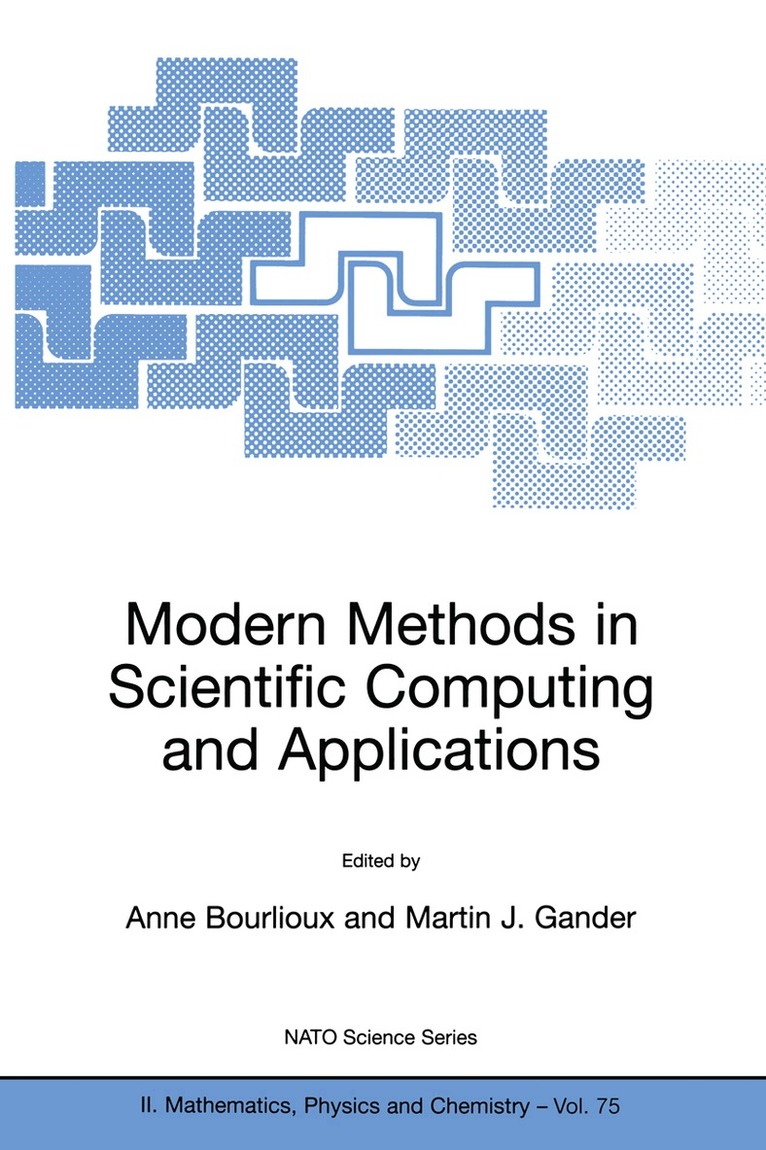
The influence of scientific computing widened considerably in almost every area during the last few decades of the 20th century. Science and engineering particularly are areas greatly influenced by simulations - image processing, thin films, mathematical finance, electrical engineering, moving interfaces and combustion rely on the field, to name but a few. One half of this book focuses on the techniques of scientific computing: domain decomposition, the absorption of boundary conditions and one-way operators, convergence analysis of multi-grid methods and other multi-grid techniques, dynamical systems, and matrix analysis. The remainder of the book is concerned with combining techniques with concrete applications: stochastic differential equations, image processing, thin films, and asymptotic analysis for combustion problems.
Del 70 - Lecture Notes in Computational Science and Engineering
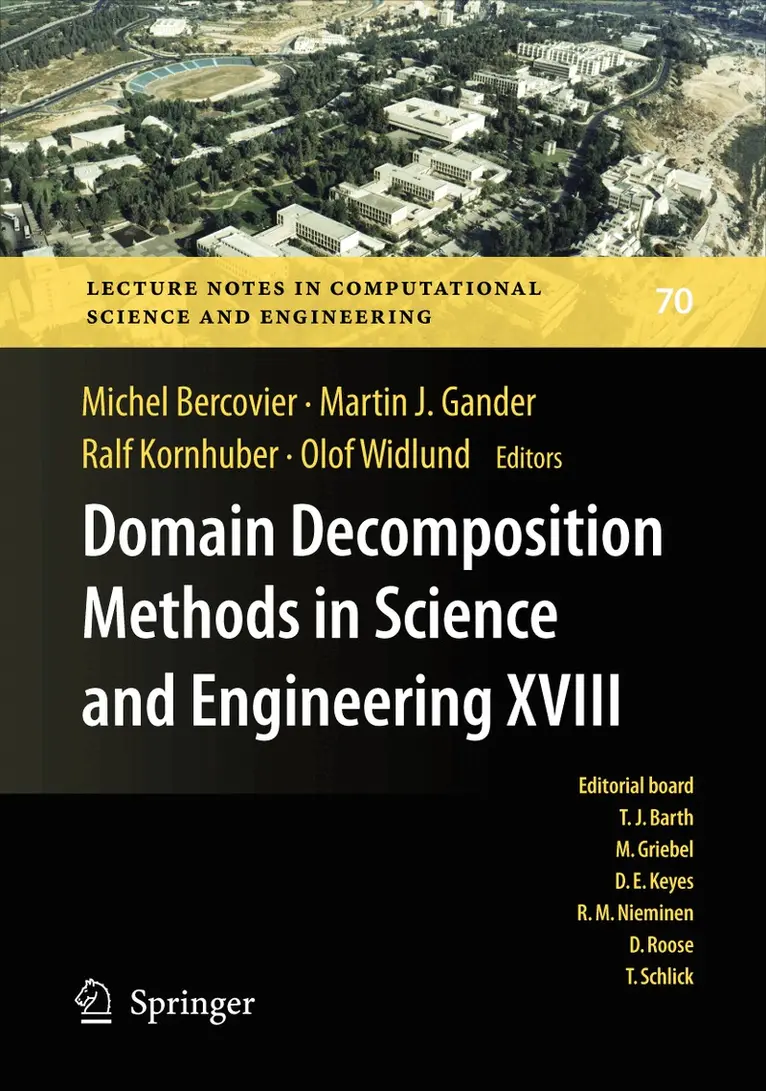
Domain Decomposition Methods in Science and Engineering XVIII
Inbunden, Engelska, 2009
1 590 kr
Skickas inom 10-15 vardagar
th This volume contains a selection of 41 refereed papers presented at the 18 International Conference of Domain Decomposition Methods hosted by the School of ComputerScience and Engineering(CSE) of the Hebrew Universityof Jerusalem, Israel, January 12–17, 2008. 1 Background of the Conference Series The International Conference on Domain Decomposition Methods has been held in twelve countries throughout Asia, Europe, the Middle East, and North America, beginning in Paris in 1987. Originally held annually, it is now spaced at roughly 18-month intervals. A complete list of past meetings appears below. The principal technical content of the conference has always been mathematical, but the principal motivation has been to make ef cient use of distributed memory computers for complex applications arising in science and engineering. The leading 15 such computers, at the “petascale” characterized by 10 oating point operations per second of processing power and as many Bytes of application-addressablem- ory, now marshal more than 200,000 independentprocessor cores, and systems with many millions of cores are expected soon. There is essentially no alternative to - main decomposition as a stratagem for parallelization at such scales. Contributions from mathematicians, computerscientists, engineers,and scientists are together n- essary in addressing the challenge of scale, and all are important to this conference.
Del 70 - Lecture Notes in Computational Science and Engineering
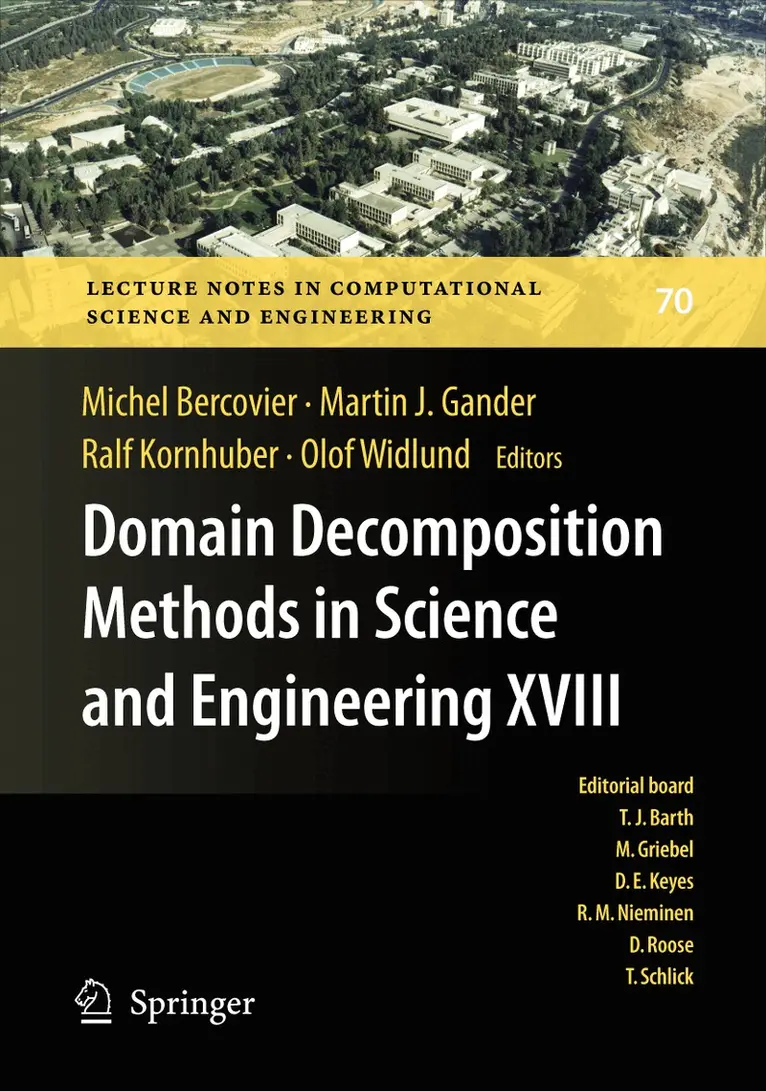
Domain Decomposition Methods in Science and Engineering XVIII
Häftad, Engelska, 2012
1 590 kr
Skickas inom 10-15 vardagar
th This volume contains a selection of 41 refereed papers presented at the 18 International Conference of Domain Decomposition Methods hosted by the School of ComputerScience and Engineering(CSE) of the Hebrew Universityof Jerusalem, Israel, January 12–17, 2008. 1 Background of the Conference Series The International Conference on Domain Decomposition Methods has been held in twelve countries throughout Asia, Europe, the Middle East, and North America, beginning in Paris in 1987. Originally held annually, it is now spaced at roughly 18-month intervals. A complete list of past meetings appears below. The principal technical content of the conference has always been mathematical, but the principal motivation has been to make ef cient use of distributed memory computers for complex applications arising in science and engineering. The leading 15 such computers, at the “petascale” characterized by 10 oating point operations per second of processing power and as many Bytes of application-addressablem- ory, now marshal more than 200,000 independentprocessor cores, and systems with many millions of cores are expected soon. There is essentially no alternative to - main decomposition as a stratagem for parallelization at such scales. Contributions from mathematicians, computerscientists, engineers,and scientists are together n- essary in addressing the challenge of scale, and all are important to this conference.