Martin Goldstein – författare
Visar alla böcker från författaren Martin Goldstein. Handla med fri frakt och snabb leverans.
6 produkter
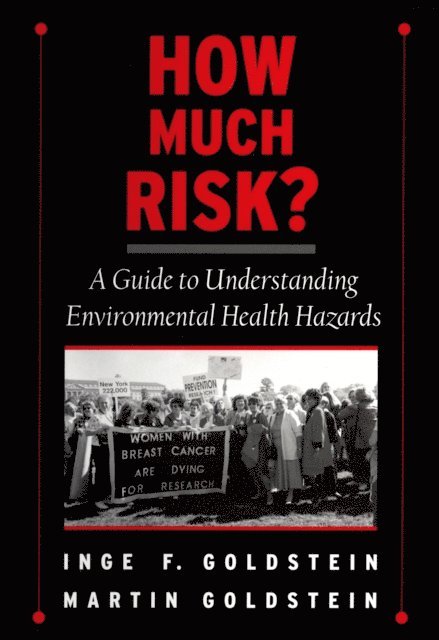
How Much Risk?
A Guide to Understanding Environmental Health Hazards
Av Martin Goldstein, Inge F. Goldstein
E-bok, 2002
504 kr
Lägg i varukorg
An excellent critical analysis and scientific assessment of the nature and actual level of risk leading environmental health hazards pose to the public. Issues such as radiation from nuclear testing, radon in the home, and the connection between electromagnetic fields and cancer, environmental …
How Much Risk?
A Guide to Understanding Environmental Health Hazards
Av Inge F. Goldstein, Martin Goldstein
Inbunden, 2002
764 kr
Lägg i varukorg
An excellent critical analysis and scientific assessment of the nature and actual level of risk leading environmental health hazards pose to the public. Issues such as radiation from nuclear testing, radon in the home, and the connection between electromagnetic fields and cancer, environmental …
How Much Risk?
A Guide to Understanding Environmental Health Hazards
Av Martin Goldstein, Inge F. Goldstein
E-bok, 2002
378 kr
Lägg i varukorg
An excellent critical analysis and scientific assessment of the nature and actual level of risk leading environmental health hazards pose to the public. Issues such as radiation from nuclear testing, radon in the home, and the connection between electromagnetic fields and cancer, environmental …
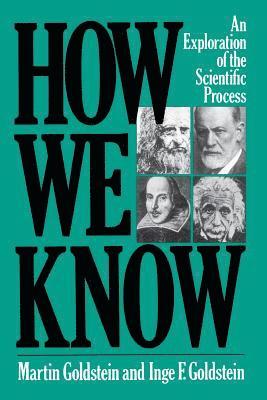
How We Know
An Exploration Of The Scientific Process
Av Inge Goldstein, Martin Goldstein
Häftad, 1981
212 kr
Lägg i varukorg
The portraits of Freud, Shakespeare, Einstein, and Leonardo da Vinci on the cover symbolize a major theme of How We Know ,that the creative imagination plays a role in the sciences no less than in the arts, and that scientific discoveries have an aesthetic beauty of their own that can be enjoyed by …
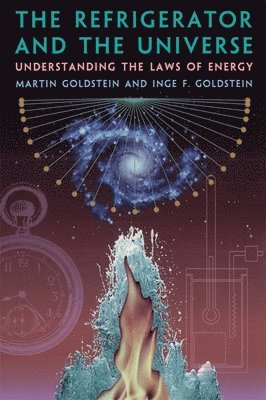
Refrigerator and the Universe
Understanding the Laws of Energy
Av Martin Goldstein, Inge F. Goldstein
Häftad, 1995
508 kr
Lägg i varukorg
C. P. Snow once remarked that not knowing the second law of thermodynamics is like never having read Shakespeare. Yet, while many people grasp the first law of energy, “Energy can neither be created nor destroyed,” few recognize the second, “Entropy can only increase.” What is entropy anyway, and …
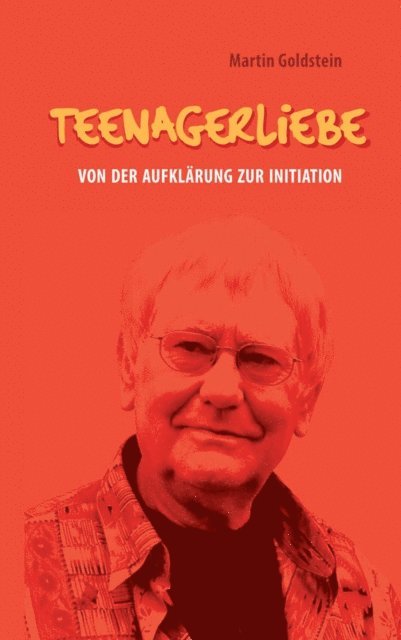
Teenagerliebe
Von der Aufklärung zur Initiation
E-bok, 2012
112 kr
Lägg i varukorg
Dr. Martin Goldstein, der als "Dr. Jochen Sommer" (1969 - 1984) zu Deutschlands bekanntestem Sexualaufklärer wurde, meldet sich 40 Jahre nach dem Start seiner spektakulären Bravo-Kolumne erneut zu Wort - mit einem Plädoyer zur Abschaffung des "Dr. Sommer".