Martin Grube - Böcker
Visar alla böcker från författaren Martin Grube. Handla med fri frakt och snabb leverans.
5 produkter
5 produkter
3 318 kr
Skickas inom 3-6 vardagar
Owing to their importance as primary producers of energy and nutrition, algae and cyanobacteria are found as symbiotic partners across diverse lineages of prokaryotic and eukaryotic kingdoms.Algal and Cyanobacteria Symbioses presents a compilation of recent, updated research in fields of diverse symbioses, including in marine, freshwater, and terrestrial habitats. It gives a comprehensive overview of algal and cyanobacteria symbioses, including reviews on their diversity and information on symbiotic specificity and stress tolerance. Also covered is a review of regulatory mechanisms in the communication between symbiotic partners.The highly interdisciplinary character of this book is demonstrated through the range of algae and cyanobacteria as energy-providing symbionts in organismal lineages which are discussed. It is a valuable source of knowledge for researchers, university lecturers, professors and students of biology and life sciences, specifically biochemistry, mycology, cell biology and plant-microbe interactions.
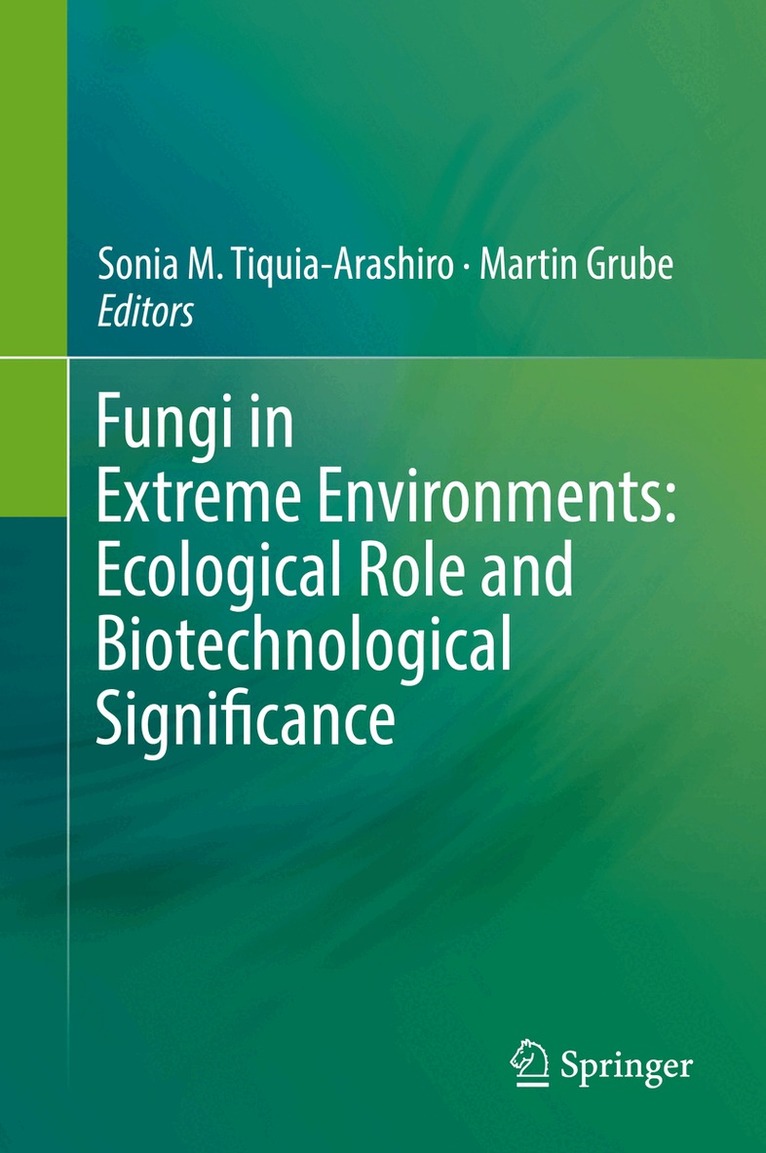
Fungi in Extreme Environments: Ecological Role and Biotechnological Significance
Inbunden, Engelska, 2019
1 069 kr
Skickas inom 10-15 vardagar
Over the last decades, scientists have been intrigued by the fascinating organisms that inhabit extreme environments. These organisms, known as extremophiles, thrive in habitats which for other terrestrial life-forms are intolerably hostile or even lethal. Based on such technological advances, the study of extremophiles has provided, over the last few years, ground-breaking discoveries that challenge the paradigms of modern biology. In the new bioeconomy, fungi in general, play a very important role in addressing major global challenges, being instrumental for improved resource efficiency, making renewable substitutes for products from fossil resources, upgrading waste streams to valuable food and feed ingredients, counteracting life-style diseases and antibiotic resistance through strengthening the gut biota, making crop plants more robust to survive climate change conditions, and functioning as host organisms for production of new biological drugs. This range ofnew uses of fungi all stand on the shoulders of the efforts of mycologists over generations. The book is organized in five parts: (I) Biodiversity, Ecology, Genetics and Physiology of Extremophilic Fungi, (II) Biosynthesis of Novel Biomolecules and Extremozymes (III) Bioenergy and Biofuel synthesis, and (IV) Wastewater and biosolids treatment, and (V) Bioremediation.
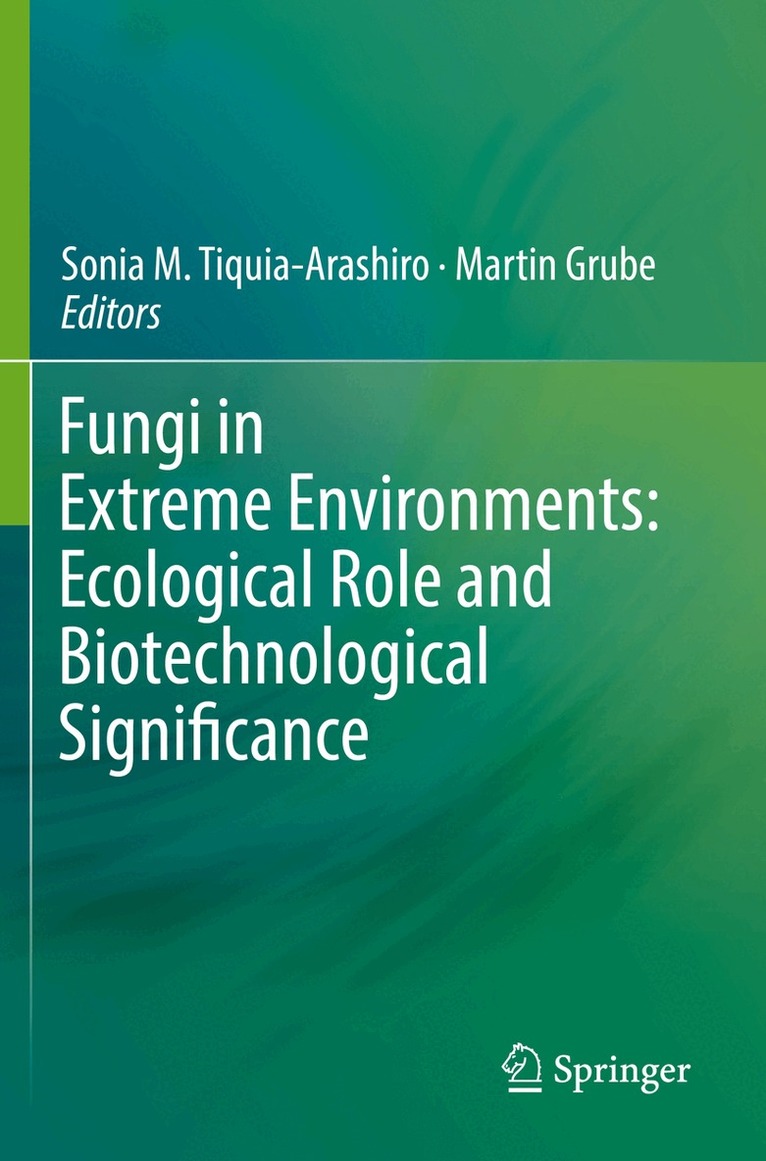
Fungi in Extreme Environments: Ecological Role and Biotechnological Significance
Häftad, Engelska, 2020
1 069 kr
Skickas inom 10-15 vardagar
Over the last decades, scientists have been intrigued by the fascinating organisms that inhabit extreme environments. These organisms, known as extremophiles, thrive in habitats which for other terrestrial life-forms are intolerably hostile or even lethal. Based on such technological advances, the study of extremophiles has provided, over the last few years, ground-breaking discoveries that challenge the paradigms of modern biology. In the new bioeconomy, fungi in general, play a very important role in addressing major global challenges, being instrumental for improved resource efficiency, making renewable substitutes for products from fossil resources, upgrading waste streams to valuable food and feed ingredients, counteracting life-style diseases and antibiotic resistance through strengthening the gut biota, making crop plants more robust to survive climate change conditions, and functioning as host organisms for production of new biological drugs. This range ofnew uses of fungi all stand on the shoulders of the efforts of mycologists over generations. The book is organized in five parts: (I) Biodiversity, Ecology, Genetics and Physiology of Extremophilic Fungi, (II) Biosynthesis of Novel Biomolecules and Extremozymes (III) Bioenergy and Biofuel synthesis, and (IV) Wastewater and biosolids treatment, and (V) Bioremediation.
3 444 kr
Skickas inom 10-15 vardagar
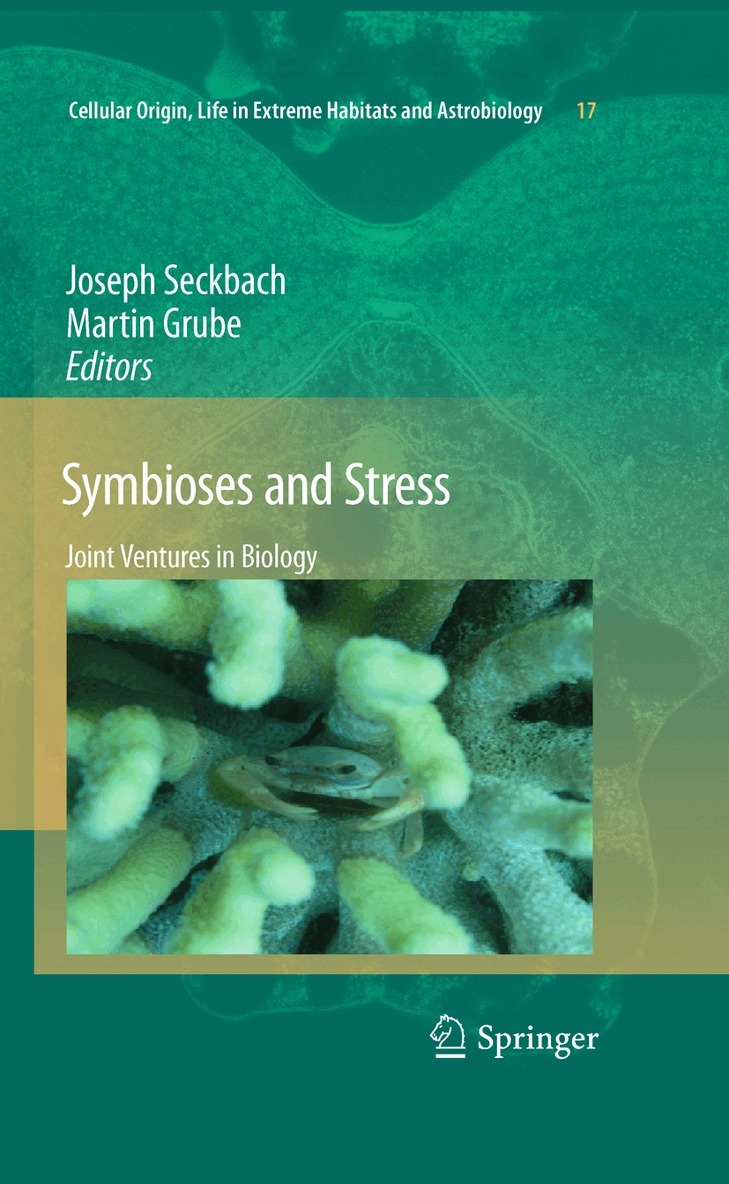
When one picks up a multiauthored book in a series like this, one wonders what will be distinctive about its contents. one wonders about the "Concept of Symbiosis. " does it have the same meaning for all authors and all potential readers? one is further tempted to question the concept of stress. What is the meaning of the c- cept of stress? Some change in the biotic or abiotic aspects of the environment or habitat of the symbiotic partners? many might support the more general def- tion of symbiosis credited to de bary (1879), that symbiosis is the living together of separately named organisms. Something like Smith's (1992) more restricted PoLLnPia (P ermanent or Long-Lived intimate associations between diffe- ent organisms, usually of different sizes, in which the larger organism, the host, exploits the capabilities of one or more smaller organisms) seems to be a better ft for a book centered on the effects of stress on symbiosis. PoLLnPia implies an integrated holobiont system that has adapted itself to living successfully in a particular environment that could be construed as harsh for nonsymbiotic s- tems. often, when queried for examples, one thinks of lichens, of corals living in oligotrophic tropical waters, of Pompeii worms living in association with che- lithotrophic bacteria, and of all sorts of herbivorous animals living in associations with microorganisms.Presumably, the hosts could not survive, or thrive, in their habitats without their smaller partners doing their trophic work for their holo- otic systems.
3 444 kr
Skickas inom 10-15 vardagar
When one picks up a multiauthored book in a series like this, one wonders what will be distinctive about its contents. one wonders about the "Concept of Symbiosis. " does it have the same meaning for all authors and all potential readers? one is further tempted to question the concept of stress. What is the meaning of the c- cept of stress? Some change in the biotic or abiotic aspects of the environment or habitat of the symbiotic partners? many might support the more general def- tion of symbiosis credited to de bary (1879), that symbiosis is the living together of separately named organisms. Something like Smith's (1992) more restricted PoLLnPia (P ermanent or Long-Lived intimate associations between diffe- ent organisms, usually of different sizes, in which the larger organism, the host, exploits the capabilities of one or more smaller organisms) seems to be a better ft for a book centered on the effects of stress on symbiosis. PoLLnPia implies an integrated holobiont system that has adapted itself to living successfully in a particular environment that could be construed as harsh for nonsymbiotic s- tems. often, when queried for examples, one thinks of lichens, of corals living in oligotrophic tropical waters, of Pompeii worms living in association with che- lithotrophic bacteria, and of all sorts of herbivorous animals living in associations with microorganisms.Presumably, the hosts could not survive, or thrive, in their habitats without their smaller partners doing their trophic work for their holo- otic systems.