Martin Harwit – författare
Visar alla böcker från författaren Martin Harwit. Handla med fri frakt och snabb leverans.
17 produkter
17 produkter
E-bok
PDF, Engelska, 2012672 kr
Läs direkt efter köp
Hadamard Transform Optics focuses on Hadamard transform optics and Hadamard encoded optical instruments. The techniques developed to date are described, and a unified mathematical treatment that should facilitate comparisons between different classes of instruments is presented. With this approach, encoded Hadamard transform spectrometers are discussed in very much the same way as encoded imaging devices. The advantages offered by singly and multiply encoded instruments designed for a wide variety of purposes are also considered. This book is comprised of seven chapters and begins with an introduction to optical multiplexing techniques, as well as the connections with weighing designs, along with the best masks for use in optical instruments and the improvement in signal-to-noise ratio that should be produced by multiplexing. Spectrometers which make use of multiplexing, including the Michelson and Mach-Zehnder interferometers and Golay''s multislit spectrometers, are then described. Subsequent chapters deal with the basic theory of Hadamard transform spectrometers and imagers; factors that affect the signal-to-noise ratio; and instrumental considerations and systematic errors in instruments. The final chapter looks at some of the applications of Hadamard transform optics, including image processing and in fields such as astronomy and medicine. This monograph will be a useful resource for physicists.
Inbunden, Engelska, 2006
922 kr
Skickas inom 10-15 vardagar
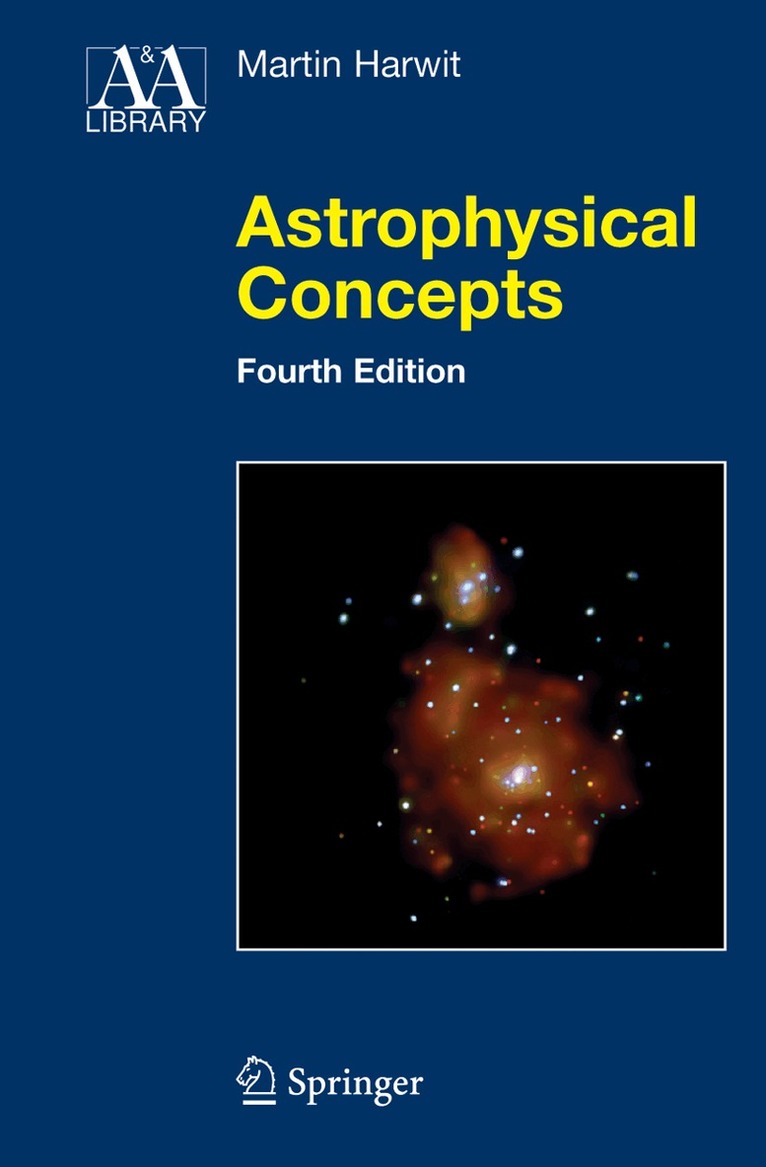
Thirty-threeyears have passed since the ?rst edition of Astrophysical Concepts - peared. During this time astrophysics has undergone major revolutions. We have gained new perspectives on the Universe with the aid of powerful gamma-ray,- ray, and infrared telescopes, whose sensitivitiescould not have been imagined three decades earlier. We have become expert at snaring neutrinos to gain insight on - clear processes at work in the Sun and supernovae. We have direct evidence for the existence of neutron stars and gravitationalwaves, and persuasive arguments for the detection of black holes on scales of individual stars as well as galactic nuclei. Primordial ?uctuations, remnants from the ?rst moments in the expansion of the Universe have revealed themselves in the faint ripples marking the microwave sky. These ripples also document the ?rst appearance of dark matter now known to have dominatedthe formationand evolutionof all cosmic structure. And dark energy has gradually had to be acknowledged to be the dominant factor driving the expansion of the Universe today.
E-bok
PDF, Engelska, 2006840 kr
Läs direkt efter köp
Thirty-threeyears have passed since the ?rst edition of Astrophysical Concepts - peared. During this time astrophysics has undergone major revolutions. We have gained new perspectives on the Universe with the aid of powerful gamma-ray,- ray, and infrared telescopes, whose sensitivitiescould not have been imagined three decades earlier. We have become expert at snaring neutrinos to gain insight on - clear processes at work in the Sun and supernovae. We have direct evidence for the existence of neutron stars and gravitationalwaves, and persuasive arguments for the detection of black holes on scales of individual stars as well as galactic nuclei. Primordial ?uctuations, remnants from the ?rst moments in the expansion of the Universe have revealed themselves in the faint ripples marking the microwave sky. These ripples also document the ?rst appearance of dark matter now known to have dominatedthe formationand evolutionof all cosmic structure. And dark energy has gradually had to be acknowledged to be the dominant factor driving the expansion of the Universe today.
Inbunden, Engelska, 2013
429 kr
Skickas inom 7-10 vardagar
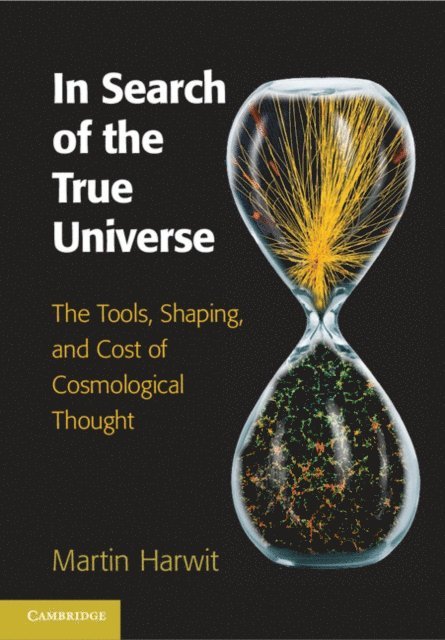
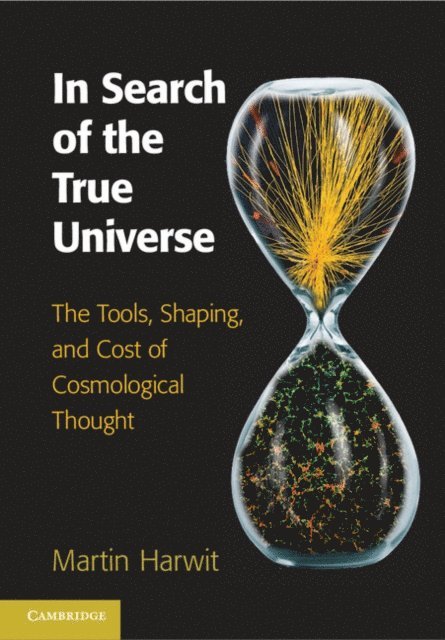
Astrophysicist and scholar Martin Harwit examines how our understanding of the cosmos advanced rapidly during the twentieth century and identifies the factors contributing to this progress. Astronomy, whose tools were largely imported from physics and engineering, benefited mid-century from the US policy of coupling basic research with practical national priorities. This strategy, initially developed for military and industrial purposes, provided astronomy with powerful tools yielding access - at virtually no cost - to radio, infrared, X-ray, and gamma-ray observations. Today, astronomers are investigating the new frontiers of dark matter and dark energy, critical to understanding the cosmos but of indeterminate socio-economic promise. Harwit addresses these current challenges in view of competing national priorities and proposes alternative new approaches in search of the true Universe. This is an engaging read for astrophysicists, policy makers, historians, and sociologists of science looking to learn and apply lessons from the past in gaining deeper cosmological insight.
E-bok
PDF, Engelska, 2013520 kr
Läs direkt efter köp
Astrophysicist and scholar Martin Harwit examines how our understanding of the cosmos advanced rapidly during the twentieth century and identifies the factors contributing to this progress. Astronomy, whose tools were largely imported from physics and engineering, benefited mid-century from the US policy of coupling basic research with practical national priorities. This strategy, initially developed for military and industrial purposes, provided astronomy with powerful tools yielding access - at virtually no cost - to radio, infrared, X-ray, and gamma-ray observations. Today, astronomers are investigating the new frontiers of dark matter and dark energy, critical to understanding the cosmos but of indeterminate socio-economic promise. Harwit addresses these current challenges in view of competing national priorities and proposes alternative new approaches in search of the true Universe. This is an engaging read for astrophysicists, policy makers, historians, and sociologists of science looking to learn and apply lessons from the past in gaining deeper cosmological insight.
E-bok
Engelska, 2013520 kr
Läs direkt efter köp
Astrophysicist and scholar Martin Harwit examines how our understanding of the cosmos advanced rapidly during the twentieth century and identifies the factors contributing to this progress. Astronomy, whose tools were largely imported from physics and engineering, benefited mid-century from the US policy of coupling basic research with practical national priorities. This strategy, initially developed for military and industrial purposes, provided astronomy with powerful tools yielding access - at virtually no cost - to radio, infrared, X-ray, and gamma-ray observations. Today, astronomers are investigating the new frontiers of dark matter and dark energy, critical to understanding the cosmos but of indeterminate socio-economic promise. Harwit addresses these current challenges in view of competing national priorities and proposes alternative new approaches in search of the true Universe. This is an engaging read for astrophysicists, policy makers, historians, and sociologists of science looking to learn and apply lessons from the past in gaining deeper cosmological insight.
Häftad, Engelska, 2019
565 kr
Skickas inom 7-10 vardagar
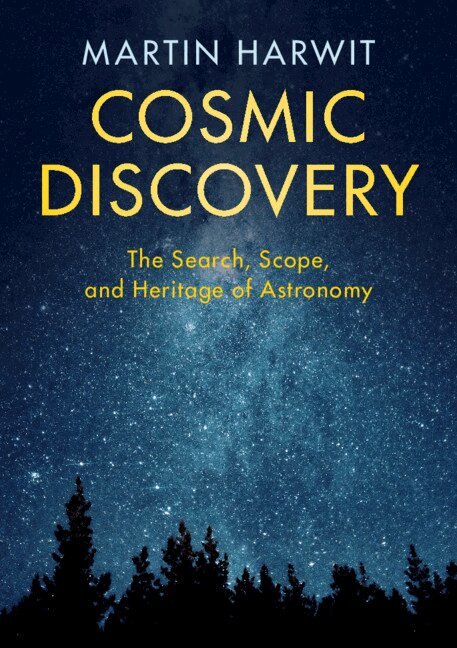
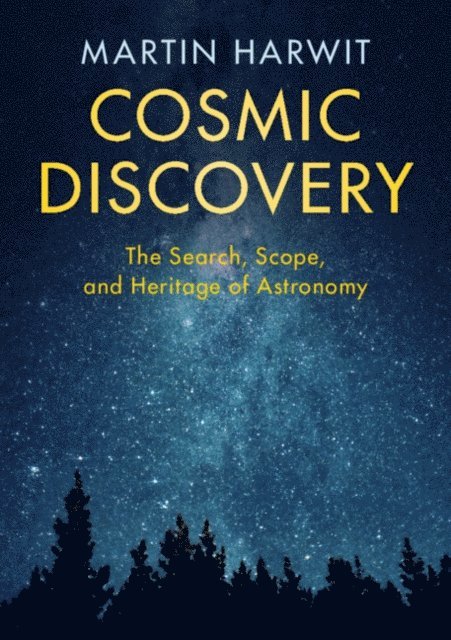
Martin Harwit's influential book, Cosmic Discovery, is rereleased after more than thirty-five years, with a new preface written by the author. The work chronicles the astronomical discoveries up to the late twentieth century and draws conclusions that major discoveries have often been unexpected, unrelated to prevailing astronomical theories and made by outsiders from other fields. One trend alone seems to prevail: major discoveries follow major technological innovations in observational instruments. The author also examines discovery in terms of its political, financial, and sociological contexts, including the role of industry and the military in enabling new technologies, and methods of funding. The challenges encountered by astronomy in the 1980s are remarkably similar to those astronomers face today. Difficulties persist in controlling recurrent cost overruns on planned missions, and in confronting mounting costs in developing observatories for detecting gravitational waves, high-energy cosmic rays, and particles that might explain dark matter.
E-bok
PDF, Engelska, 2019687 kr
Läs direkt efter köp
Martin Harwit''s influential book, Cosmic Discovery, is rereleased after more than thirty-five years, with a new preface written by the author. The work chronicles the astronomical discoveries up to the late twentieth century and draws conclusions that major discoveries have often been unexpected, unrelated to prevailing astronomical theories and made by outsiders from other fields. One trend alone seems to prevail: major discoveries follow major technological innovations in observational instruments. The author also examines discovery in terms of its political, financial, and sociological contexts, including the role of industry and the military in enabling new technologies, and methods of funding. The challenges encountered by astronomy in the 1980s are remarkably similar to those astronomers face today. Difficulties persist in controlling recurrent cost overruns on planned missions, and in confronting mounting costs in developing observatories for detecting gravitational waves, high-energy cosmic rays, and particles that might explain dark matter.
E-bok
Engelska, 2019687 kr
Läs direkt efter köp
Martin Harwit''s influential book, Cosmic Discovery, is rereleased after more than thirty-five years, with a new preface written by the author. The work chronicles the astronomical discoveries up to the late twentieth century and draws conclusions that major discoveries have often been unexpected, unrelated to prevailing astronomical theories and made by outsiders from other fields. One trend alone seems to prevail: major discoveries follow major technological innovations in observational instruments. The author also examines discovery in terms of its political, financial, and sociological contexts, including the role of industry and the military in enabling new technologies, and methods of funding. The challenges encountered by astronomy in the 1980s are remarkably similar to those astronomers face today. Difficulties persist in controlling recurrent cost overruns on planned missions, and in confronting mounting costs in developing observatories for detecting gravitational waves, high-energy cosmic rays, and particles that might explain dark matter.
Inbunden, Engelska, 2021
431 kr
Skickas
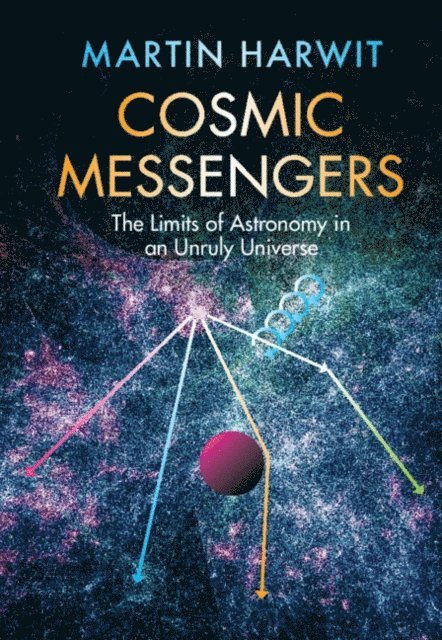
Martin Harwit, author of the influential book Cosmic Discovery, asks key questions about the scope of observational astronomy. Humans have long sought to understand the world we inhabit. Recent realization of how our unruly Universe distorts information before it ever reaches us reveals distinct limits on how well we will ultimately understand the Cosmos. Even the best instruments we might conceive will inevitably be thwarted by ever more complex distortions and will never untangle the data completely. Observational astronomy, and the cost of pursuing it, will then have reached an inherent end. Only some totally different lines of approach, as yet unknown and potentially far more costly, might then need to emerge if we wish to learn more. This accessible book is written for all astronomers, astrophysicists, and those curious about how well we will ever understand the Universe and the potential costs of pushing those limits.
E-bok
Engelska, 2021565 kr
Läs direkt efter köp
Martin Harwit, author of the influential book Cosmic Discovery, asks key questions about the scope of observational astronomy. Humans have long sought to understand the world we inhabit. Recent realization of how our unruly Universe distorts information before it ever reaches us reveals distinct limits on how well we will ultimately understand the Cosmos. Even the best instruments we might conceive will inevitably be thwarted by ever more complex distortions and will never untangle the data completely. Observational astronomy, and the cost of pursuing it, will then have reached an inherent end. Only some totally different lines of approach, as yet unknown and potentially far more costly, might then need to emerge if we wish to learn more. This accessible book is written for all astronomers, astrophysicists, and those curious about how well we will ever understand the Universe and the potential costs of pushing those limits.
E-bok
PDF, Engelska, 2021565 kr
Läs direkt efter köp
Martin Harwit, author of the influential book Cosmic Discovery, asks key questions about the scope of observational astronomy. Humans have long sought to understand the world we inhabit. Recent realization of how our unruly Universe distorts information before it ever reaches us reveals distinct limits on how well we will ultimately understand the Cosmos. Even the best instruments we might conceive will inevitably be thwarted by ever more complex distortions and will never untangle the data completely. Observational astronomy, and the cost of pursuing it, will then have reached an inherent end. Only some totally different lines of approach, as yet unknown and potentially far more costly, might then need to emerge if we wish to learn more. This accessible book is written for all astronomers, astrophysicists, and those curious about how well we will ever understand the Universe and the potential costs of pushing those limits.
Häftad, Engelska, 2010
653 kr
Skickas inom 10-15 vardagar
Thirty-threeyears have passed since the ?rst edition of Astrophysical Concepts - peared. During this time astrophysics has undergone major revolutions. We have gained new perspectives on the Universe with the aid of powerful gamma-ray,- ray, and infrared telescopes, whose sensitivitiescould not have been imagined three decades earlier. We have become expert at snaring neutrinos to gain insight on - clear processes at work in the Sun and supernovae. We have direct evidence for the existence of neutron stars and gravitationalwaves, and persuasive arguments for the detection of black holes on scales of individual stars as well as galactic nuclei. Primordial ?uctuations, remnants from the ?rst moments in the expansion of the Universe have revealed themselves in the faint ripples marking the microwave sky. These ripples also document the ?rst appearance of dark matter now known to have dominatedthe formationand evolutionof all cosmic structure. And dark energy has gradually had to be acknowledged to be the dominant factor driving the expansion of the Universe today.
E-bok
PDF, Engelska, 2012708 kr
Läs direkt efter köp
At 8:15 A.M., August 6, 1945, the Enola Gay released her load. For forty three seconds, the world''s first atomic bomb plunged through six miles of clear air to its preset detonation altitude. There it exploded, destroying Hiroshima and eighty thousand of her citizens. No war had ever seen such instant devastation. Within nine days Japan surrendered. World War II was over and a nuclear arms race had begun. Fifty years later, the National Air and Space Museum was in the final stages of preparing an exhibition on the Enola Gay''s historic mission when eighty-one members of Congress angrily demanded cancellation of the planned display and the resignation or dismissal of the museum''s director. The Smithsonian tnstitution, of which the National Air and Space Museum is a part, is heavily dependent on congressional funding. The Institution''s chief executive, Smithsonian Secretary I. Michael Heyman, in office only four months at the time, scrapped the exhibit as requested, and promised to personally oversee a new display devoid of any historic context. In the wake of that decision I resigned as the museum''s director and left the Smithsonian.
Häftad, Engelska, 2012
515 kr
Skickas inom 10-15 vardagar
Fifty years later, the National Air and Space Museum was in the final stages of preparing an exhibition on the Enola Gay's historic mission when eighty-one members of Congress angrily demanded cancellation of the planned display and the resignation or dismissal of the museum's director.
E-bok
PDF, Engelska, 20131 100 kr
Läs direkt efter köp
My principal aim in writing this book was to present a wide range of astrophysical topics in sufficient depth to give the reader a general quantitative understanding of the subject. The book outlines cosmic events but does not portray them in detail-it provides aseries of astrophysical sketches. I think this approach befits the present uncertainties and changing views in astrophysics. The material is based on notes I prepared for a course aimed at seniors and beginning graduate students in physics and astronomy at Cornell. This course defined the level at which the book is written. For readers who are versed in physics but are unfamiliar with astronomical terminology, Appendix A is included. It gives a brief background of astronomical concepts and should be read before starting the main text. The first few chapters outline the scope of modern astrophysics and deal with elementary problems concerning the size and mass of cosmic objects. However, it soon becomes apparent that a broad foundation in physics is needed to proceed. This base is developed in Chapters 4 to 7 by using, as ex am pIes, specific astronomi cal situations. Chapters 8 to 10 enlarge on the topics first outlined in Chapter I and show how we can obtain quantitative insights into the structure and evolution of stars, the dynamics of co~mic gases, and the large-scale behavior of the universe.
E-bok
PDF, Engelska, 20121 100 kr
Läs direkt efter köp
Twenty-five years have passed since the first edition of Astrophysical Concepts appeared. During this time astrophysics has undergone major revolutions. We have gained new perspectives on the Universe with the aid ofpowerful gamma-ray, X ray, and infrared telescopes, whose sensitivities could not have been imagined a quarter-century earlier. We have become expert at snaring neutrinos to gain insight on nuclear processes at work in the Sun and supernovae. We have direct evidence for the existence of neutron stars and gravitational waves, and persuasive arguments for the detection of black holes on scales of individual stars as weH as galactic nuclei. With so much that is new, and so many new problems revealed by knowledge al ready gained, almost all parts ofthis book had to be reconsidered and rewritten. In the second edition, which appeared ten years ago, I had only added a chapter on the formation of galaxies, stars, and planets. For this third edition, such piecemeal mea sures no longer seemed appropriate. Much ofthe book has been completely revised. My principal aim in this third edition, as before, was to present a wide range of astrophysical topics in sufficient depth to give the reader a general quantitative understanding ofthe subject. The book outlines cosmic events but does not portray them in detail-it provides aseries of astrophysical sketches. I think this approach still befits the prevailing uncertainties and rapidly evolving views in astrophysics.