Martin Hauberg-Lund Laugesen – författare
Visar alla böcker från författaren Martin Hauberg-Lund Laugesen. Handla med fri frakt och snabb leverans.
2 produkter
2 produkter
Inbunden, Engelska, 2019
767 kr
Skickas inom 10-15 vardagar
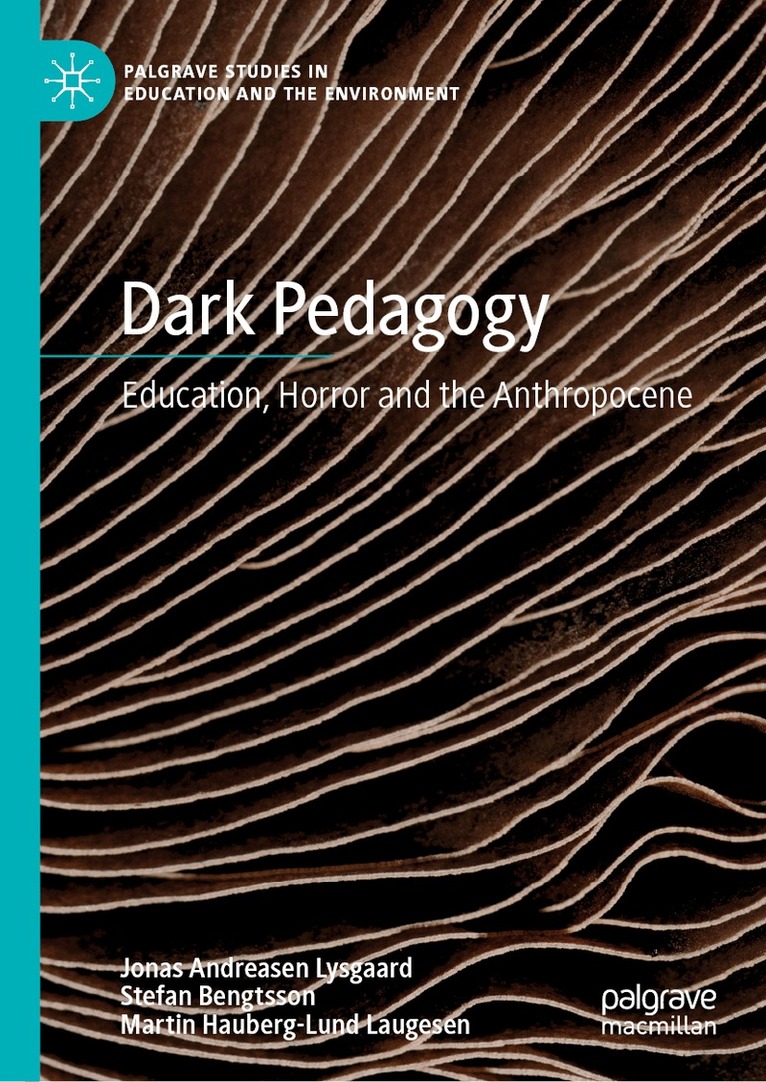
Dark pedagogy explores how different perspectives can be incorporated into a darker understanding of environmental and sustainability education. Drawing on the work of the classic horror author H.P. Lovecraft and new materialist insights of speculative realism, the authors link Lovecraft’s ‘tales of the horrible’ to the current spectres of environmental degradation, climate change, and pollution. In doing so, they draw parallels between how humans have always related to the ‘horrible’ things that are scaled beyond our understanding and how education can respond to an era of climate catastrophe in the age of the Anthropocene. A new and darker understanding of environmental and sustainability education is thus developed: using the tripartite reaction pattern of denial, insanity and death to frame the narrative, the book subsequently examines the specific challenges of potentials of developing education and pedagogy for an age of mass extinction. This unflinching book will appeal to students and scholars of dark pedagogies as well as those interested in environment and sustainability education.
E-bok
Engelska, 2019916 kr
Läs direkt efter köp
Dark pedagogy explores how different perspectives can be incorporated into a darker understanding of environmental and sustainability education. Drawing on the work of the classic horror author H.P. Lovecraft and new materialist insights of speculative realism, the authors link Lovecraft’s ‘tales of the horrible’ to the current spectres of environmental degradation, climate change, and pollution. In doing so, they draw parallels between how humans have always related to the ‘horrible’ things that are scaled beyond our understanding and how education can respond to an era of climate catastrophe in the age of the Anthropocene. A new and darker understanding of environmental and sustainability education is thus developed: using the tripartite reaction pattern of denial, insanity and death to frame the narrative, the book subsequently examines the specific challenges of potentials of developing education and pedagogy for an age of mass extinction. This unflinching book will appeal to students and scholars of dark pedagogies as well as those interested in environment and sustainability education.