
Martin Lipkin – författare
Visar alla böcker från författaren . Handla med fri frakt och snabb leverans.
7 produkter
7 produkter
Inbunden, Engelska, 2017
4 166 kr
Skickas inom 10-15 vardagar
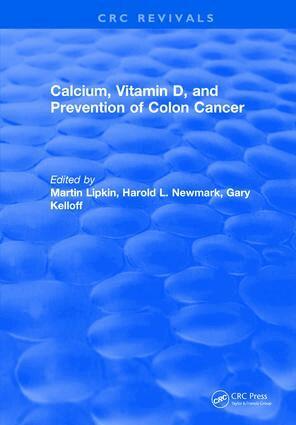
These proceedings were published as a result of a workshop sponsored by the Chemoprevention Branch of the National Cancer Institute. The workshop covered a range of topics including calcium and vitamin D in human nutrition; epidemiologic relationships betweencalcium, vitamin D, and colon cancer; the biology of calium and vitamin D at the tissue and cellular level; and enimal and human studies investigating the potential for prevention of colon cancer with calcium and vitamin D.
E-bok
PDF, Engelska, 20185 021 kr
Läs direkt efter köp
These proceedings were published as a result of a workshop sponsored by the Chemoprevention Branch of the National Cancer Institute. The workshop covered a range of topics including calcium and vitamin D in human nutrition; epidemiologic relationships betweencalcium, vitamin D, and colon cancer; the biology of calium and vitamin D at the tissue and cellular level; and enimal and human studies investigating the potential for prevention of colon cancer with calcium and vitamin D.
E-bok
Engelska, 20185 007 kr
Läs direkt efter köp
These proceedings were published as a result of a workshop sponsored by the Chemoprevention Branch of the National Cancer Institute. The workshop covered a range of topics including calcium and vitamin D in human nutrition; epidemiologic relationships betweencalcium, vitamin D, and colon cancer; the biology of calium and vitamin D at the tissue and cellular level; and enimal and human studies investigating the potential for prevention of colon cancer with calcium and vitamin D.
E-bok
PDF, Engelska, 2013712 kr
Läs direkt efter köp
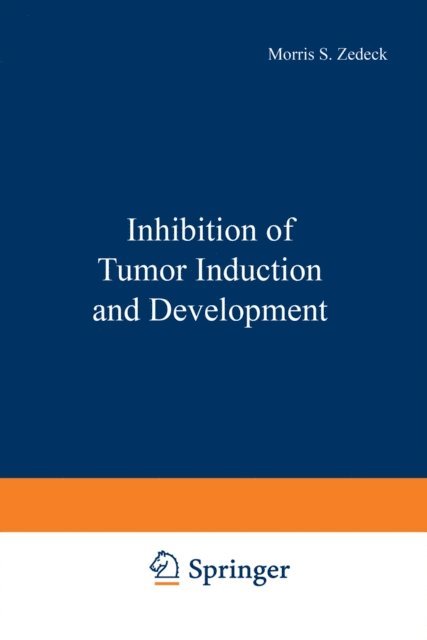
The primary purpose of this book is to bring to the attention of members of the medical and scientific communities, as well as to other interested persons, a new and expanding area of investigation that features the use of chemicals for the prevention of tumor induction and development. This novel use of chemical compounds has succeeded in producing a remarkable series of discoveries in recent years. Some of these are beginning to be evaluated in the field of clinical oncology in a manner that has potentially enormous public health implications. It is anticipated, therefore, that increasing amounts of time, energy, and financial resources will be devoted to the further development and expansion of this work. The major contribution of this book at the present time is that it summarizes and brings up to date the pioneering efforts of the various scientists who originated this new and exciting field of scientific activity. The thoughts expressed by Louis Pasteur in 1884 may soon be applicable in the fight against cancer: "When meditating over a disease, I never think of finding a remedy for it, but instead a means of preventing it. " The emphasis on cancer prevention currently underway is the result, in part, of an increased awareness that the environment-geographical, cultural, and occupational-has a role in development of the disease.
Häftad, Engelska, 2013
541 kr
Skickas inom 10-15 vardagar
The primary purpose of this book is to bring to the attention of members of the medical and scientific communities, as well as to other interested persons, a new and expanding area of investigation that features the use of chemicals for the prevention of tumor induction and development. This novel use of chemical compounds has succeeded in producing a remarkable series of discoveries in recent years. Some of these are beginning to be evaluated in the field of clinical oncology in a manner that has potentially enormous public health implications. It is anticipated, therefore, that increasing amounts of time, energy, and financial resources will be devoted to the further development and expansion of this work. The major contribution of this book at the present time is that it summarizes and brings up to date the pioneering efforts of the various scientists who originated this new and exciting field of scientific activity. The thoughts expressed by Louis Pasteur in 1884 may soon be applicable in the fight against cancer: "When meditating over a disease, I never think of finding a remedy for it, but instead a means of preventing it. " The emphasis on cancer prevention currently underway is the result, in part, of an increased awareness that the environment-geographical, cultural, and occupational-has a role in development of the disease.
E-bok
PDF, Engelska, 20131 455 kr
Läs direkt efter köp
In observing the development of modern scientific knowledge, many indivi duals have expressed concern over the rapid growth of information in various specialized disciplines. Over 100 years ago the first Secretary of the Smith sonian Institution, and more recently Dr. Vannevar Bush while proposing the modern expansion of the National Institutes of Health, both noted prob lems that prevented the proper utilization of information by individuals in medical and related scientific fields. These observations, tagether with con comitant implications of future difficulty, are particularly pertinent to the field of oncology. The rapid evolution of the latter discipline has largely been aided by the incorporation of concepts and methods developed over a long period of time, and drawn from a wide variety of other scientific fields. The large body of discoveries that have contributed to our current understanding of neoplasia, however, cannot be viewed as being made up of equal parts. They bring to mind Claude Bernard''s view "des determinismes simples et complexes" in the physiological and biochemical regulation of bod ily functions. He was able to observe that the most important and basic of physiologic processes were destined to be fewer in number than those of less fundamental and more highly specialized purpose. He understood that in the future development of medical science, sturlies of the lauer would occupy much of the time and attention of investigators, and were likely to contribute much to scientific literature.
Häftad, Engelska, 2013
1 107 kr
Skickas inom 10-15 vardagar
In observing the development of modern scientific knowledge, many indivi duals have expressed concern over the rapid growth of information in various specialized disciplines. Over 100 years ago the first Secretary of the Smith sonian Institution, and more recently Dr. Vannevar Bush while proposing the modern expansion of the National Institutes of Health, both noted prob lems that prevented the proper utilization of information by individuals in medical and related scientific fields. These observations, tagether with con comitant implications of future difficulty, are particularly pertinent to the field of oncology. The rapid evolution of the latter discipline has largely been aided by the incorporation of concepts and methods developed over a long period of time, and drawn from a wide variety of other scientific fields. The large body of discoveries that have contributed to our current understanding of neoplasia, however, cannot be viewed as being made up of equal parts. They bring to mind Claude Bernard's view "des determinismes simples et complexes" in the physiological and biochemical regulation of bod ily functions. He was able to observe that the most important and basic of physiologic processes were destined to be fewer in number than those of less fundamental and more highly specialized purpose. He understood that in the future development of medical science, sturlies of the lauer would occupy much of the time and attention of investigators, and were likely to contribute much to scientific literature.