Martin Marcussen - Böcker
Visar alla böcker från författaren Martin Marcussen. Handla med fri frakt och snabb leverans.
3 produkter
3 produkter
1 932 kr
Skickas inom 5-8 vardagar
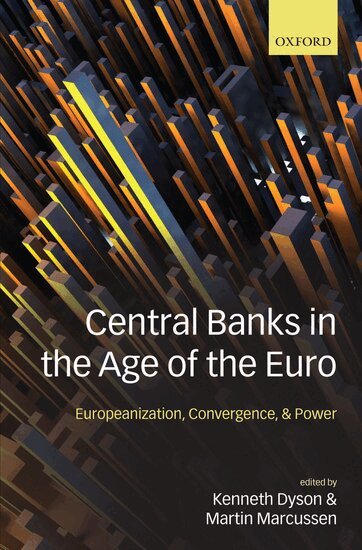
Both studies of political power and Europeanization studies have tended to neglect central banks. As the age of the euro reaches its 10th anniversary, it is timely to reflect on what it means for central banks, which have been at the forefront of the establishment of Economic and Monetary Union in the European Union. Central banks have been caught up in a major historic political project. What does it mean for them? What does the age of the euro tell us about the power of central banks, their Europeanization and whether they are coming to resemble each other more closely? This book brings together a range of recognized academic specialists to examine the main political aspects of this question. How, and in what ways, has the euro Europeanized central banks (members and non-members of the Euro Area)? What have been its effects on the power of central banks and their use of power? Has the euro generated convergence or divergence in central banking? The book offers the first, in-depth and systematic political analysis of central banks in the first decade of the euro. It places the euro in its global and European contexts, including the US Fed and the Australasian central banks, patterns of differentiated integration in European central banking, and the European Central Bank. It offers a set of case studies of its effects on a representative sample of EU central banks (euro 'insiders' and 'outsiders') and looks at four main thematic areas (monetary policy, financial market supervision, accountability and transparency, and research). The book contributes to Europeanization studies, comparative political economy, and studies of Economic and Monetary Union. It will be of major interest to students of the European Union and European integration, comparative European politics, and area and 'country' studies. More generally, it will interest all those interested in central banking and their pivotal and problematic position between politics and markets.
1 167 kr
Skickas inom 5-8 vardagar
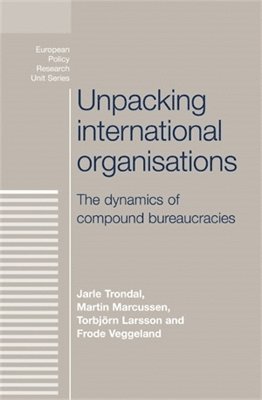
This book introduces international bureaucracy as a key field of study for public administration and also rediscovers it as an essential ingredient in the study of international organisations. To what extent, how and why do international bureaucracies challenge and supplement the inherent Westphalian intergovernmental order based on territorial sovereignty? To what extent, how and why do international bureaucracies supplement the existing international intergovernmental order with a multi-dimensional international order subjugated by a compound set of decision-making dynamics? International bureaucracies constitute a distinct and increasingly important feature of public administration studies. However, the role of international bureaucracies has been largely neglected in most social science sub-disciplines. This book takes a first step into a third generation of international organisation (IO) studies.It will be of immense value to academics in politics and international relations as well as practitioners in public administration in domestic governments and international organizations.
354 kr
Skickas inom 5-8 vardagar
This book, available in paperback for the first time, introduces international bureaucracy as a key field of study for public administration and also rediscovers it as an essential ingredient in the study of international organisations. To what extent, how and why do international bureaucracies challenge and supplement the inherent Westphalian intergovernmental order based on territorial sovereignty? To what extent, how and why do international bureaucracies supplement the existing international intergovernmental order with a multi-dimensional international order subjugated by a compound set of decision-making dynamics? International bureaucracies constitute a distinct and increasingly important feature of public administration studies. However, the role of international bureaucracies has been largely neglected in most social science sub-disciplines. This book takes a first step into a third generation of international organisation (IO) studies.