Martin Melosi - Böcker
Visar alla böcker från författaren Martin Melosi. Handla med fri frakt och snabb leverans.
6 produkter
6 produkter
720 kr
Skickas inom 7-10 vardagar
Garbage, wastewater, hazardous waste: these are the lenses through which Melosi views nineteenth- and twentieth-century America. In broad overviews and specific case studies, Melosi treats the relationship between industrial expansion and urban growth from an ecological perspective.
720 kr
Skickas inom 7-10 vardagar
As recently as the 1880s, most American cities had no effective means of collecting and removing the mountains of garbage, refuse, and manure-over a thousand tons a day in New York City alone-that clogged streets and overwhelmed the senses of residents. In his landmark study, Garbage in the Cities, Martin Melosi offered the first history of efforts begun in the Progressive Era to clean up this mess.Since it was first published, Garbage in the Cities has remained one of the best historical treatments of the subject. This thoroughly revised and updated edition includes two new chapters that expand the discussion of developments since World War I. It also offers a discussion of the reception of the first edition, and an examination of the ways solid waste management has become more federally regulated in the last quarter of the twentieth century.Melosi traces the rise of sanitation engineering, accurately describes the scope and changing nature of the refuse problem in U.S. cities, reveals the sometimes hidden connections between industrialization and pollution, and discusses the social agendas behind many early cleanliness programs. Absolutely essential reading for historians, policy analysts, and sociologists, Garbage in the Cities offers a vibrant and insightful analysis of this fascinating topic.
Sanitary City
Environmental Services in Urban America from Colonial Times to the Present
Häftad, Engelska, 2008
720 kr
Skickas inom 7-10 vardagar
Immersed in their on-demand, highly consumptive, and disposable lifestyles, most urban Americans take for granted the technologies that provide them with potable water, remove their trash, and process their wastewater. These vital services, however, are the byproduct of many decades of development by engineers, sanitarians, and civic planners.In The Sanitary City, Martin V. Melosi assembles a comprehensive, thoroughly researched and referenced history of sanitary services in urban America. He examines the evolution of water supply, sewage systems, and solid waste disposal during three distinct eras: The Age of Miasmas (pre-1880); The Bacteriological Revolution (1880-1945); and The New Ecology (1945 to present-day).Originally published in 2000, this abridged edition includes updated text and bibliographic materials. The Sanitary City is an essential resource for those interested in environmental history, environmental engineering, science and technology, urban studies, and public health.Winner of:George Perkins Marsh Prize from the American Society for Environmental History Urban History Association Prize for the best book in North American Urban HistoryAbel Wolman Prize from the Public Works Historical SocietySidney Edelstein Prize from the Society for the History of Technology
720 kr
Skickas inom 7-10 vardagar
As an essential resource, water has been the object of warfare, political wrangling, and individual and corporate abuse. It has also become an object of commodification, with multinational corporations vying for water supply contracts in many countries. In Precious Commodity, Martin V. Melosi examines water resources in the United States and addresses whether access to water is an inalienable right of citizens, and if government is responsible for its distribution as a public good. Melosi provides historical background on the construction, administration, and adaptability of water supply and wastewater systems in urban America. He cites budgetary constraints and the deterioration of existing water infrastructures as factors leading many municipalities to seriously consider the privatization of their water supply. Melosi also views the role of government in the management of, development of, and legal jurisdiction over AmericaÆs rivers and waterways for hydroelectric power, flood control, irrigation, and transportation access. Looking to the future, he compares the costs and benefits of public versus private water supply, examining the global movement toward privatization.
642 kr
Skickas inom 7-10 vardagar
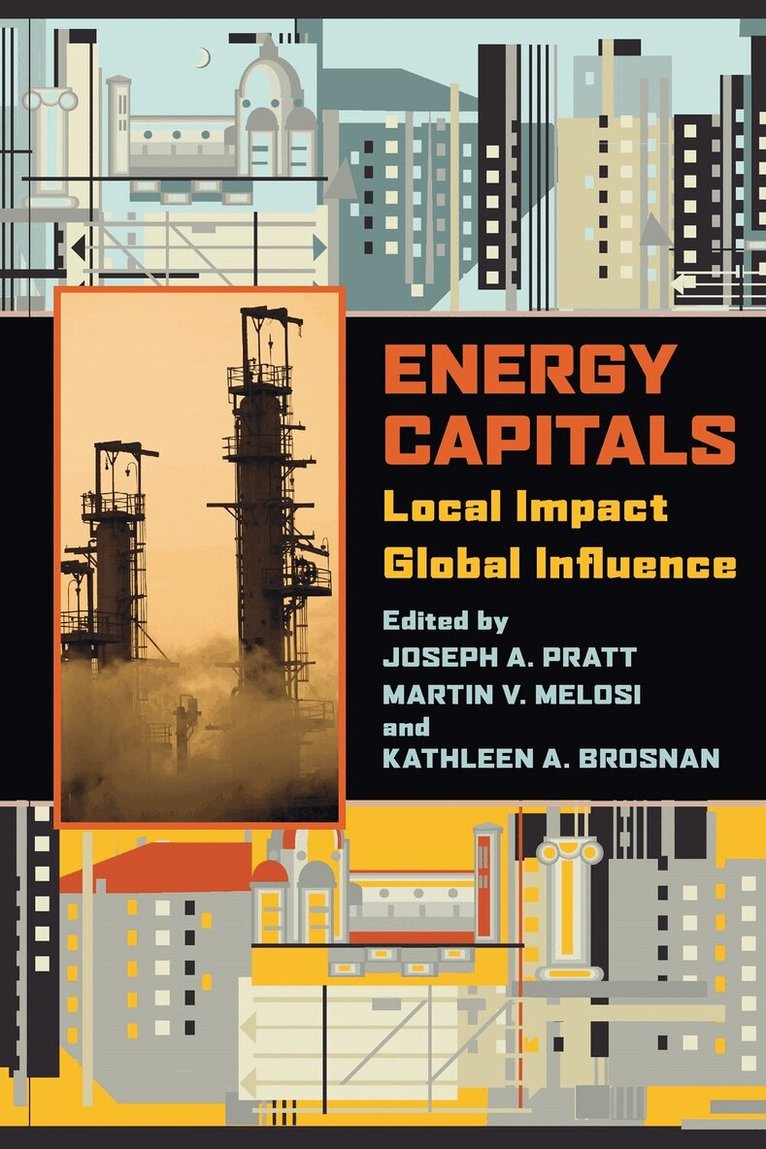
Fossil fuels propelled industries and nations into the modern age and continue to powerfully influence economies and politics today. As Energy Capitals demonstrates, the discovery and exploitation of fossil fuels has proven to be a mixed blessing in many of the cities and regions where it has occurred.With case studies from the United States, Canada, Mexico, Norway, Africa, and Australia, this volume views a range of older and more recent energy capitals, contrasts their evolutions, and explores why some capitals were able to influence global trends in energy production and distribution while others failed to control even their own destinies. Chapters show how local and national politics, social structures, technological advantages, education systems, capital, infrastructure, labor force, supply and demand, and other factors have affected the ability of a region to develop and control its own fossil fuel reserves. The contributors also view the environmental impact of energy industries and demonstrate how, in the depletion of reserves or a shift to new energy sources, regions have or have not been able to recover economically.The cities of Tampico, Mexico, and Port Gentil, Gabon, have seen their oil deposits exploited by international companies with little or nothing to show in return and at a high cost environmentally. At the opposite extreme, Houston, Texas, has witnessed great economic gain from its oil, natural gas, and petrochemical industries. Its growth, however, has been tempered by the immense strain on infrastructure and the human transformation of the natural environment. In another scenario, Perth, Australia, Calgary, Alberta, and Stavanger, Norway have benefitted as the closest established cities with administrative and financial assets for energy production that was developed hundreds of miles away.Whether coal, oil, or natural gas, the essays offer important lessons learned over time and future considerations for the best ways to capture the benefits of energy development while limiting the cost to local populations and environments.
Shadow of Pearl Harbor
Political Controversy Over the Surprise Attack, 1941-1946
Häftad, Engelska, 2000
213 kr
Skickas inom 10-15 vardagar