Martin Plant - Böcker
Visar alla böcker från författaren Martin Plant. Handla med fri frakt och snabb leverans.
6 produkter
6 produkter
1 899 kr
Skickas inom 5-8 vardagar
Alcohol has played a major part in British life for centuries. It has led do the rise and fall of governments, financed wars, provoked civil disorder and even acts of terrorism. In this book, two of the leading authorities on alcohol and its problems take a look at the UK and its alcohol addiction.
706 kr
Skickas inom 5-8 vardagar
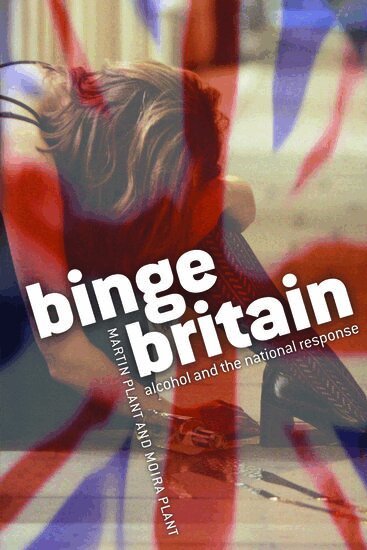
Alcohol has played a major part in British life for centuries. It has led to the rise and fall of governments, financed wars, provoked civil disorder and even acts of terrorism. In many countries, alcohol consumption has been decreasing in recent years but in Britain we are drinking more and more, and from an earlier age. With the relaxation of licensing hours there is real concern that the current epidemic of binge drinking will get even worse. So why has this problem not arisen in most of the continent? Why are British adolescents drinking more now than ever? What will be the effect of the relaxation of licensing hours? Why have so many city centres become no-go zones - filled with social unrest and violence? Is it just that we can't hold our drink - or that we don't know when to stop?The authors of this book are two of the leading authorities on alcohol and its problems. In this highly topical book, the first ever on binge drinking, they take a look at the UK and its alcohol problem. They review the role of alcohol in Britain in the past 1500 years. Binge Britain looks at why our drinking culture is maintained and why politicians seem reluctant to act effectively to reduce the problem. The authors examine the power of the alcohol industry, and the huge amount of money it contributes in taxes. The book provides an informed overview of recent developments in alcohol consumption and alcohol-related problems, together with a commentary on and critique of the development of recent policy and the national response to this policy.Informative, authoritative, and accessibly written, Binge Britain provides a fascinating look at our need for intoxication.
1 156 kr
Skickas inom 3-6 vardagar
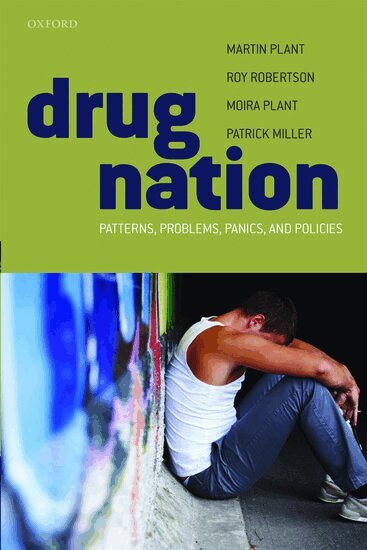
Humans have been using psychoactive (mind-altering) drugs since ancient times. Barely a day goes by without a drug related issue reaching the headlines, and drugs, in some way or other, affect all of our lives, whether by our own use, the use of those we know, or even from just being a victim of drug related crime. This book provides an accessible and lucid introduction to some of the main health and social issues related to illicit drugs and their use. It reviews a range of popular drugs - including amphetamines, cannabis, cocaine, Ecstasy (MDMA), heroin and LSD whilst considering the law related to such substances. Written in an accessible and approachable style, the book dispels some of the many myths about drug use that exist, offering an authoritative and balanced perspective on issues of personal, local, national and international importance. Drug Nation will be essential reading for anyone who wants to be informed about the drug situation, offering a sensible and non-sensational account of drugs and drug taking.
Addiction
2007
11 500 kr
Skickas inom 7-10 vardagar
Millions of us make use of psychoactive—or mind-altering—drugs. Such drugs, both legal and otherwise, can cause pleasure or pain (or both). So, too, can sex, gambling, shopping, dieting, exercise, and Internet use. ‘Addiction’ or ‘dependence’ on substances like alcohol, tobacco, illicit and prescribed drugs, and on other risky behaviours, is strongly associated with a broad range of personal and social consequences. They can greatly enhance life—or ruin it. The heavy and chronic use of legal and illegal drugs, as well as other compulsive or problematic behaviours, are associated with massive health and social problems. Health problems related to addiction include dependence, injury, overdose, foetal damage, cancers, liver disease, and premature mortality, while social problems include crime and disorder, debt, family violence, poverty, and industrial inefficiency.The addictions field is very wide ranging, and covers a considerable number of psychoactive substances and compulsive behaviours. However, much of the literature remains inaccessible or is highly specialized and compartmentalized, so that it is hard for many of those who are interested to obtain an informed and comprehensive overview of issues and evidence. The sheer scale of the growth in addiction research output—and the breadth of the field—makes this four-volume collection especially timely and meets the demand for a wide ranging, multidisciplinary perspective on this fascinating and important subject. The editors have collected material under the following sections and, together with their newly written introduction, this Routledge Major Work, a new title in the Major Themes in Health and Social Welfare series, will enable users to make sense of the wide range of approaches, theories, and concepts that have informed the subject to date:• concepts of addiction• alcohol• tobacco• illicit drugs• other addictive behaviours such as compulsive gambling, sex, exercise, shopping, Internet use and dieting.Edited by two of the world’s leading authorities on addiction and risky behaviours, Addiction will be welcomed by professionals and policymakers in health and social services. It will also be an invaluable reference resource for students and scholars working in the field of addiction, as well as those whose courses in a wide range of allied disciplines—such as nursing, medicine, psychology, education, social work, and law—increasingly require an understanding of the issues this collection explores.
1 753 kr
Skickas inom 10-15 vardagar
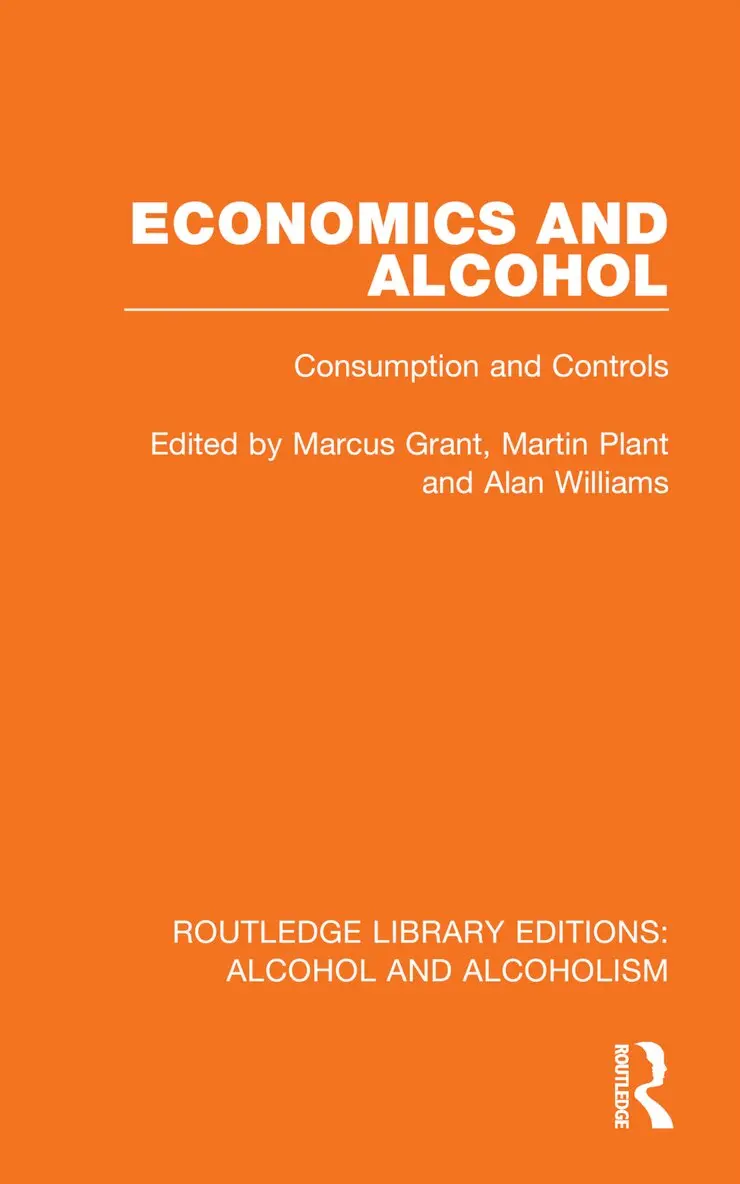
During the 1950s, 1960s and 1970s, general levels of alcohol consumption had risen considerably in all parts of the world. In association with this, there was a proliferation of alcohol-related problems such as liver disease, drunkenness offences, marital disharmony and employment difficulties. Many factors influence the probability of alcohol addiction and the habits of drinking; they include age, sex, race, occupation and income.Economic aspects of the use and misuse of alcohol had been attracting increasing attention during the early 1980s. Politicians and scholars alike had drawn attention to the benefits of a vigorous alcohol industry on the one hand, and on the other, the costs of providing medical, social and educational services for those suffering from alcohol-related problems. Originally published in 1983, the real nature of the relationship between economics and alcohol is explored in detail for the first time in this book. It argues for increased participation by economists in the processes of social policy decision-making and considers the key issues of cost-benefit analyses, control policies, taxation and programme efficiency. No easy solutions are provided, but a host of unjustified assumptions about this subject are clarified. This book paved the way for substantial future collaboration between economists and those involved in alcohol studies.
441 kr
Skickas inom 10-15 vardagar
During the 1950s, 1960s and 1970s, general levels of alcohol consumption had risen considerably in all parts of the world. In association with this, there was a proliferation of alcohol-related problems such as liver disease, drunkenness offences, marital disharmony and employment difficulties. Many factors influence the probability of alcohol addiction and the habits of drinking; they include age, sex, race, occupation and income.Economic aspects of the use and misuse of alcohol had been attracting increasing attention during the early 1980s. Politicians and scholars alike had drawn attention to the benefits of a vigorous alcohol industry on the one hand, and on the other, the costs of providing medical, social and educational services for those suffering from alcohol-related problems. Originally published in 1983, the real nature of the relationship between economics and alcohol is explored in detail for the first time in this book. It argues for increased participation by economists in the processes of social policy decision-making and considers the key issues of cost-benefit analyses, control policies, taxation and programme efficiency. No easy solutions are provided, but a host of unjustified assumptions about this subject are clarified. This book paved the way for substantial future collaboration between economists and those involved in alcohol studies.