Martin Skov - Böcker
Visar alla böcker från författaren Martin Skov. Handla med fri frakt och snabb leverans.
4 produkter
4 produkter
3 071 kr
Skickas inom 10-15 vardagar
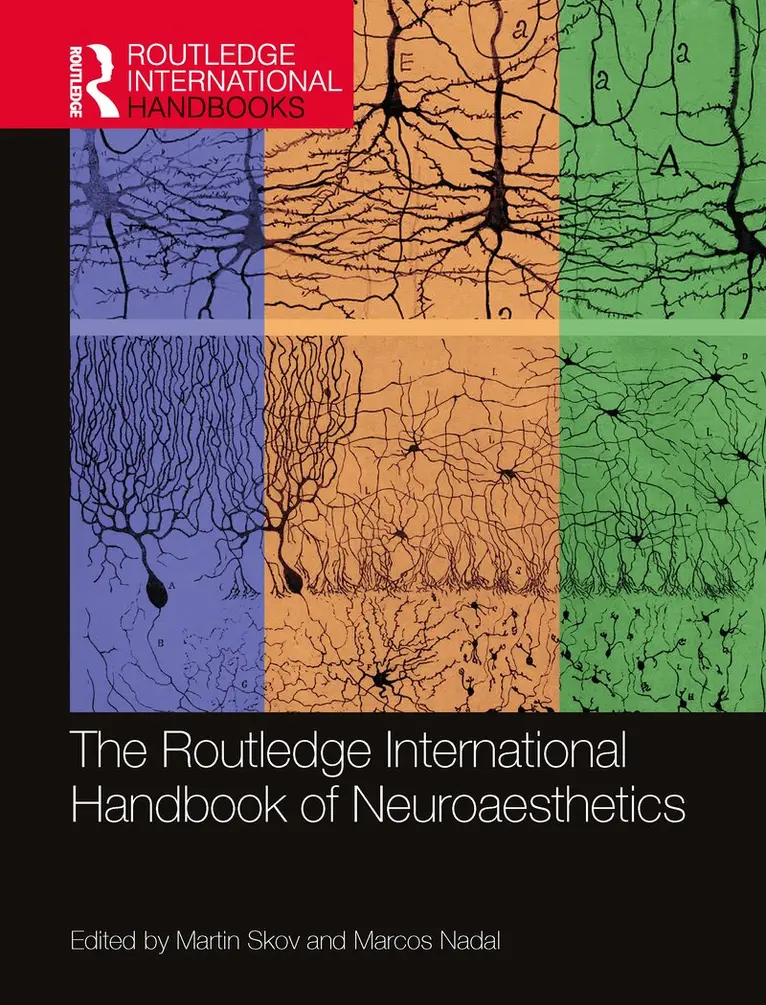
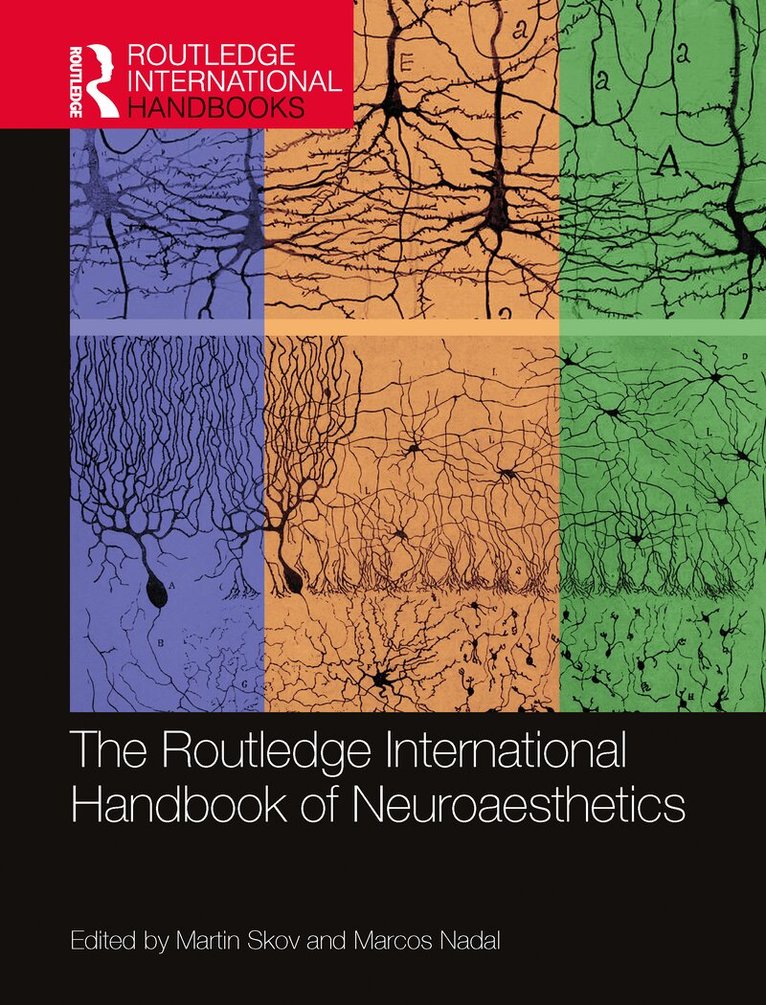
The Routledge International Handbook of Neuroaesthetics is an authoritative reference work that provides the reader with a wide-ranging introduction to this exciting new scientific discipline. The book brings together leading international academics to offer a well-balanced overview of this burgeoning field while addressing two questions central to the field: how the brain computes aesthetic appreciation for sensory objects and how art is created and experienced.The editors, Martin Skov and Marcos Nadal, have compiled a neuroscientific, physiological, and psychological overview of the systems underlying the evaluation of sensory objects and aesthetic appreciation. Covering a variety of art forms mediated by vision, audition, movement, and language, the handbook puts forward a critical review of the current research to explain how and why perceptual and emotional processes are essential for art production. The work also unravels the interaction of art with expectations, experience and knowledge and the modulation of artistic appreciation through social and contextual settings, eventually bringing to light the potential of art to influence mental states, health, and well-being. The concepts are presented through research on the neural processes enabling artistic creativity, artistic expertise, and the evolution of symbolic cognition.This handbook is a compelling read for anyone interested in making a first venture into this exciting new area of study and is best suited for students and researchers in the fields of neuroaesthetics, perceptual learning, and cognitive psychology.
845 kr
Skickas inom 10-15 vardagar
The beginning of psychological aesthetics is normally traced back to the publication of Gustav Theodor Fechner's seminal book "Vorschule der Aesthetik" in 1876. Following in the footsteps of this rich tradition, editors Martin Skov and Oshin Vartanian view neuroaesthetics - the emerging field of inquiry concerned with uncovering the ways in which aesthetic behavior is caused by brain processes - as a natural extension of Fechner's 'empirical spirit' to understand the link between the objective and subjective worlds inherent in aesthetic experience. The editors had two specific aims for this book. The first was to highlight the diversity of approaches that are underway under the banner of neuroaesthetics.Currently, this topic is being investigated from experimental, evolutionary, neuropsychological, and neuroimaging perspectives to tackle problems in the visual arts, literature, music, and film. Its quintessentially interdisciplinary nature has functioned as a breeding ground for generating and testing hypotheses in multiple domains. The second goal was more integrative and involved distilling some of the key features common to these diverse strands of work. The book presents a possible framework for neuroaesthetics by highlighting what the contributors consider to be its defining features and offering a working definition of neuroaesthetics that captures these features. "Neuroaesthetics" will provide an empirical and theoretical framework to motivate further work in this area. Ultimately, the hope is that puzzles in aesthetics can be solved through insights from biology, but that the contribution can be truly bidirectional.
2 171 kr
Skickas inom 10-15 vardagar
The beginning of psychological aesthetics is normally traced back to the publication of Gustav Theodor Fechner's seminal book "Vorschule der Aesthetik" in 1876. Following in the footsteps of this rich tradition, editors Martin Skov and Oshin Vartanian view neuroaesthetics - the emerging field of inquiry concerned with uncovering the ways in which aesthetic behavior is caused by brain processes - as a natural extension of Fechner's 'empirical spirit' to understand the link between the objective and subjective worlds inherent in aesthetic experience. The editors had two specific aims for this book. The first was to highlight the diversity of approaches that are underway under the banner of neuroaesthetics.Currently, this topic is being investigated from experimental, evolutionary, neuropsychological, and neuroimaging perspectives to tackle problems in the visual arts, literature, music, and film. Its quintessentially interdisciplinary nature has functioned as a breeding ground for generating and testing hypotheses in multiple domains. The second goal was more integrative and involved distilling some of the key features common to these diverse strands of work. The book presents a possible framework for neuroaesthetics by highlighting what the contributors consider to be its defining features and offering a working definition of neuroaesthetics that captures these features. "Neuroaesthetics" will provide an empirical and theoretical framework to motivate further work in this area. Ultimately, the hope is that puzzles in aesthetics can be solved through insights from biology, but that the contribution can be truly bidirectional.
643 kr
Skickas inom 10-15 vardagar
The Routledge International Handbook of Neuroaesthetics is an authoritative reference work that provides the reader with a wide-ranging introduction to this exciting new scientific discipline. The book brings together leading international academics to offer a well-balanced overview of this burgeoning field while addressing two questions central to the field: how the brain computes aesthetic appreciation for sensory objects and how art is created and experienced.The editors, Martin Skov and Marcos Nadal, have compiled a neuroscientific, physiological, and psychological overview of the systems underlying the evaluation of sensory objects and aesthetic appreciation. Covering a variety of art forms mediated by vision, audition, movement, and language, the handbook puts forward a critical review of the current research to explain how and why perceptual and emotional processes are essential for art production. The work also unravels the interaction of art with expectations, experience and knowledge and the modulation of artistic appreciation through social and contextual settings, eventually bringing to light the potential of art to influence mental states, health, and well-being. The concepts are presented through research on the neural processes enabling artistic creativity, artistic expertise, and the evolution of symbolic cognition.This handbook is a compelling read for anyone interested in making a first venture into this exciting new area of study and is best suited for students and researchers in the fields of neuroaesthetics, perceptual learning, and cognitive psychology.