Martina Klimes – författare
Visar alla böcker från författaren Martina Klimes. Handla med fri frakt och snabb leverans.
2 produkter
2 produkter
3 336 kr
Skickas inom 10-15 vardagar
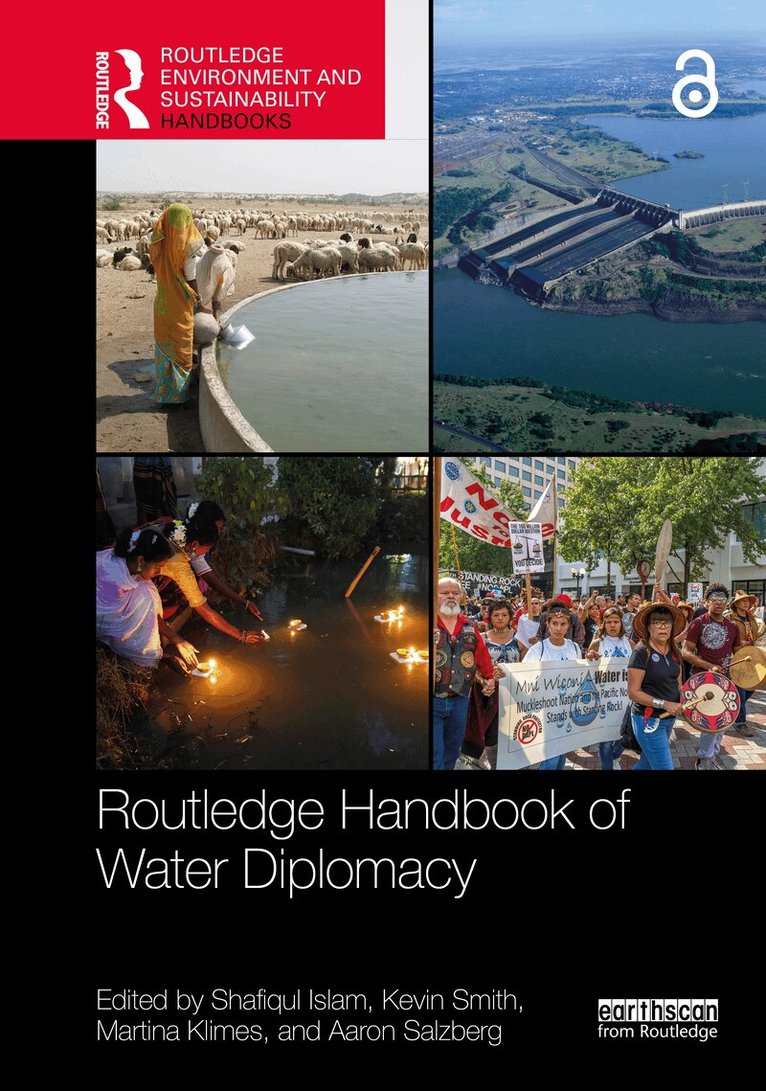
The Routledge Handbook of Water Diplomacy is a comprehensive guide to understanding and practicing water diplomacy – a framework for building relationships, negotiating shared interests, and managing complex water challenges across physical, political, and societal boundaries.In an era marked by rising scarcity, deepening uncertainty, and growing geopolitical tension, this timely volume offers actionable insights for negotiated problem-solving grounded in both scientific understanding and diplomatic skill. Moving beyond abstract theory and technical fixes, the Handbook introduces a dual-pathway structure designed to meet the diverse needs of its users. The “Working Together” pathway invites readers to engage with water diplomacy through the lens of their roles, whether as professionals, decision-makers, funders, researchers, or affected communities. The “What Matters and Why” pathway highlights key thematic dimensions, including process design, adaptive learning, trust-building, divergent worldviews, and the management of uncertainty. Together, these pathways guide readers through a wide range of case studies, from transboundary river basins to subnational disputes and community-scale water systems, demonstrating how water diplomacy can resolve conflict, enable cooperation, and support adaptive, context-sensitive 'learning by doing' under conditions of complexity and change. Whether addressing a transboundary dispute or a local allocation challenge, this book provides guiding principles, practical tools, and real-world cases to support water solutions that are scientifically credible, socially inclusive, and politically feasible.The Routledge Handbook of Water Diplomacy serves as an essential reference volume for students and scholars of water diplomacy, water governance and water resource management, as well as for policymakers and water professionals who are seeking actionable insights into the nuanced challenges they encounter as they work to promote a more sustainable and equitable water future.The Open Access version of this book, available at http://www.taylorfrancis.com, has been made available under a Creative Commons Attribution- NonCommercial- ShareAlike 4.0 International (CC BY- NC- SA) license.
1 951 kr
Skickas inom 5-8 vardagar
How can peace be brokered between warring sides in conflicts over self-determination and what roles do external third parties play? This book is the first of its kind to thoroughly explore the effectiveness of aid conditionality and other external tools that third parties — from states and regional organizations to NGOs — bring to the table in peace negotiations. Surveying the existing academic debate on incentives and peace conditionality, the author first identifies the gaps between theory and the needs of third party mediators and facilitators. Analysing in depth the negotiation processes in Sri Lanka (Eelam), Indonesia (Aceh), and the Philippines (Mindanao) as case studies, policy tools likely to be most effective are then identified and policy recommendations developed. This book is an invaluable resource for students, scholars, and practitioners alike.