Martyn Tranter - Böcker
Visar alla böcker från författaren Martyn Tranter. Handla med fri frakt och snabb leverans.
3 produkter
3 produkter
2 137 kr
Skickas inom 7-10 vardagar
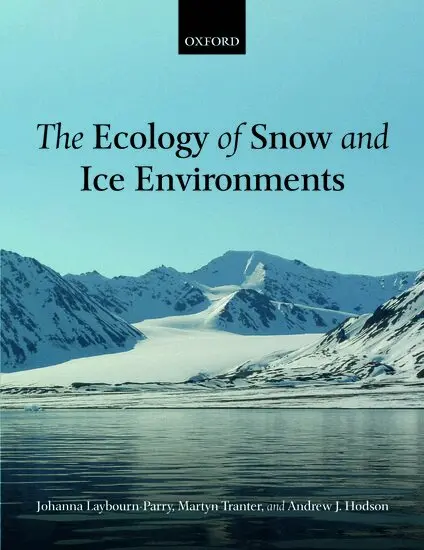
Snow and ice environments support significant biological activity, yet the biological importance of some of these habitats, such as glaciers, has only recently gained appreciation. Collectively, these ecosystems form a significant part of the cryosphere, most of which is situated at high latitudes. These ice environments are important sentinels of climate change since the polar regions are presently undergoing the highest rates of climate warming, resulting in very marked changes in the extent of ice caps, glaciers, and the sea ice. Glacial systems are also regarded as an analogue for astrobiology, particularly for Mars and the moons of Jupiter (e.g. Europa), and one of the justifications for research in this area is its potential value in astrobiology. This timely and accessible volume draws together the current knowledge on life in snow and ice environments. It describes these often complex and often productive ecosystems, their physical and chemical conditions, and the nature and activity of the organisms that have colonised them. The cryosphere is the domain of extremophiles, organisms able to adapt to the physiological and biochemical challenges of harsh cold conditions where liquid water may only be present for relatively short periods each year. The majority of extremophiles in ice and snow are microorganisms.The Ecology of Snow and Ice Environments is intended for the non-specialist, enabling environmental scientists to understand the biological functioning of extreme cold environments and for biologists to gain knowledge of the nature of the cryosphere.
922 kr
Skickas inom 7-10 vardagar
Snow and ice environments support significant biological activity, yet the biological importance of some of these habitats, such as glaciers, has only recently gained appreciation. Collectively, these ecosystems form a significant part of the cryosphere, most of which is situated at high latitudes. These ice environments are important sentinels of climate change since the polar regions are presently undergoing the highest rates of climate warming, resulting in very marked changes in the extent of ice caps, glaciers, and the sea ice. Glacial systems are also regarded as an analogue for astrobiology, particularly for Mars and the moons of Jupiter (e.g. Europa), and one of the justifications for research in this area is its potential value in astrobiology. This timely and accessible volume draws together the current knowledge on life in snow and ice environments. It describes these often complex and often productive ecosystems, their physical and chemical conditions, and the nature and activity of the organisms that have colonised them. The cryosphere is the domain of extremophiles, organisms able to adapt to the physiological and biochemical challenges of harsh cold conditions where liquid water may only be present for relatively short periods each year. The majority of extremophiles in ice and snow are microorganisms.The Ecology of Snow and Ice Environments is intended for the non-specialist, enabling environmental scientists to understand the biological functioning of extreme cold environments and for biologists to gain knowledge of the nature of the cryosphere.
1 064 kr
Skickas inom 10-15 vardagar
Seasonal Snowpacks examines the processes which control the chemistry of seasonal snowcover and provides detailed information on the biogeographical distribution of snow (e.g. urban, alpine snowpacks), snow composition (e.g. micropollutants, stable isotopes) or the physical and biological processes which influence the chemical changes in snow (e.g. wind, microbiological activity). The fluxes of chemicals at the snow-atmosphere and snow-soil interfaces are examined, as are processes which modify composition within the snowcover. It is the first book in which the reader will find a comprehensive overview of the theoretical concepts, latest measurement techniques, process-oriented research methods, and models of studies in snow chemistry. The linkages between snow chemistry, atmospheric chemistry and hydrology will make this book of use to both research workers and students in the physical and biological sciences and to natural resource management personnel.